
udochukwu anidobu, Lola Ayisha OgbarA, Stella Rae Binion, Keamber Pearson, Heaven Hill, phia lynne, Andrea Coleman
too tender headed
april 2026 - june 2026
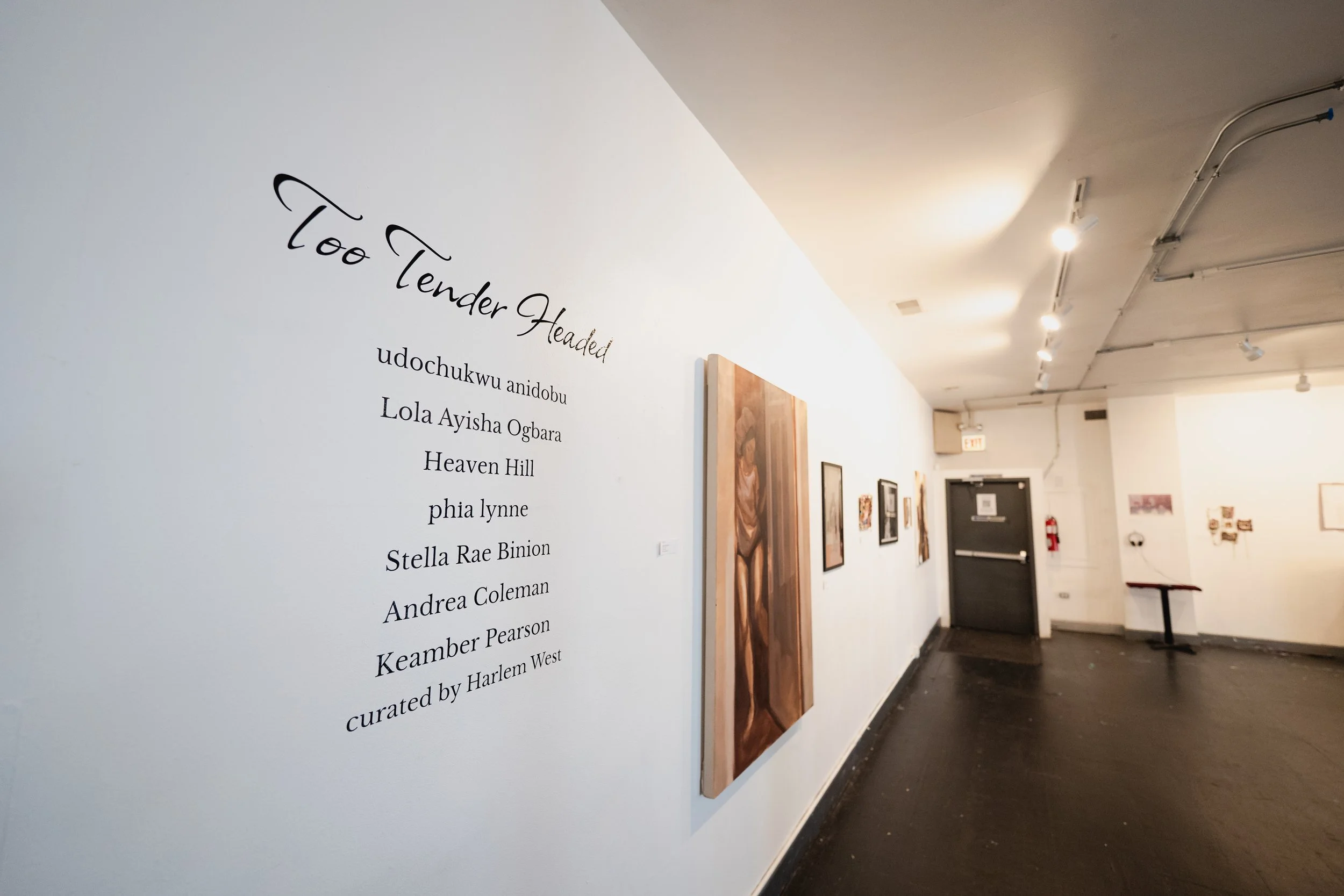
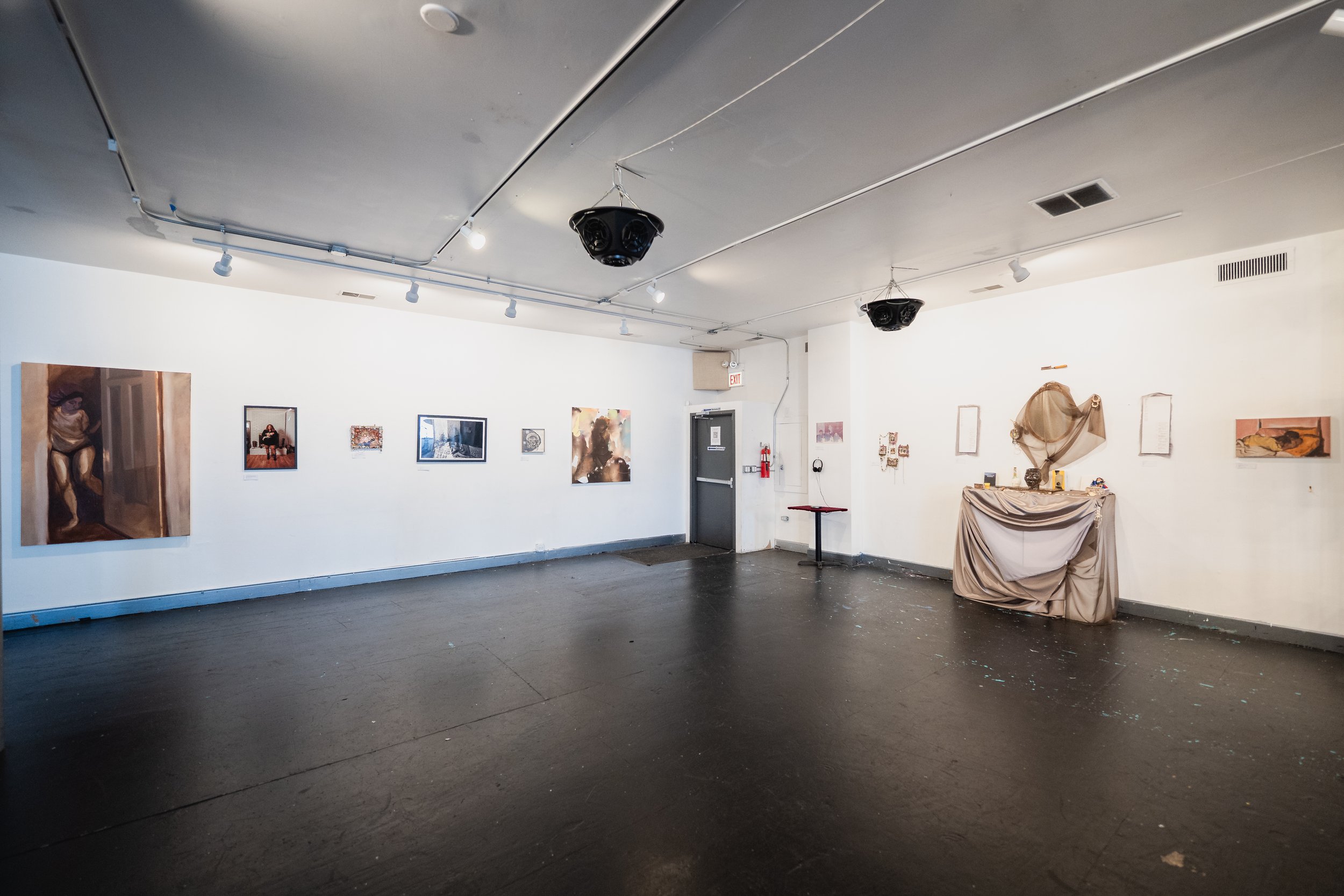
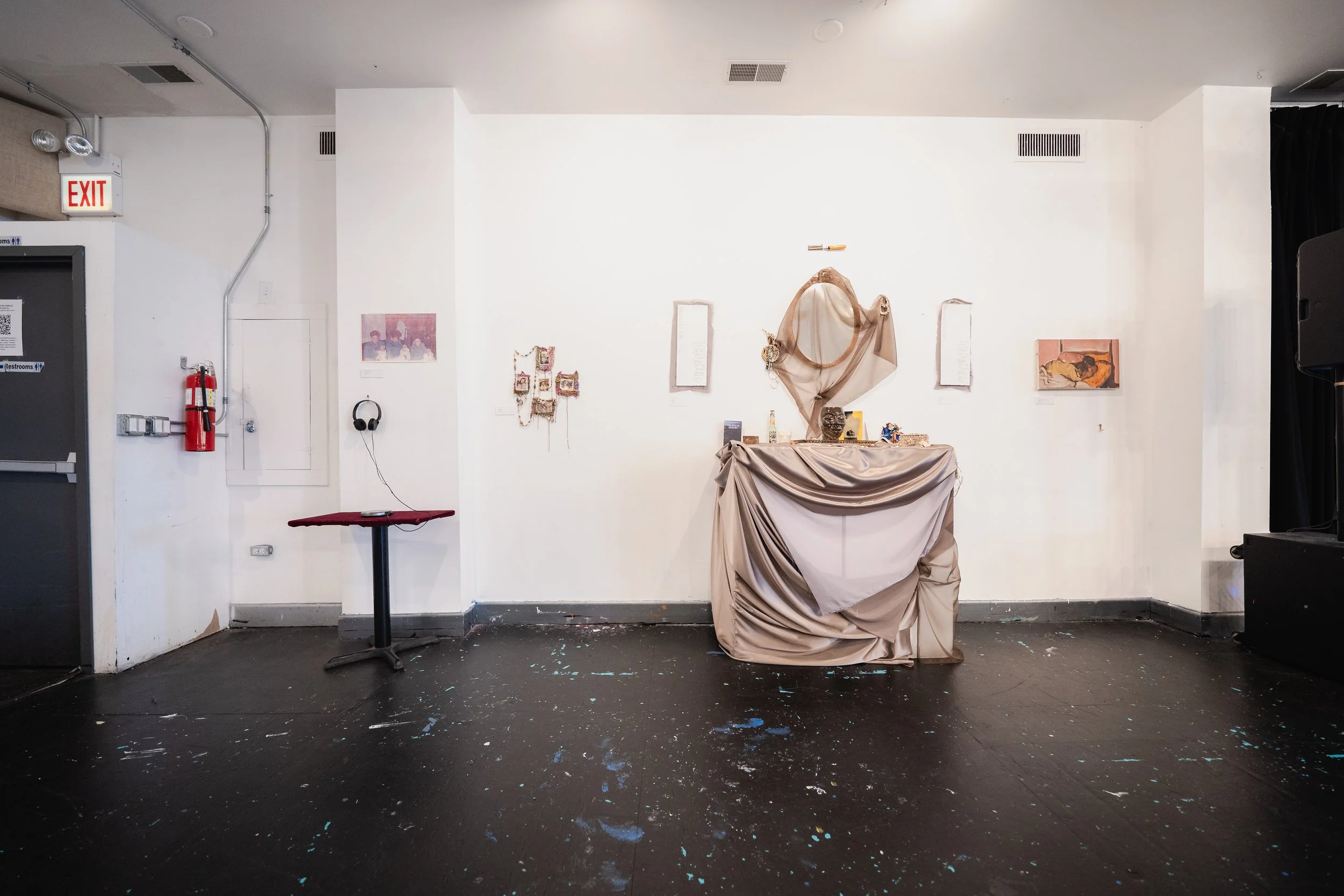
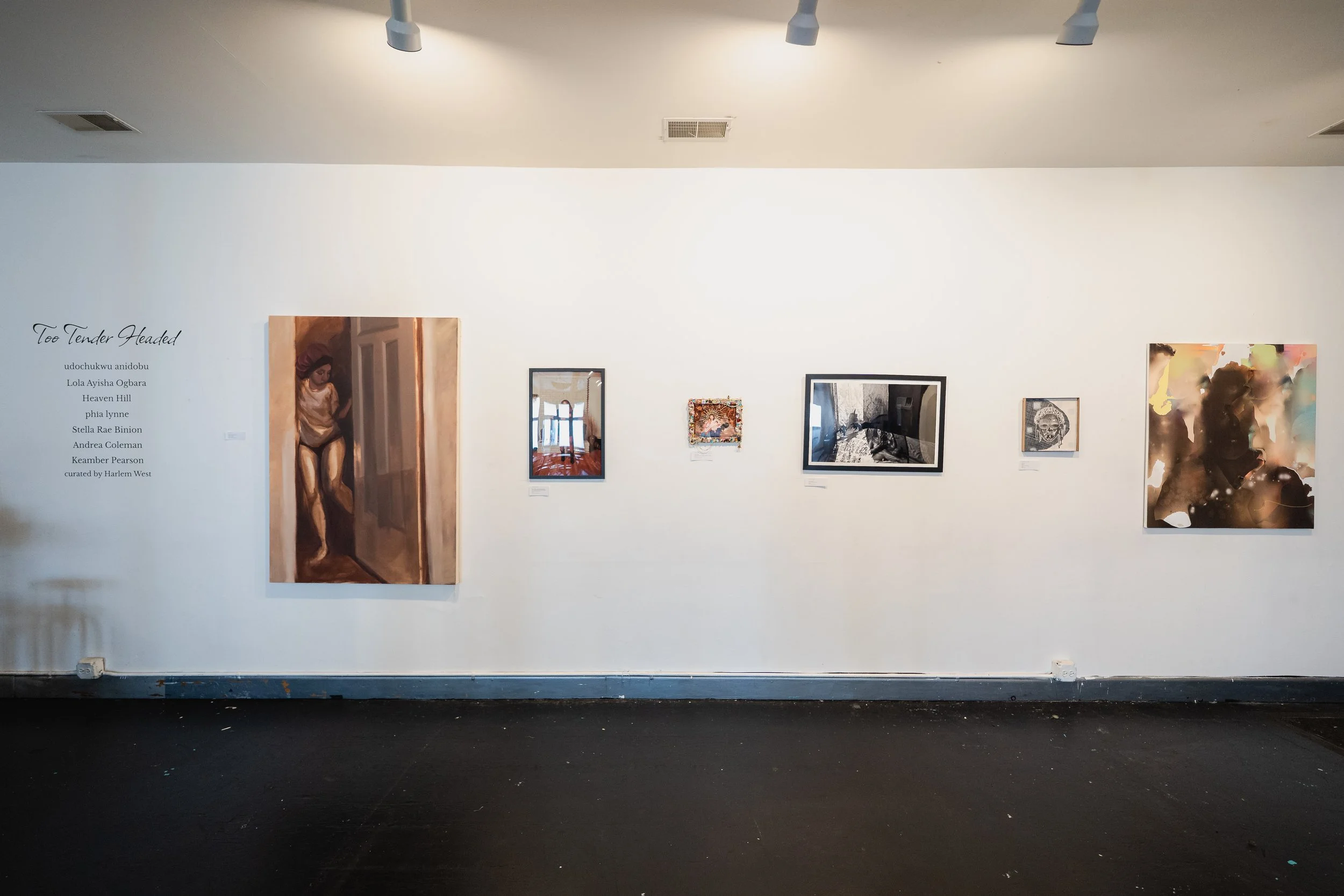
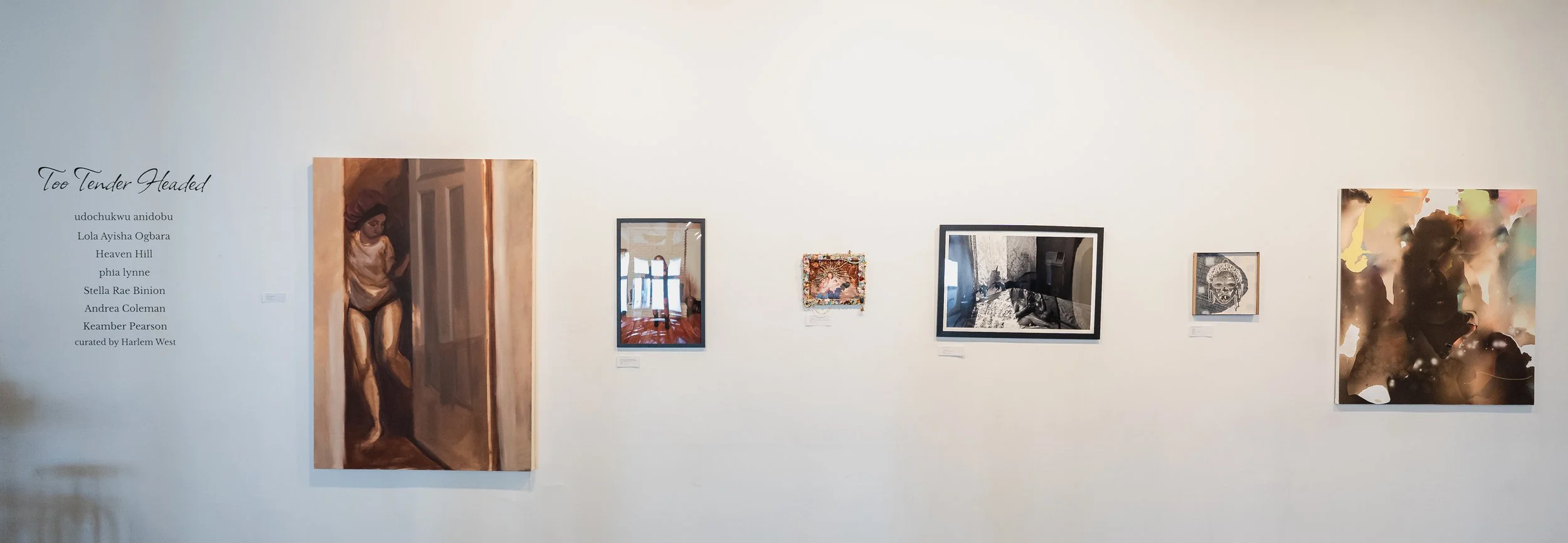
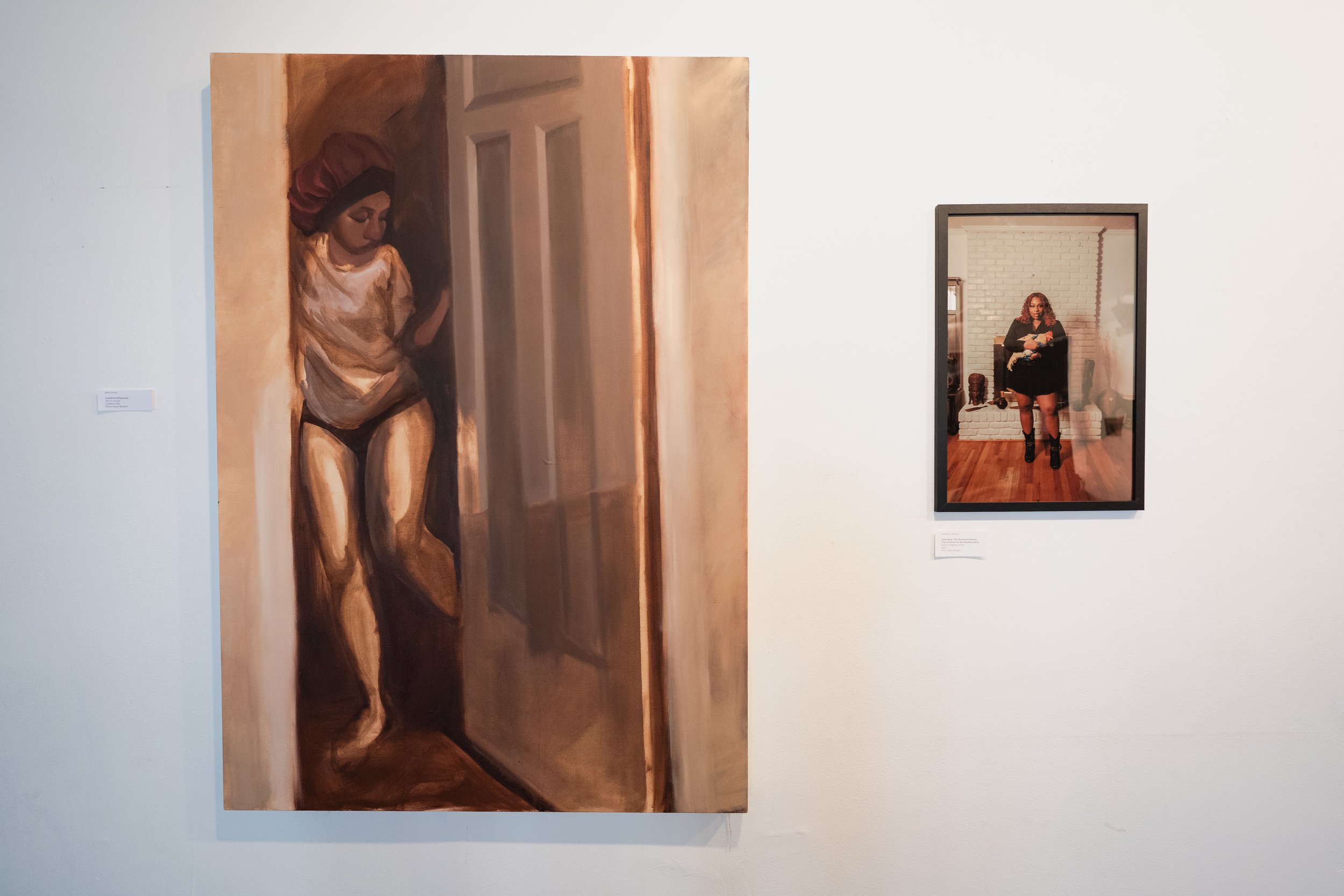
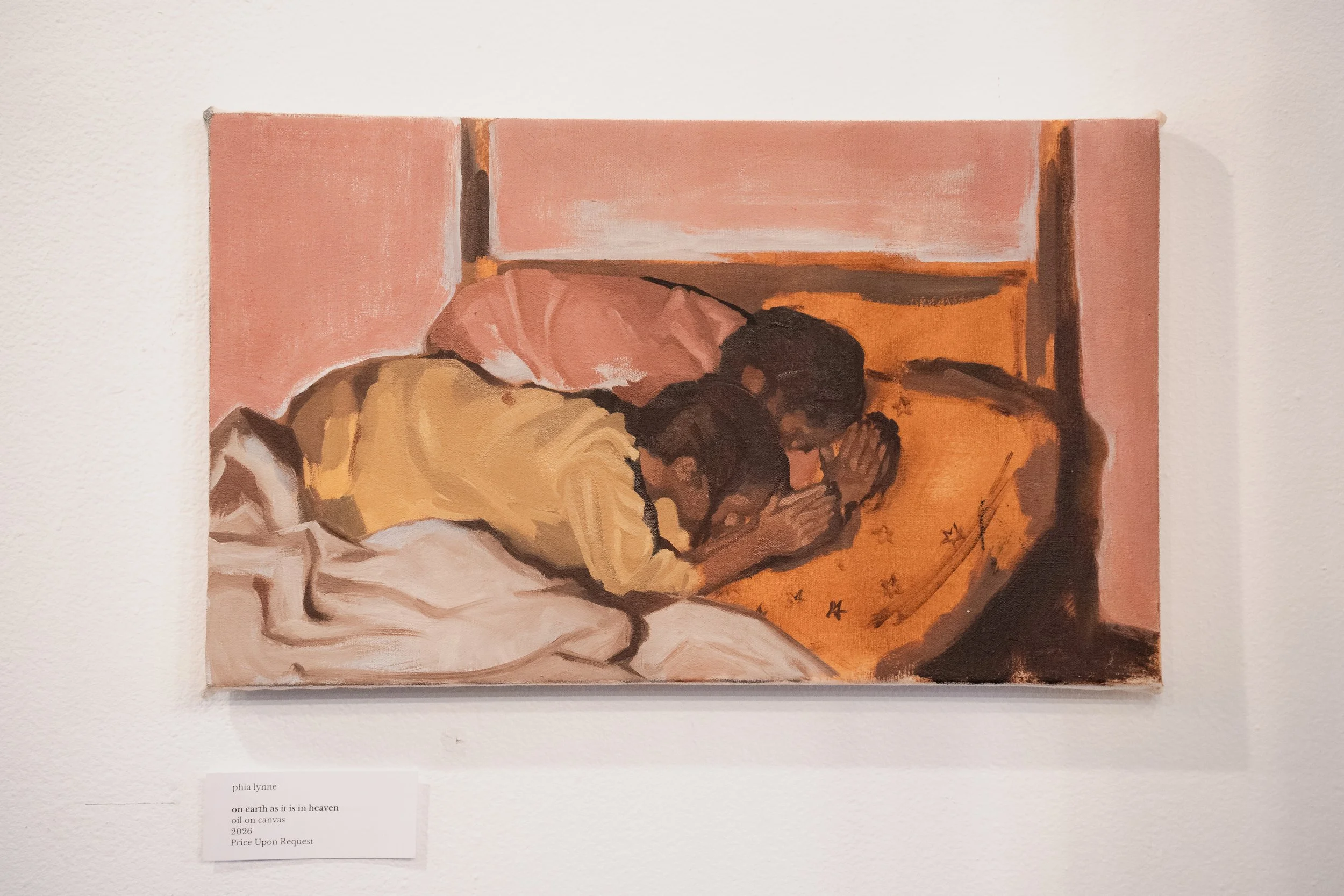
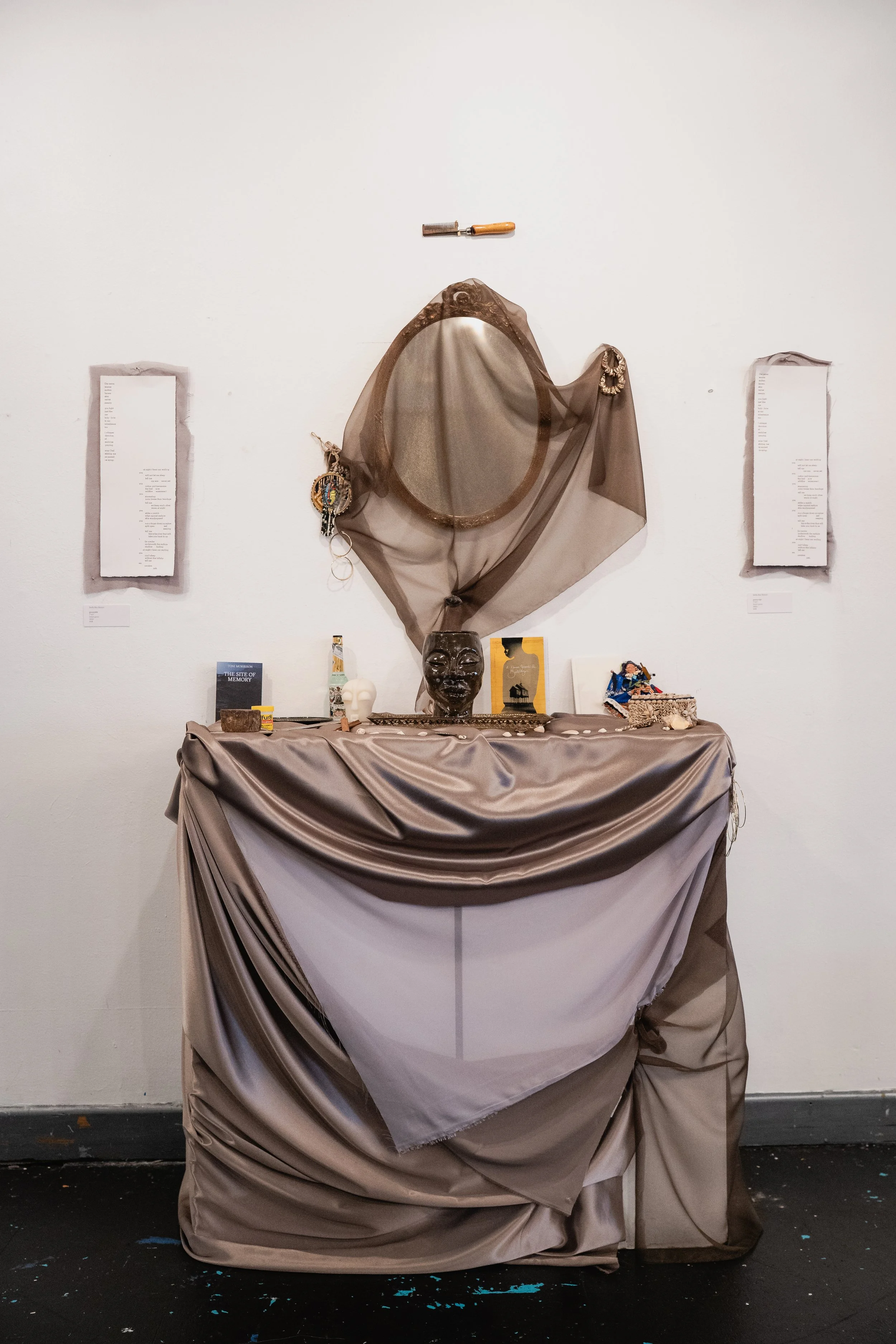
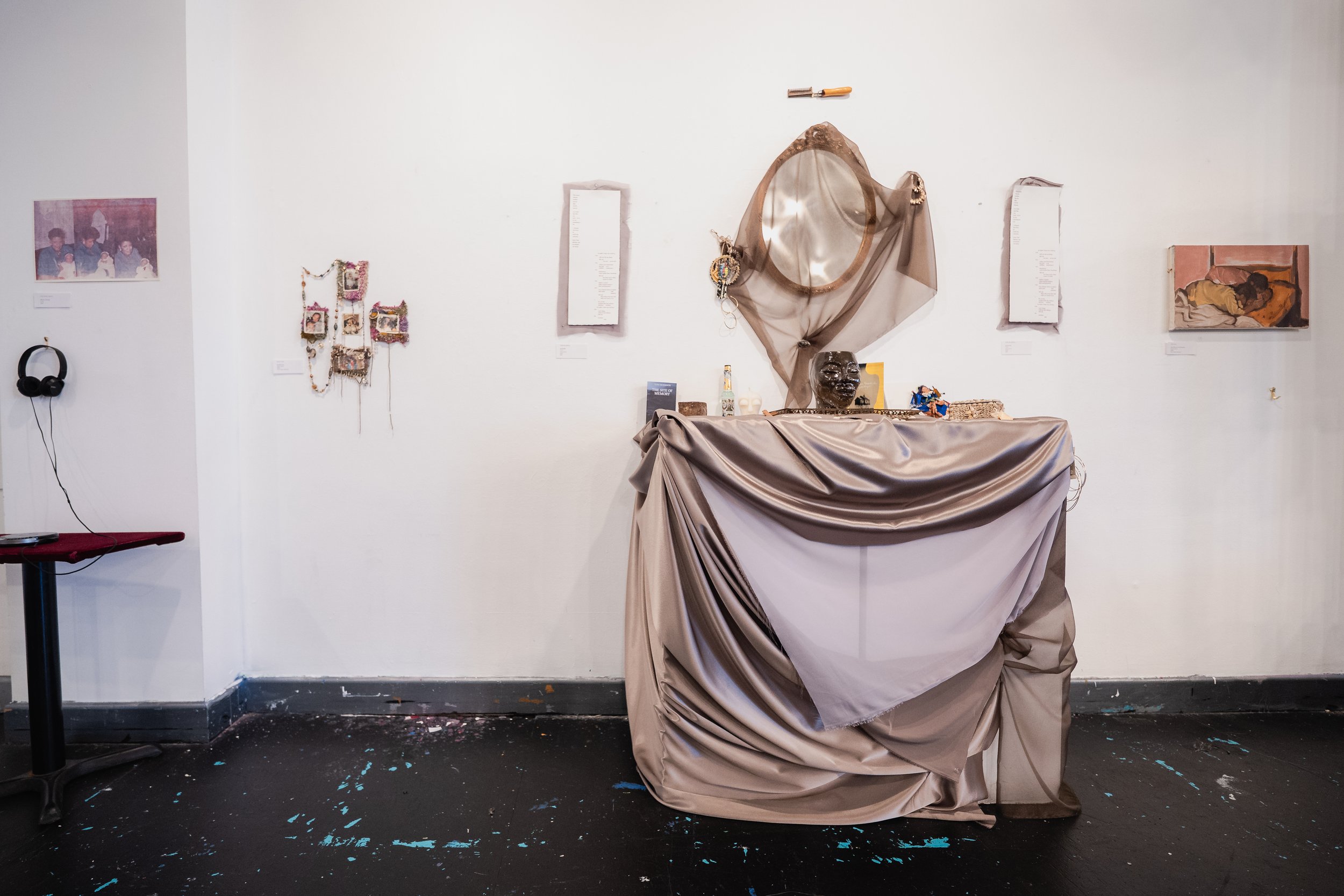
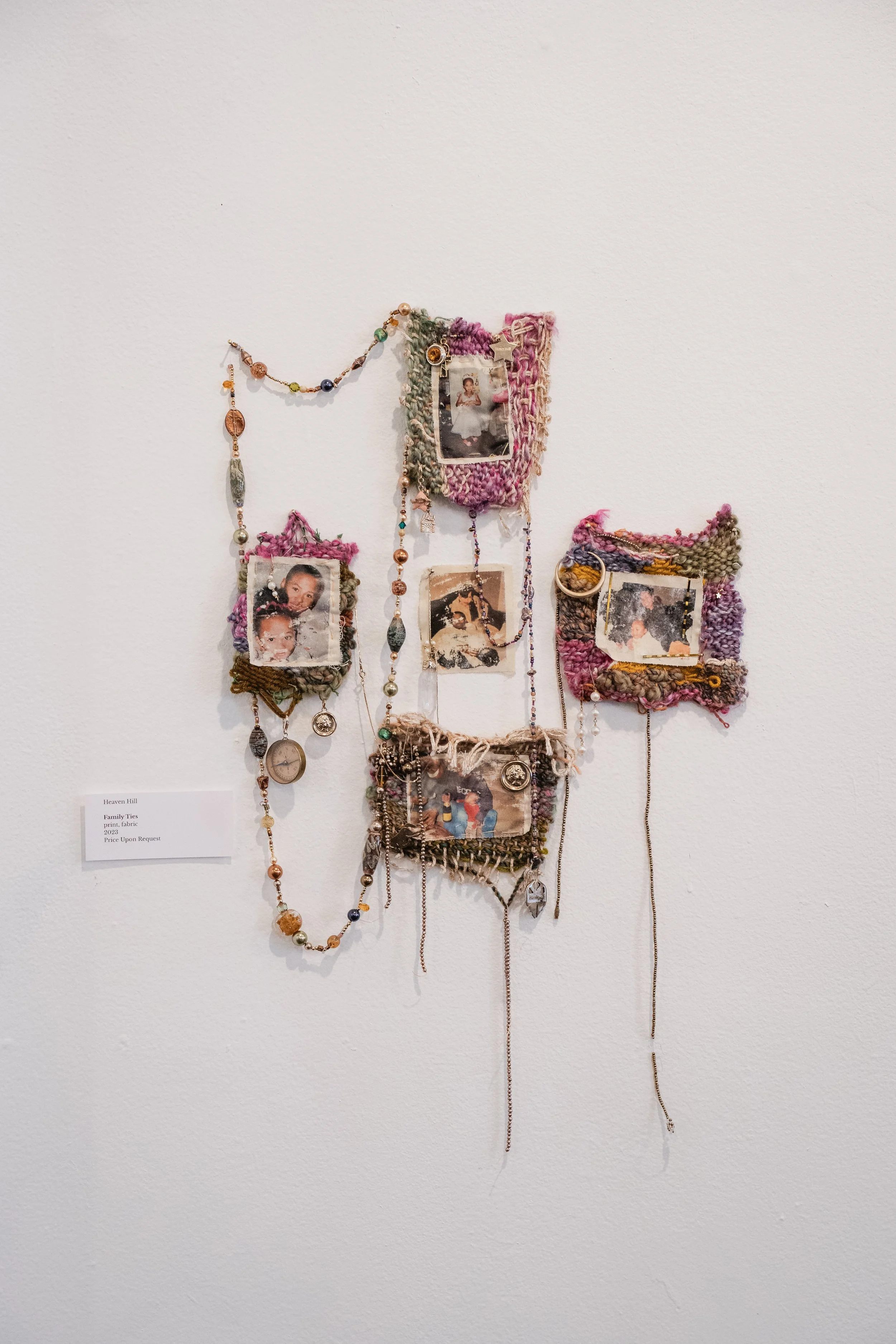
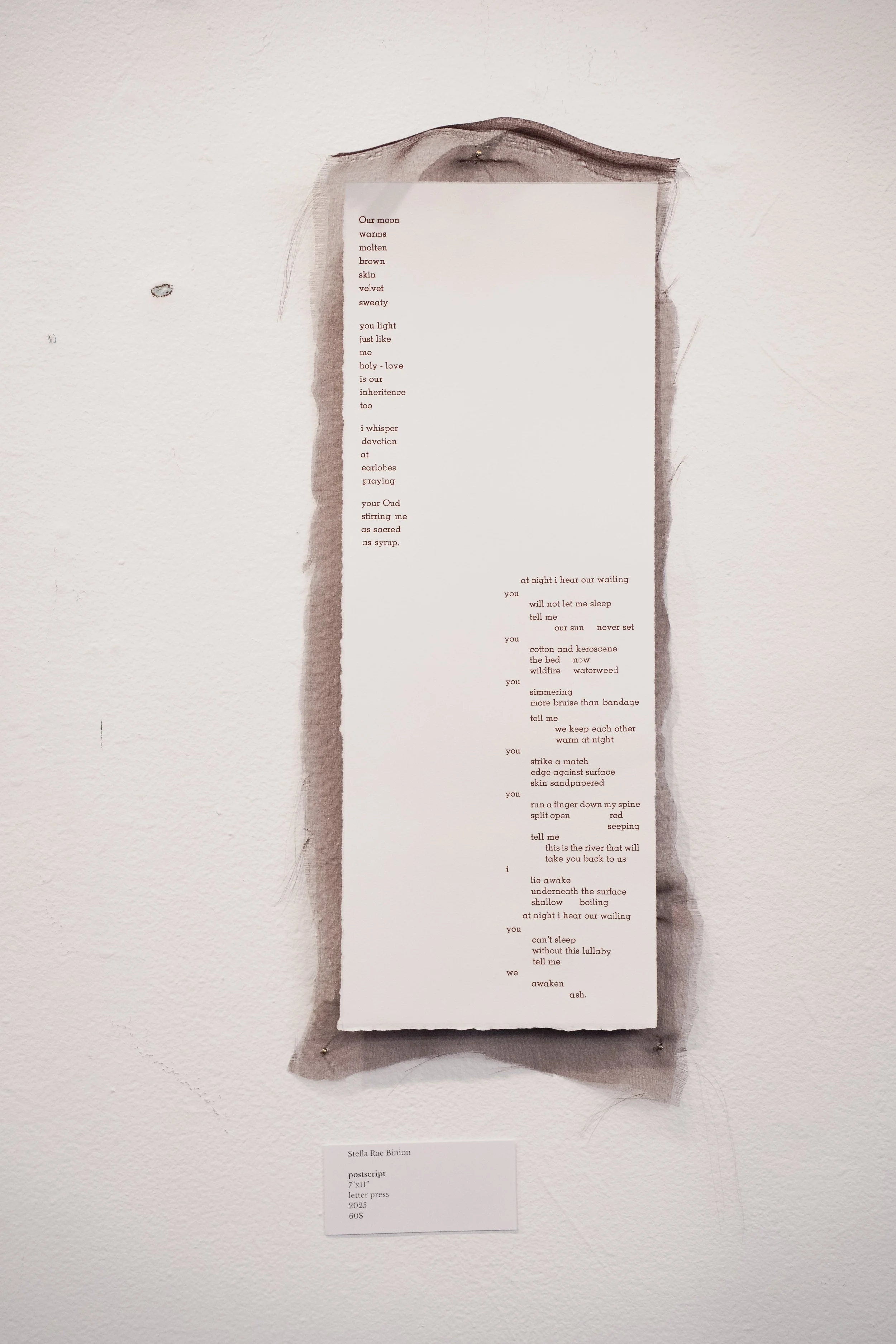
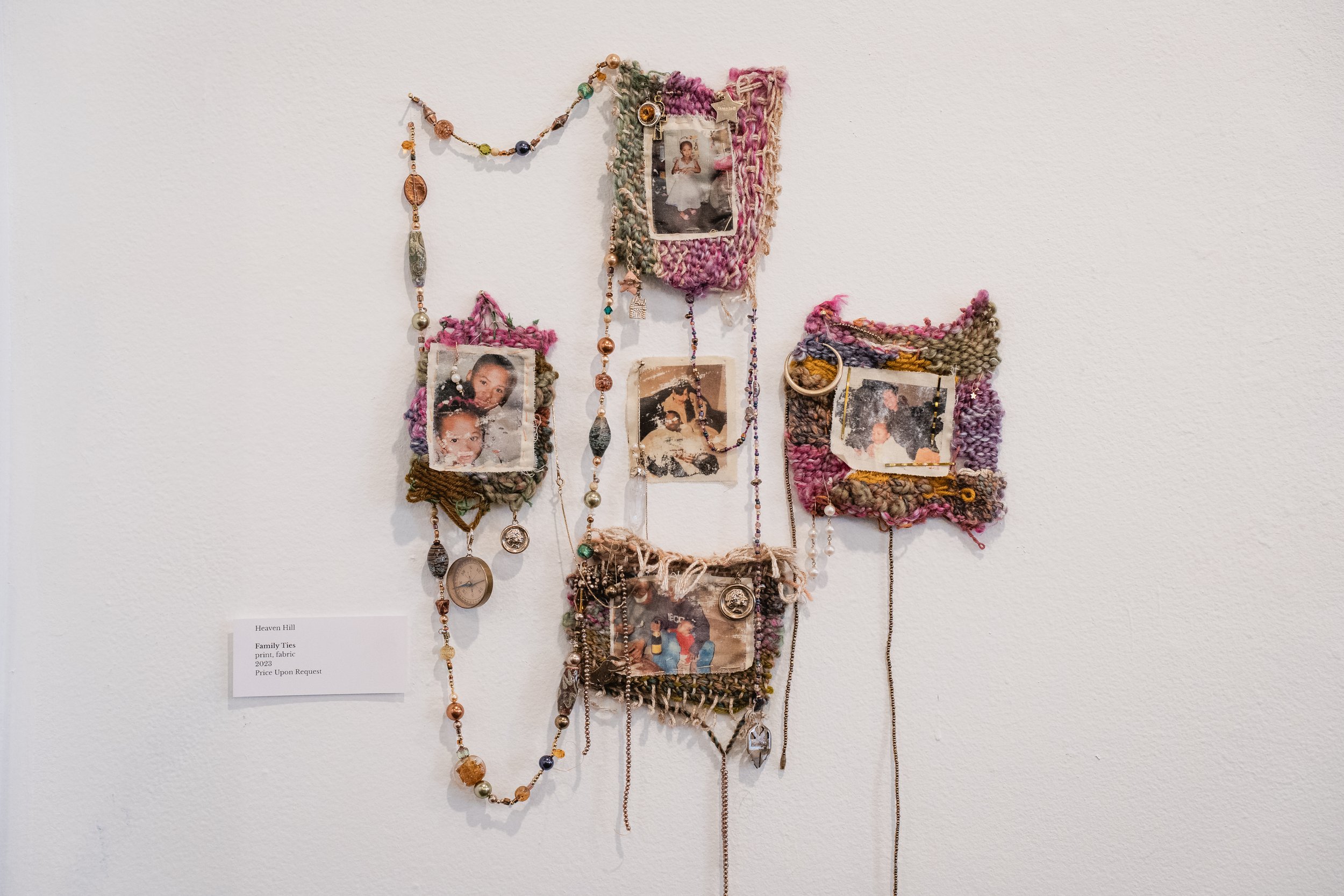
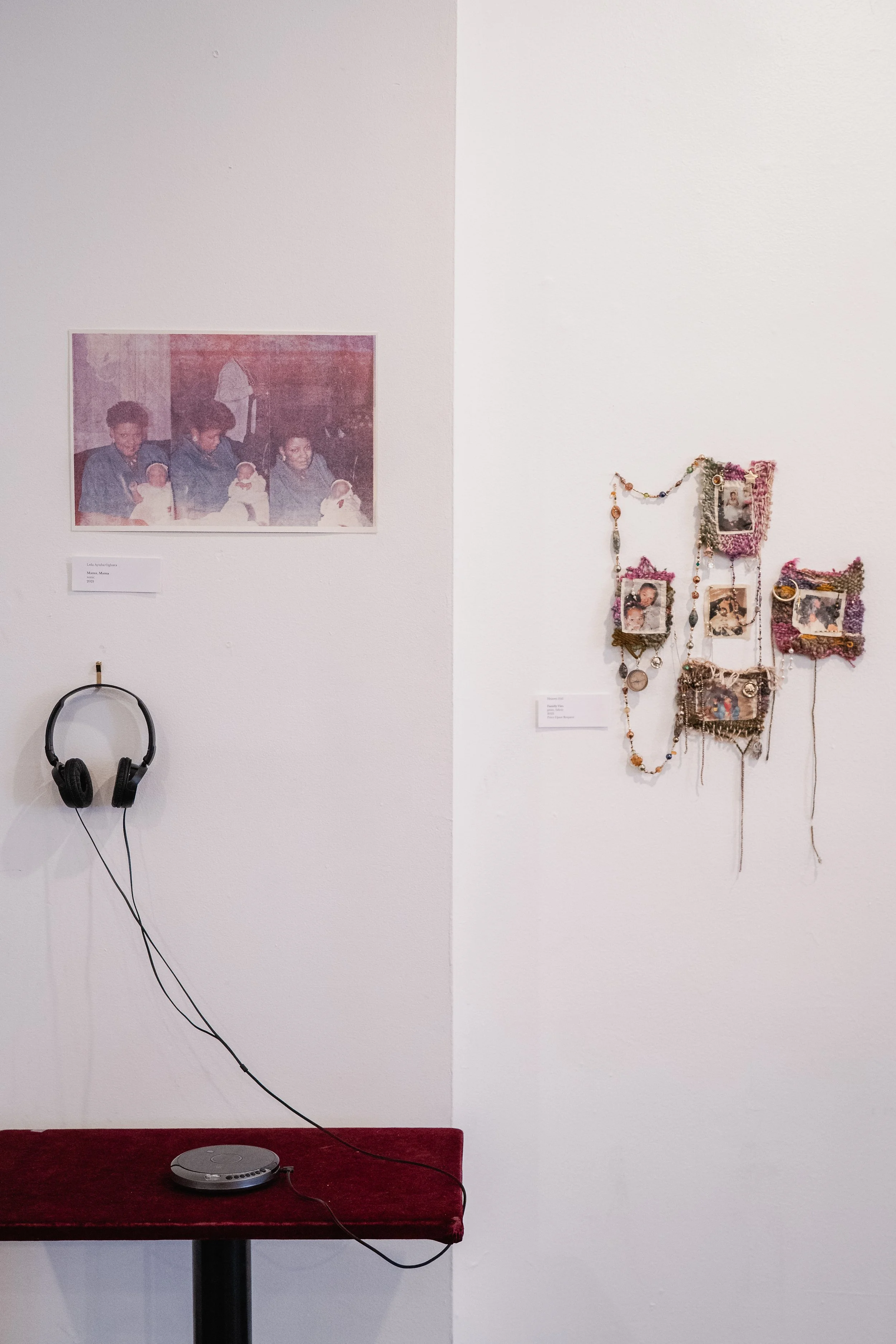
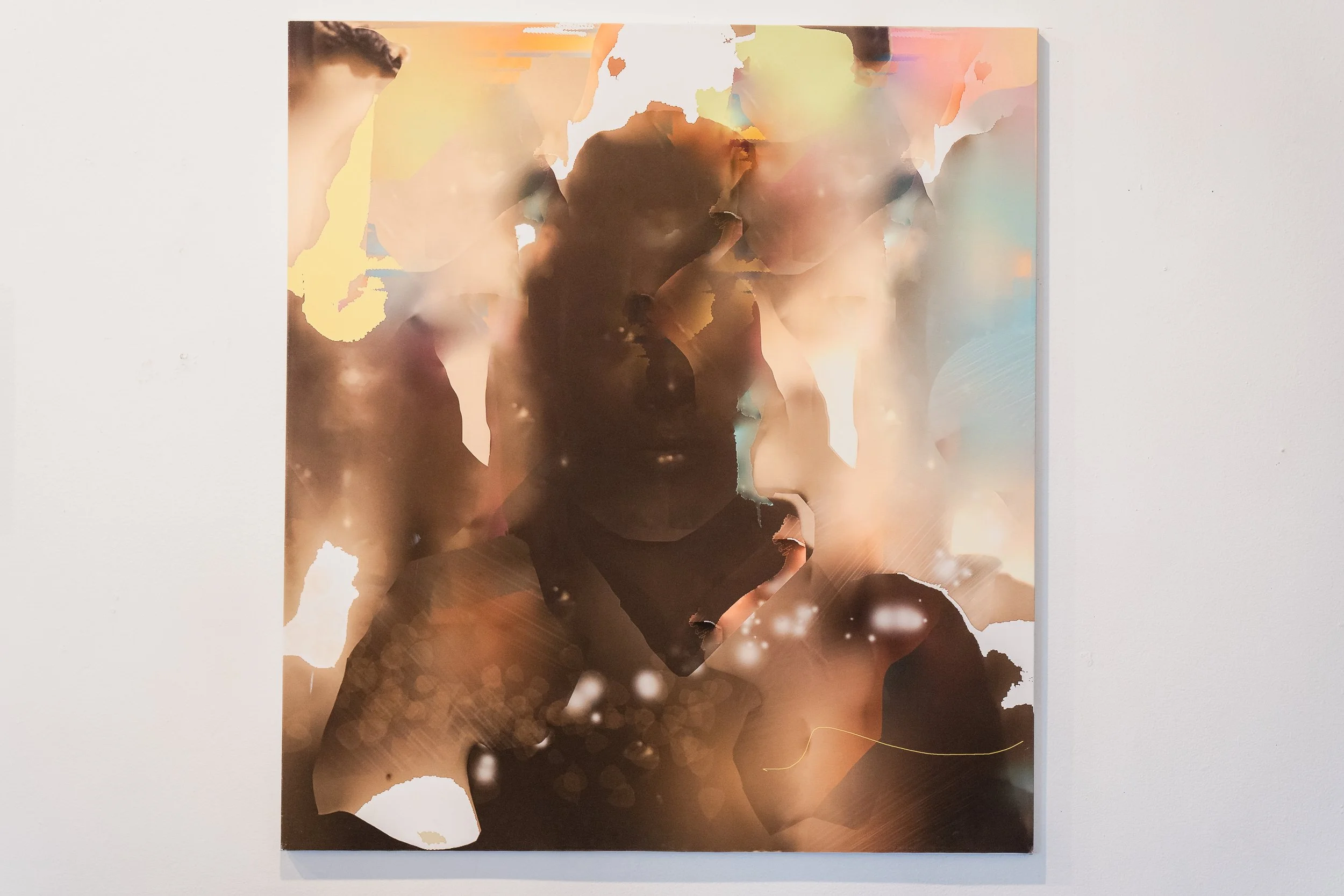
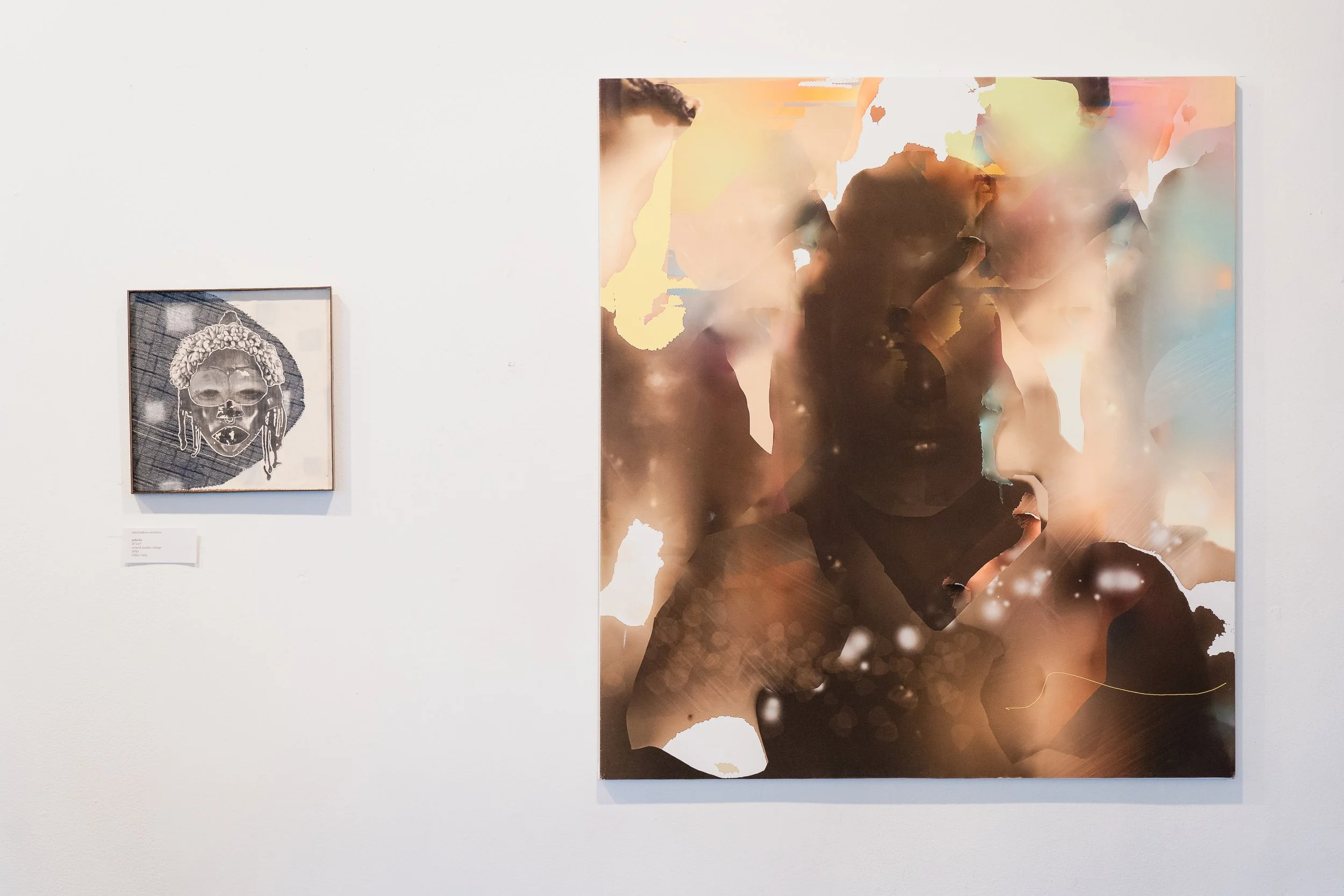
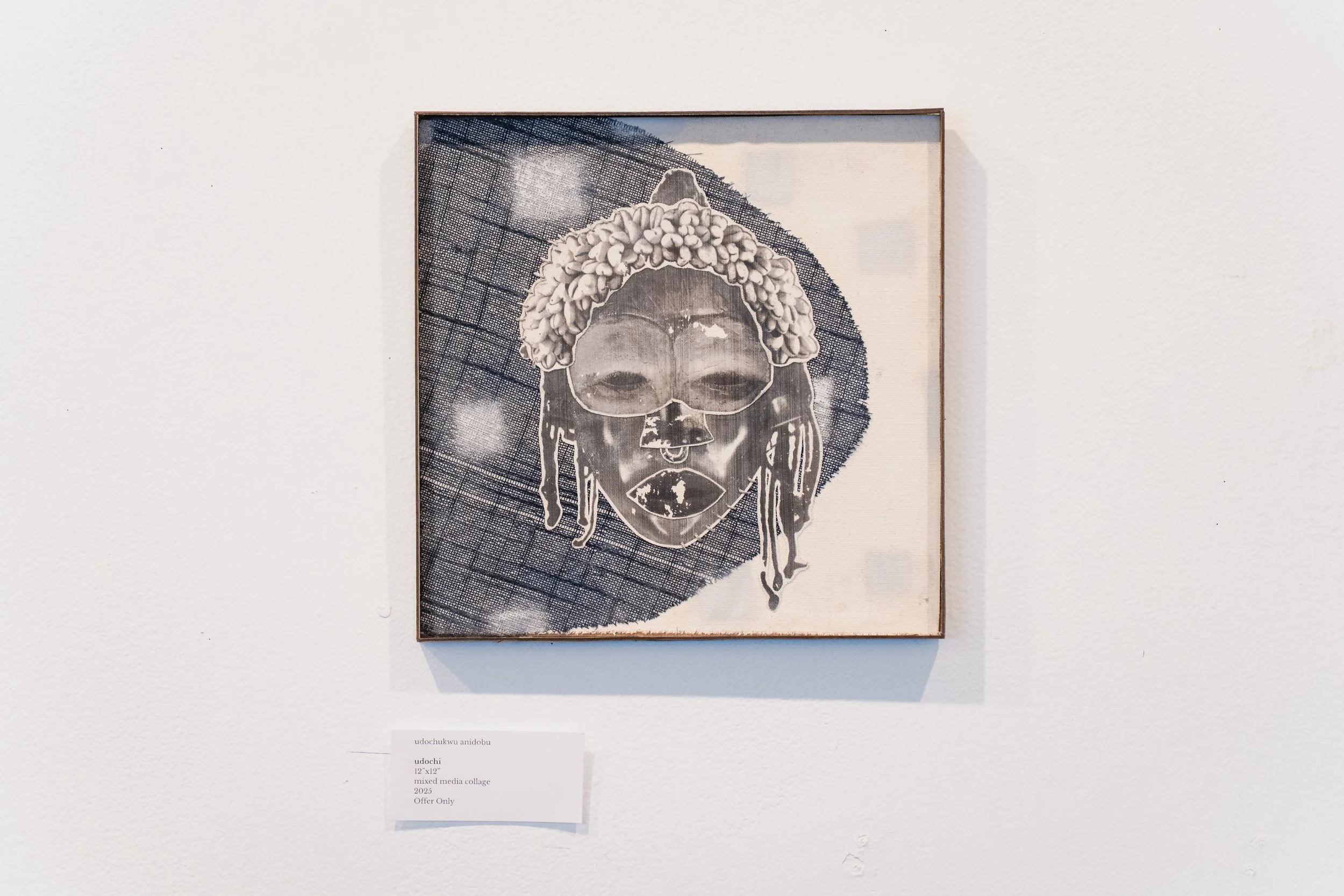
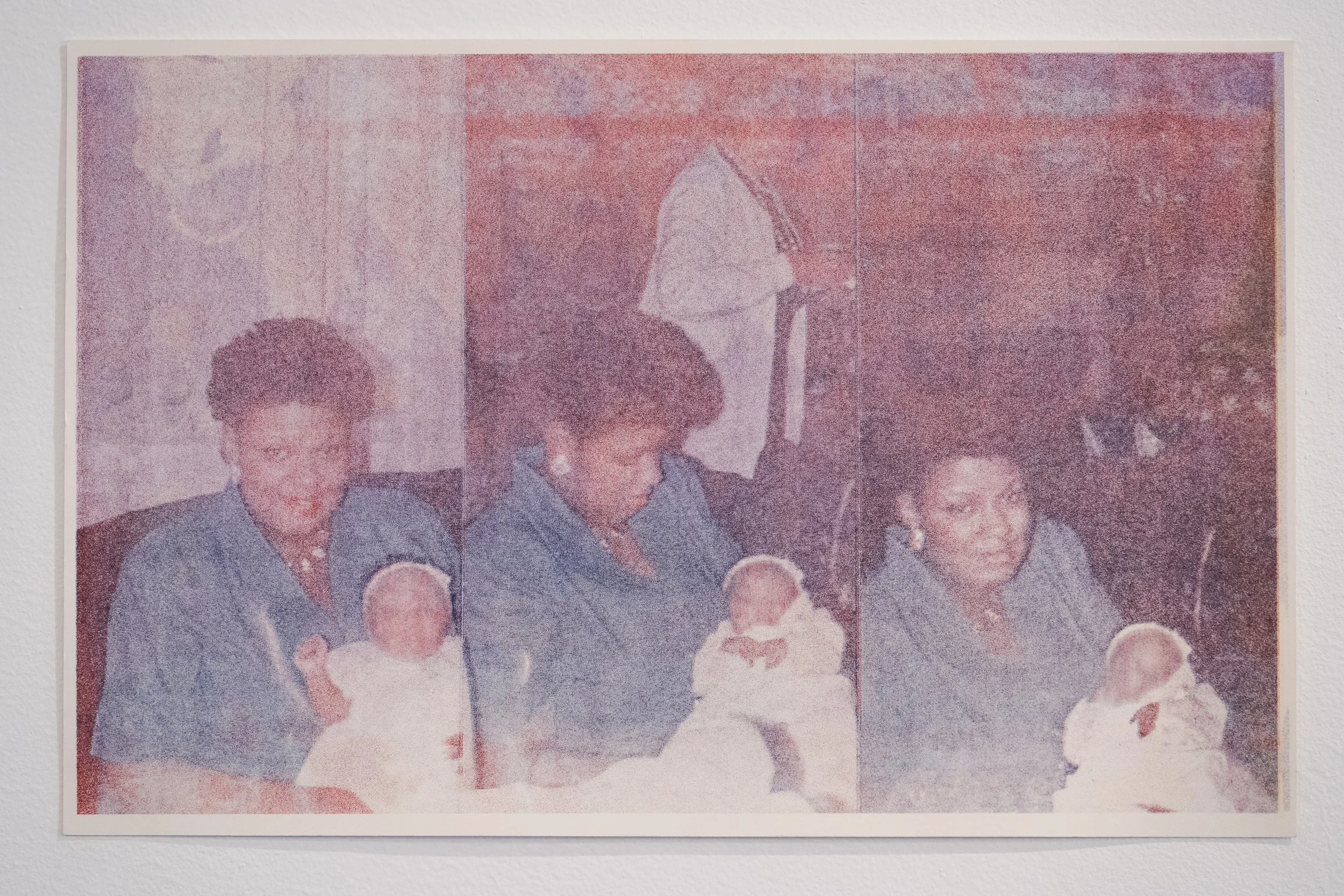
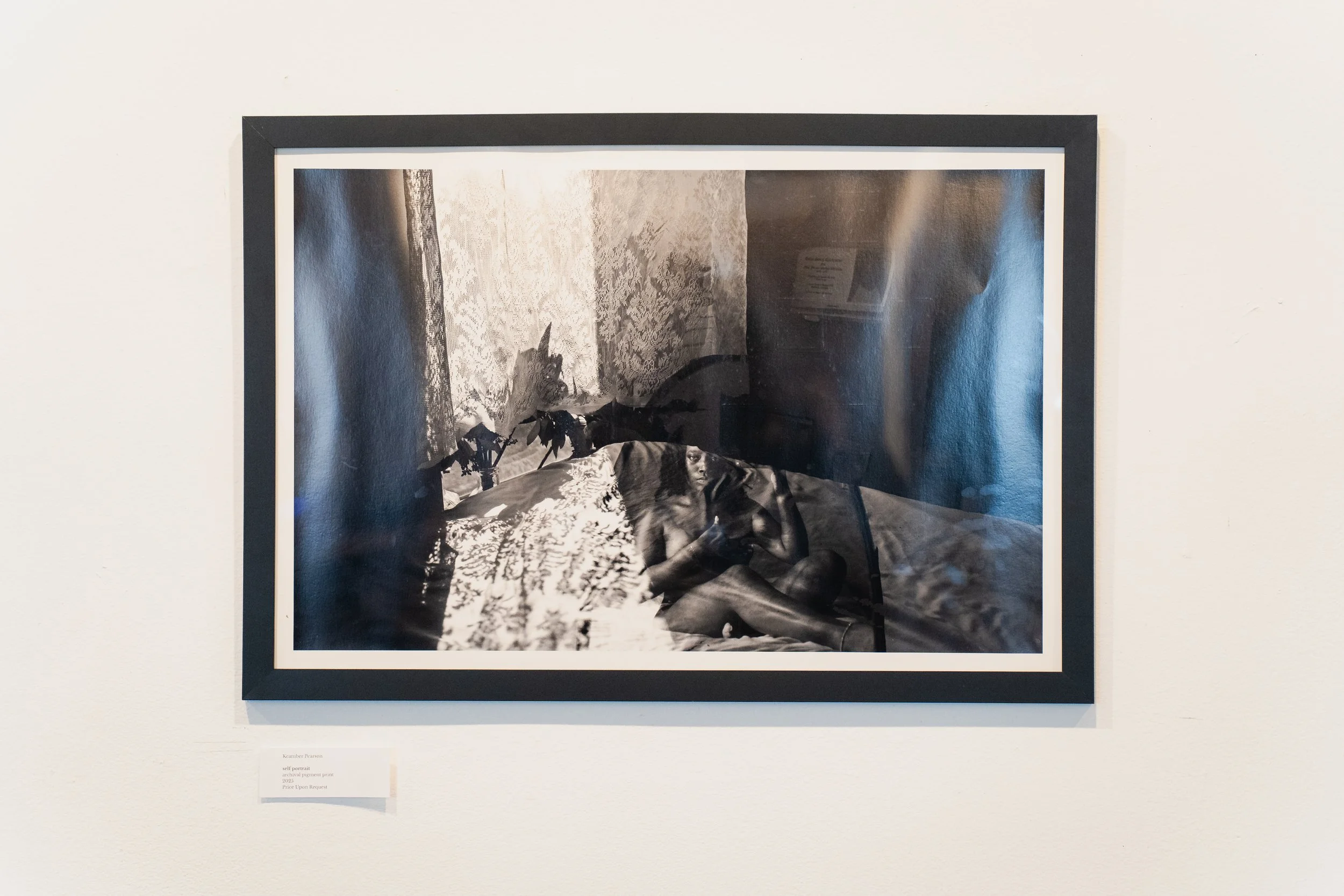
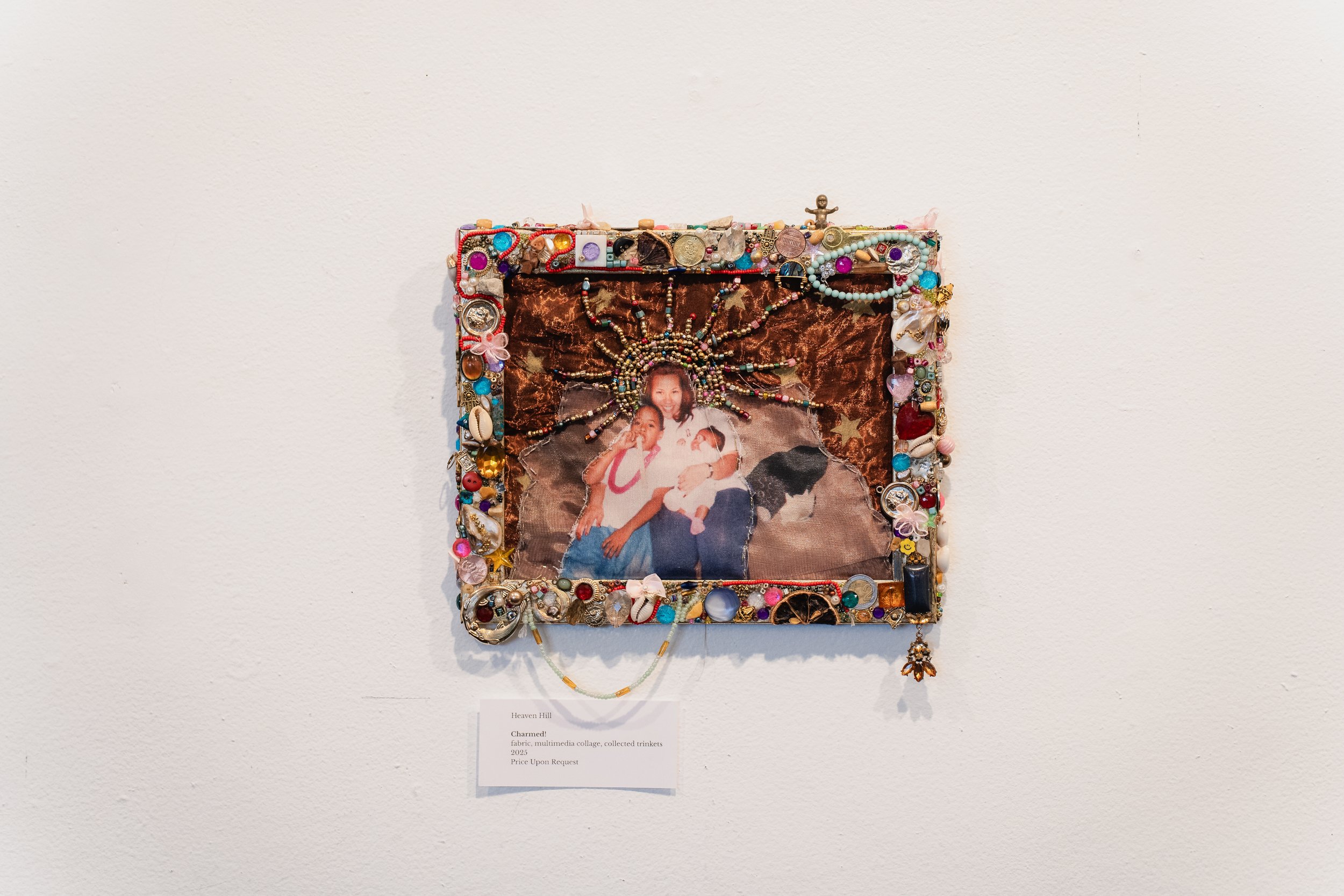
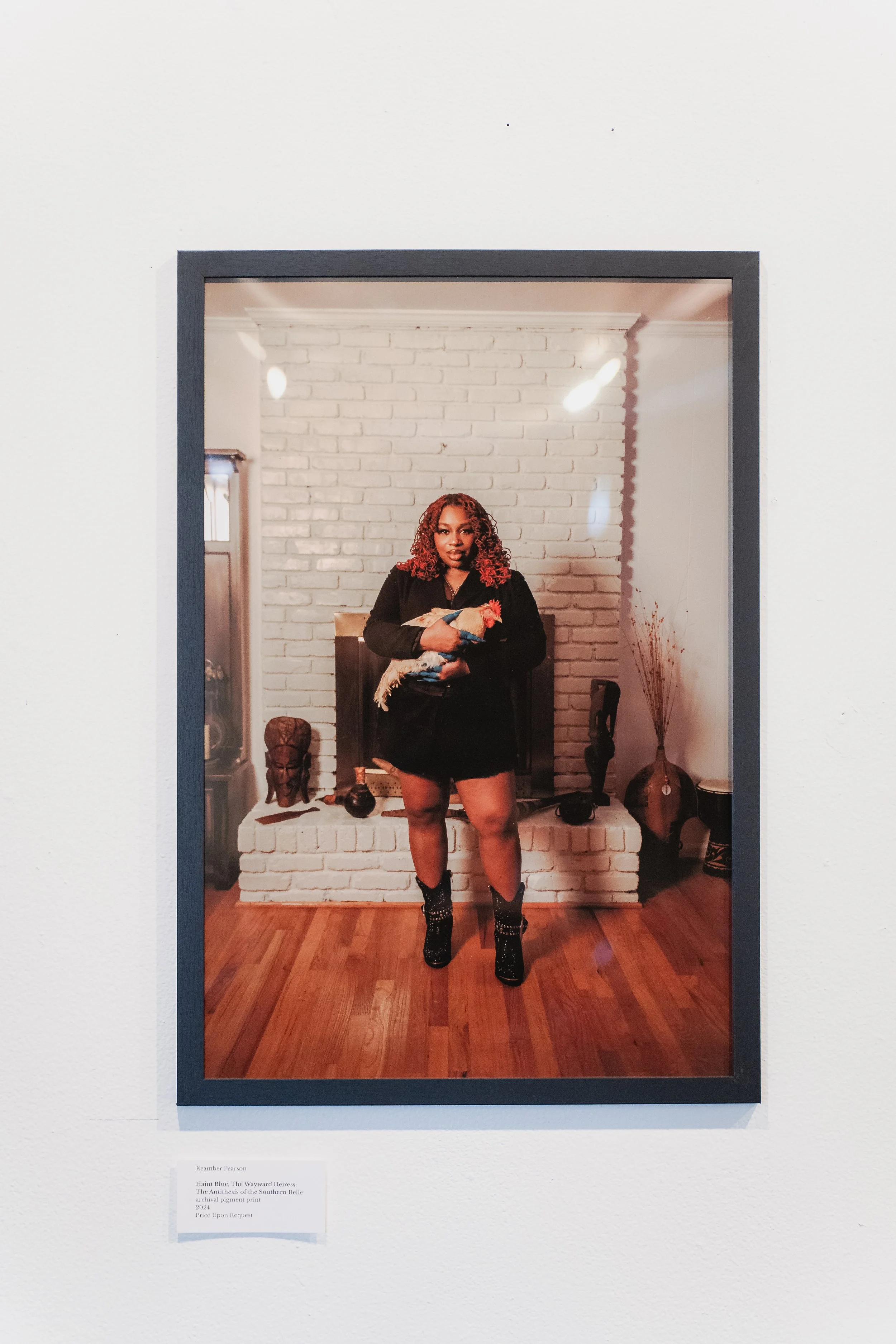
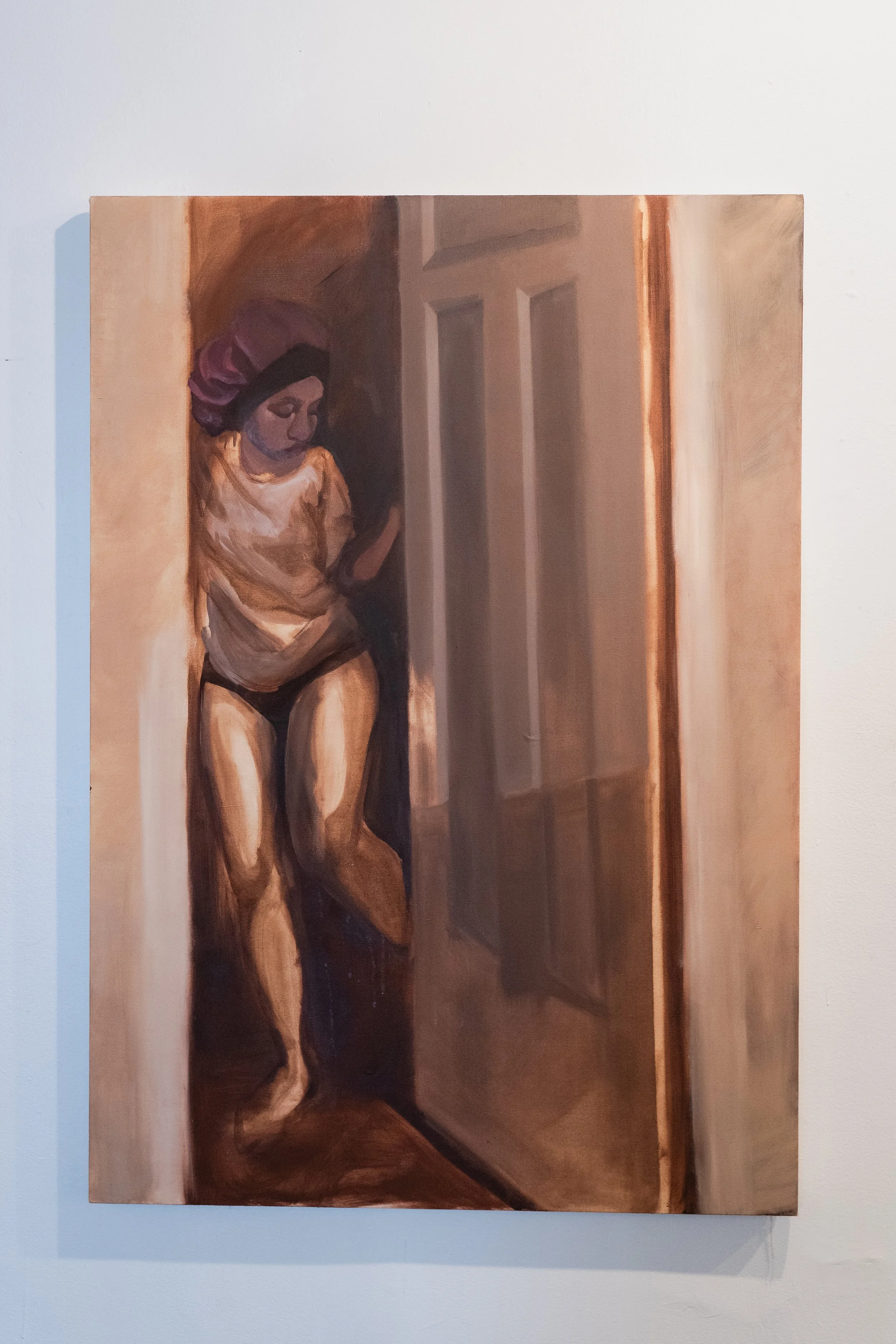
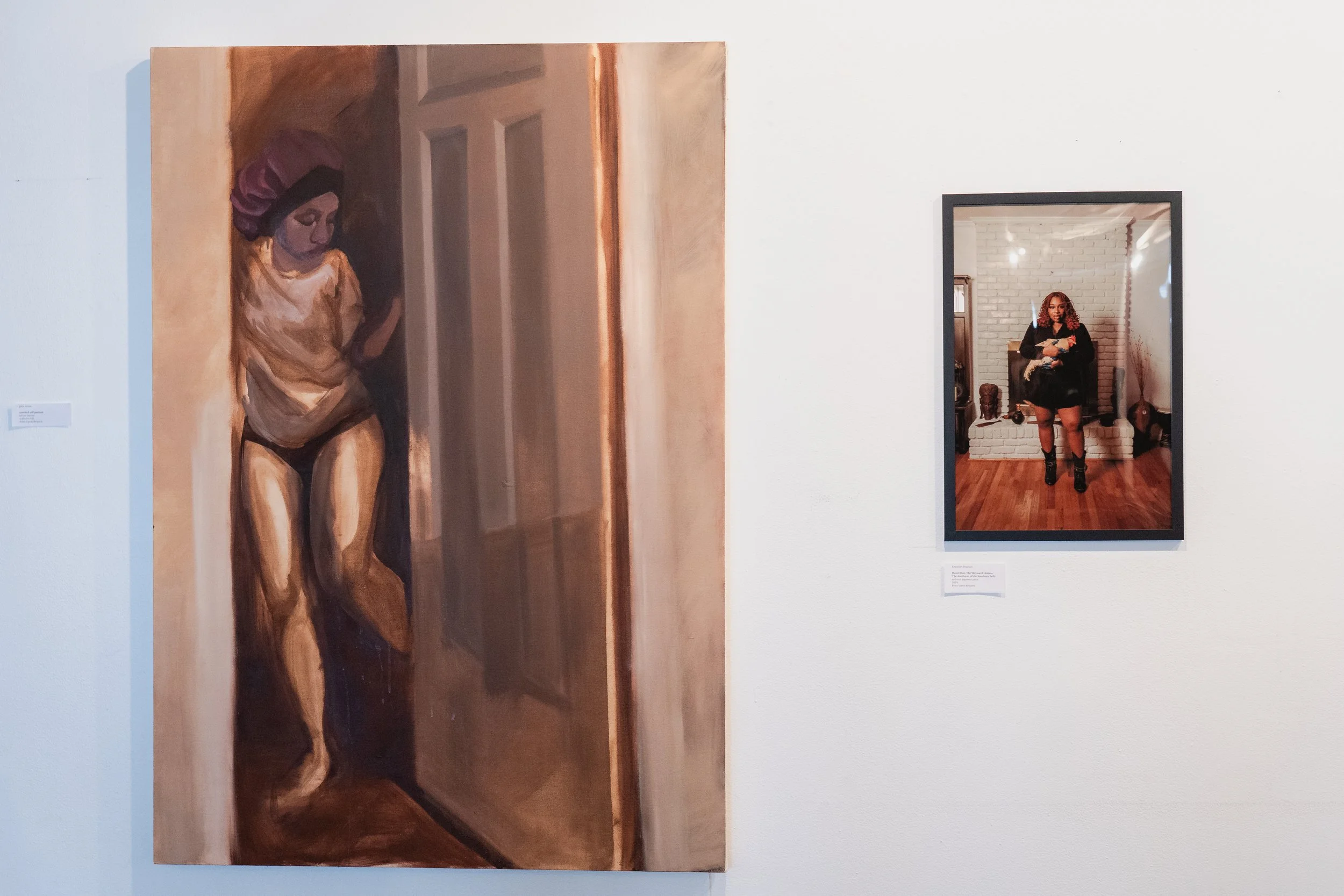
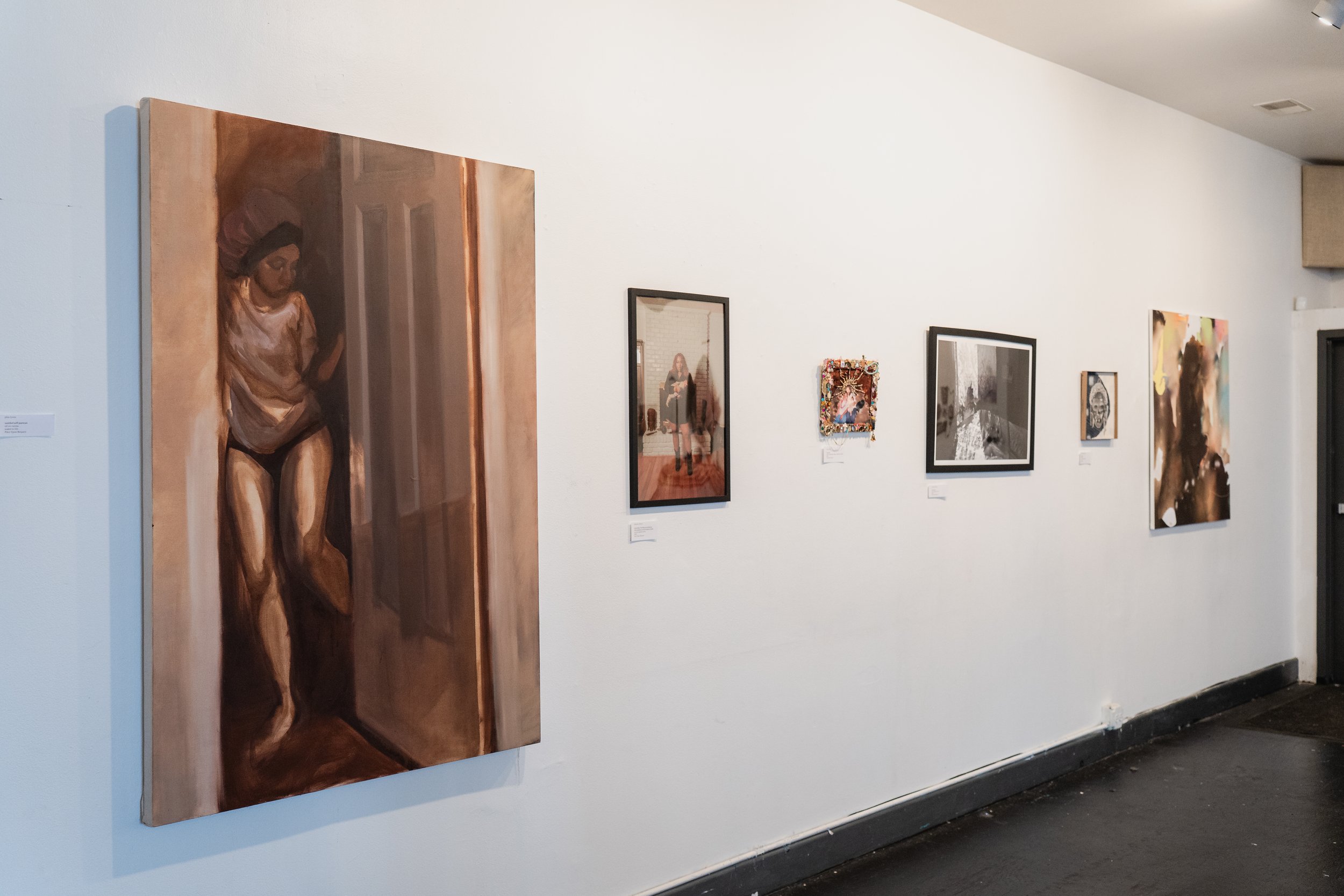
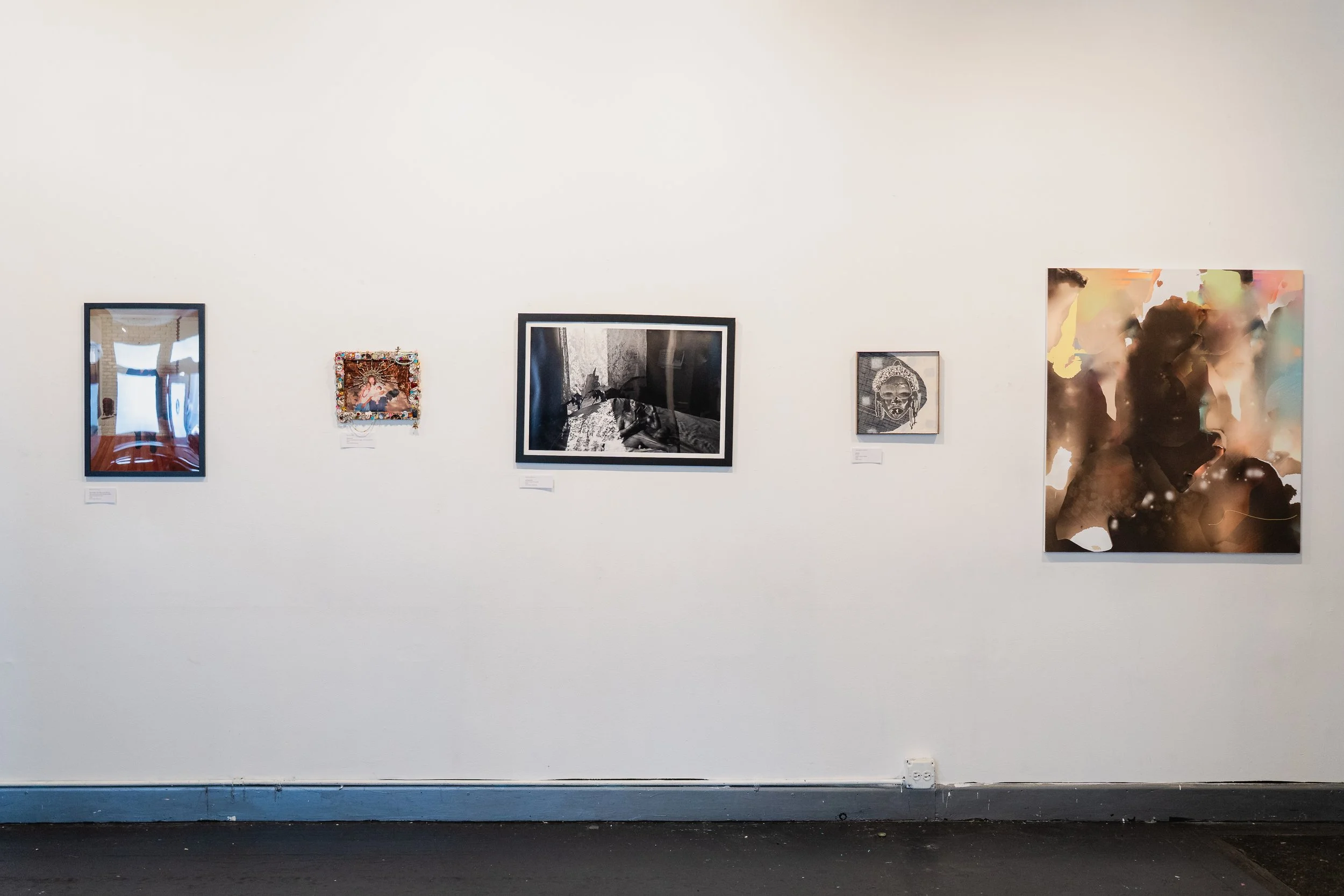
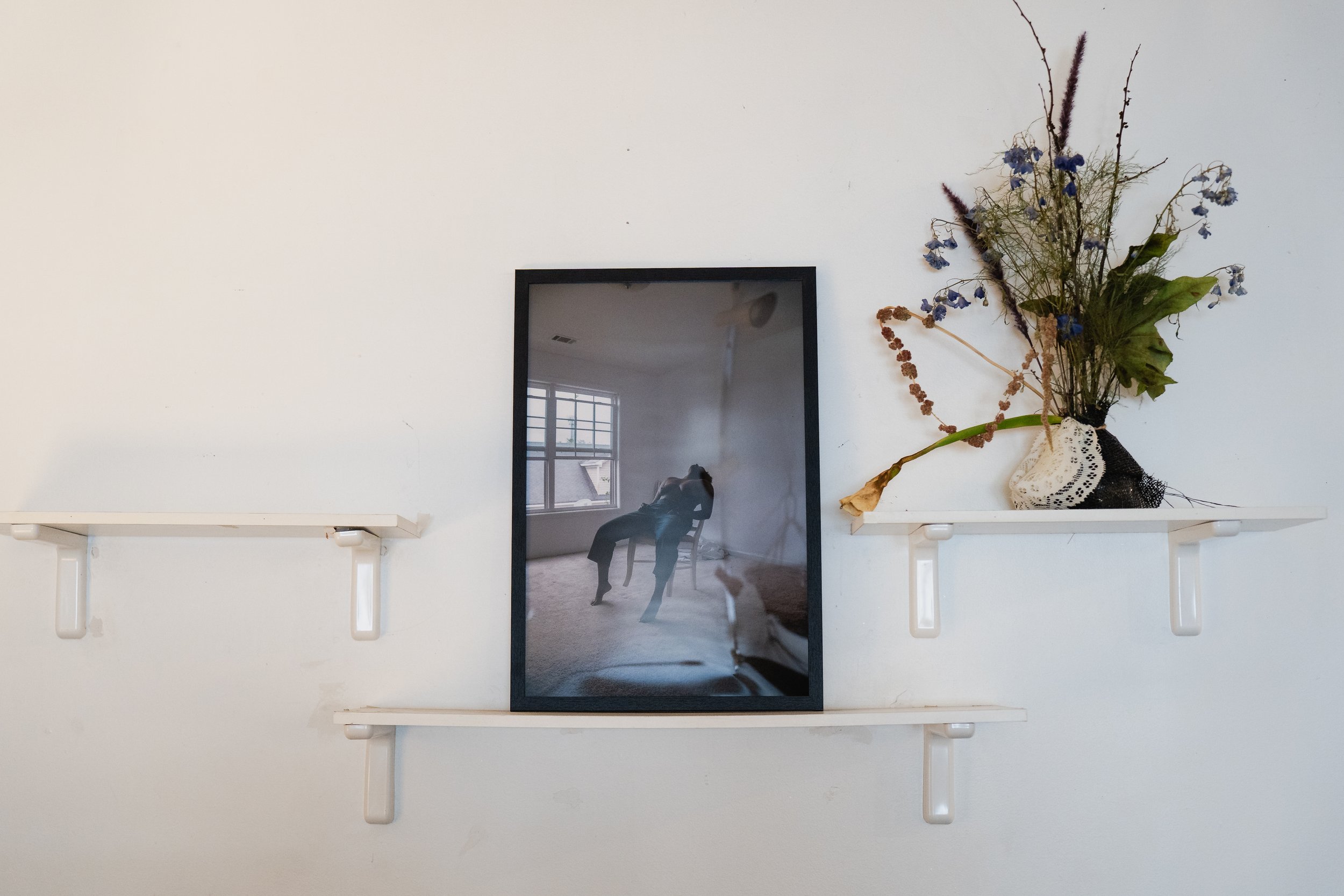
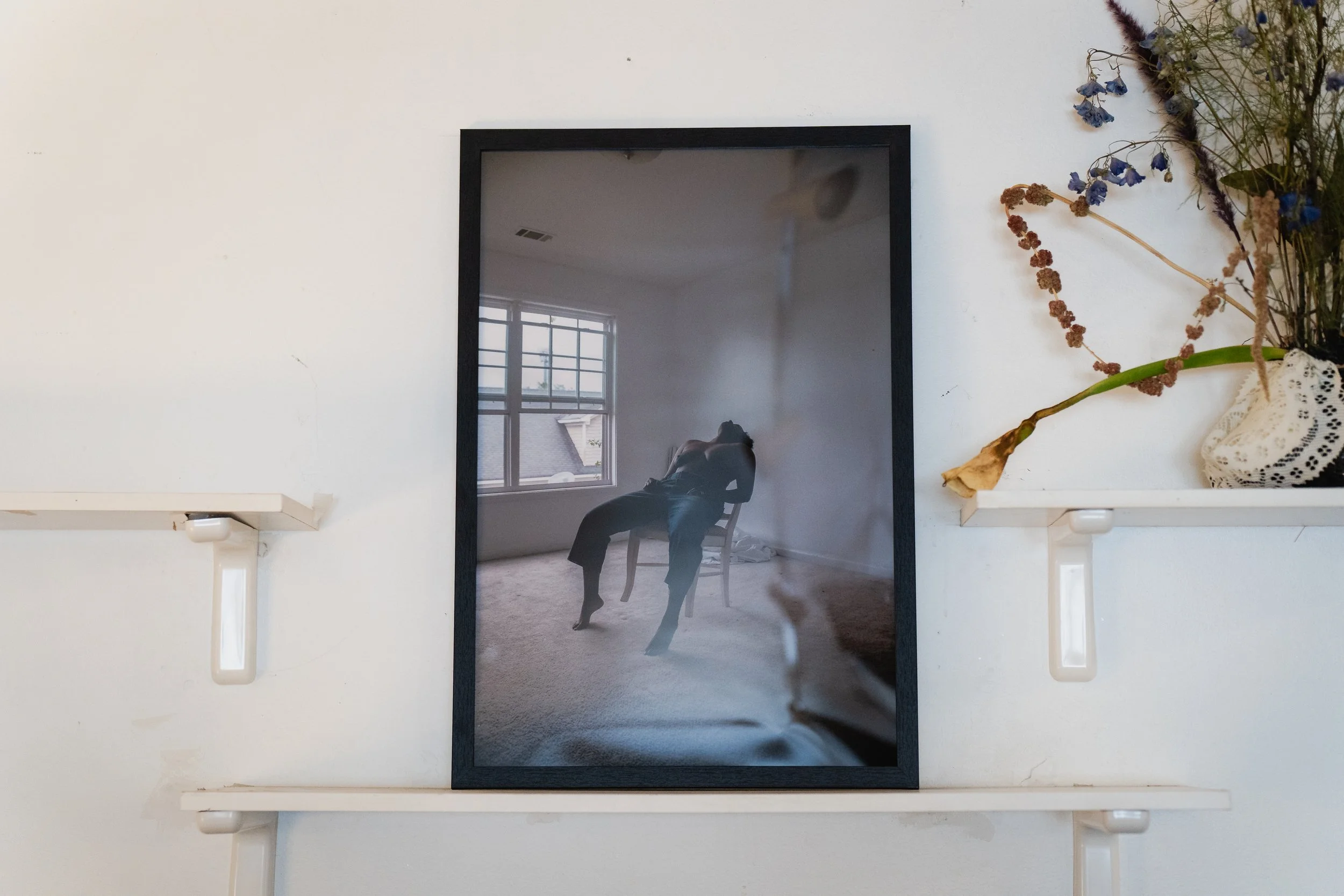
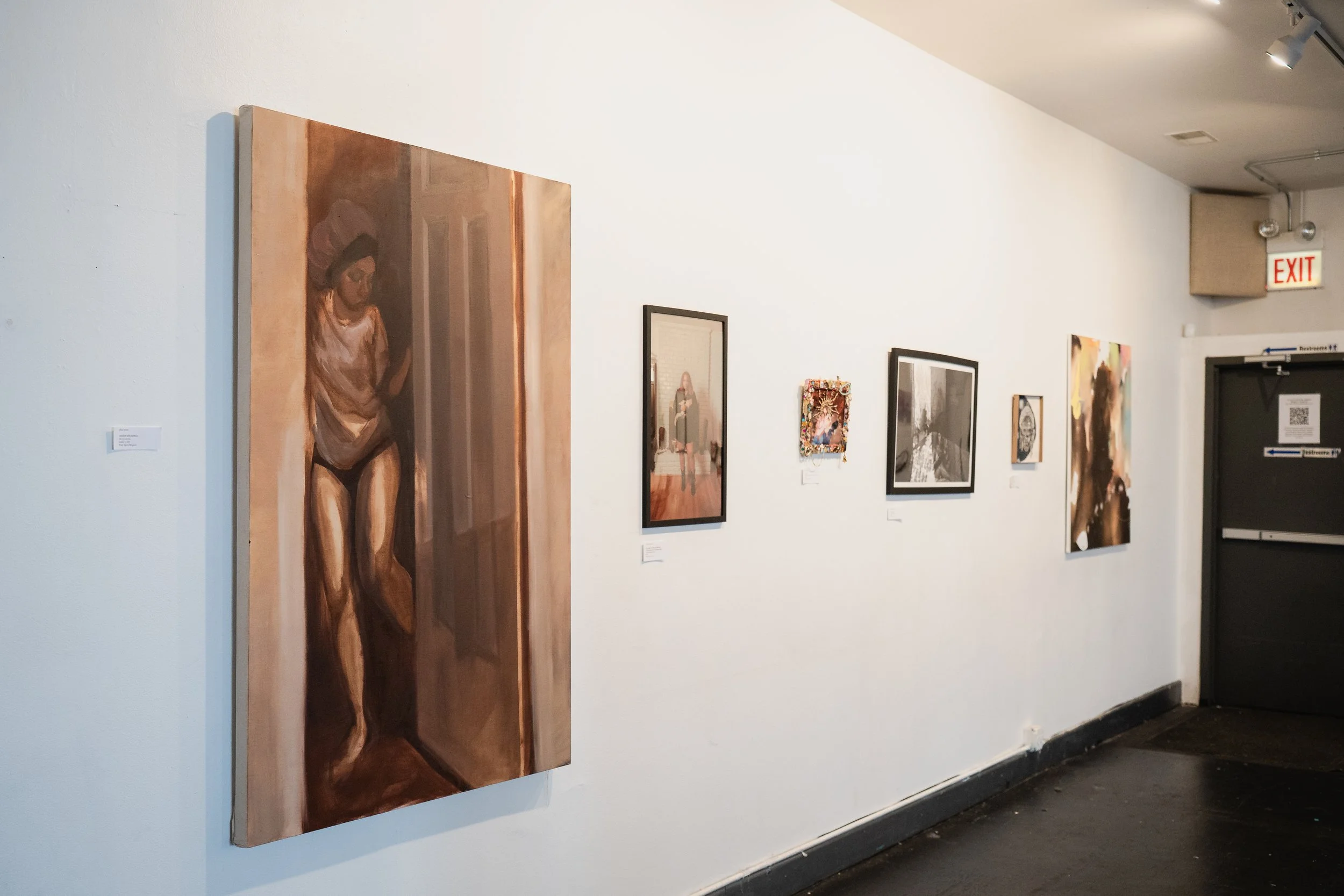
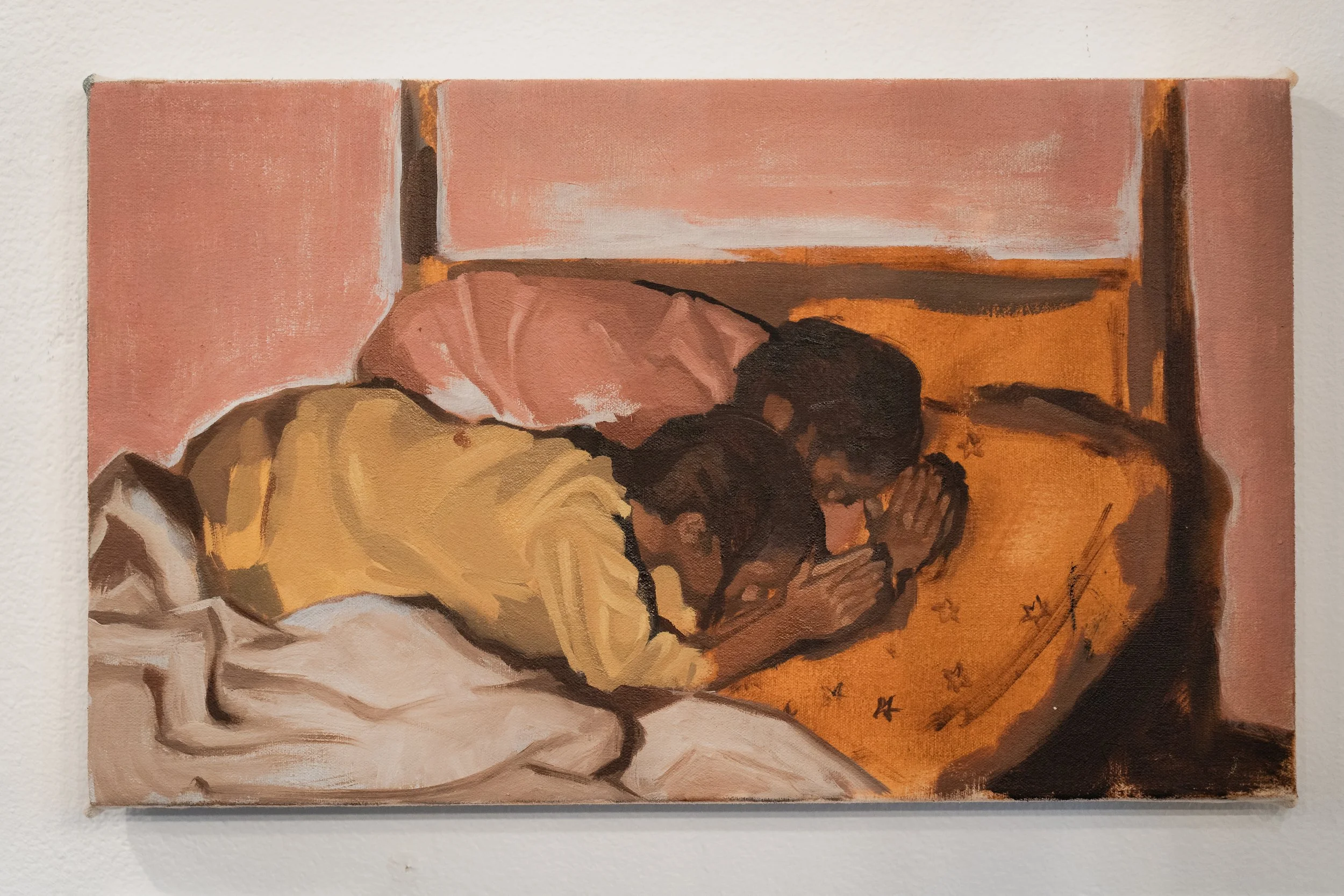
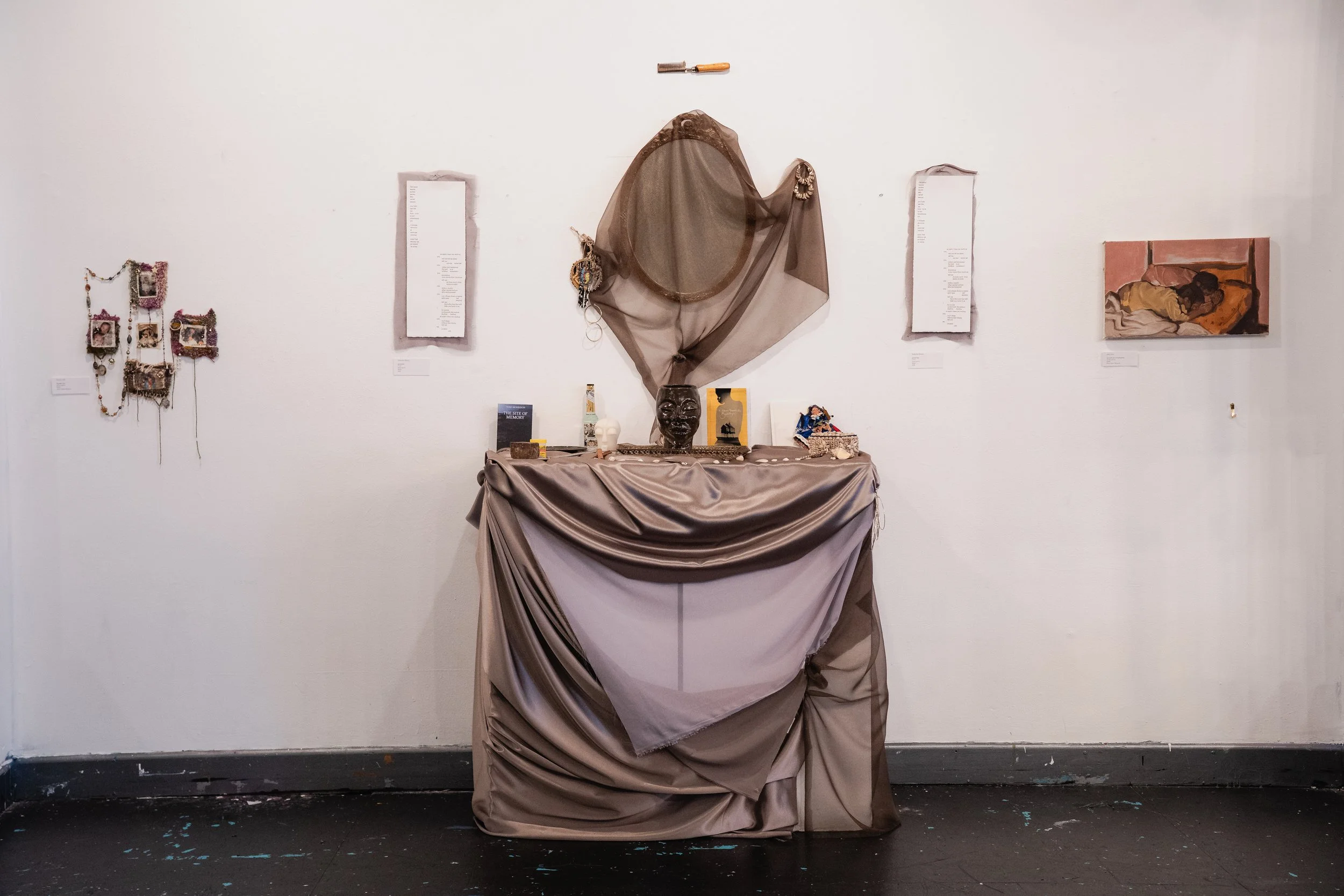
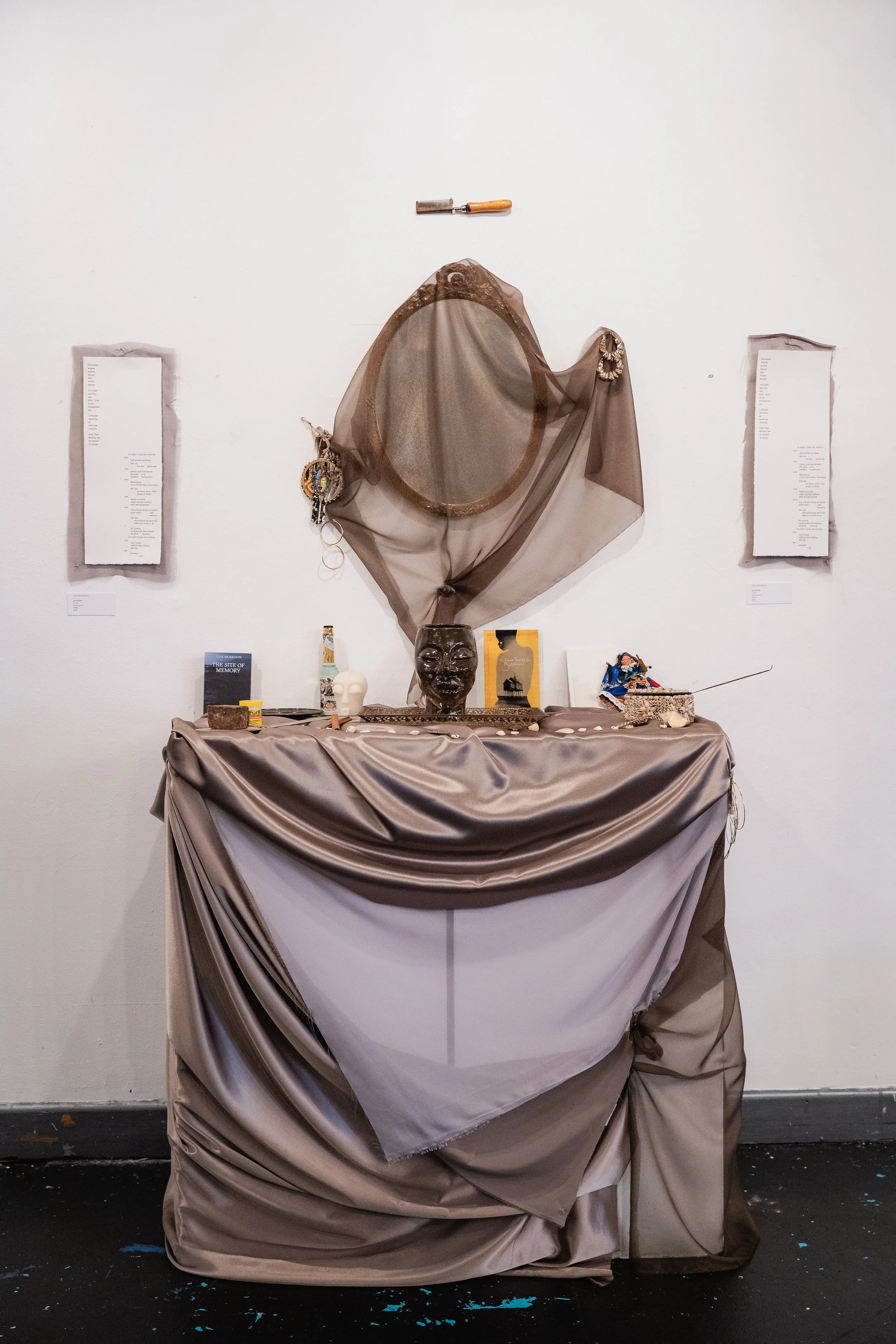
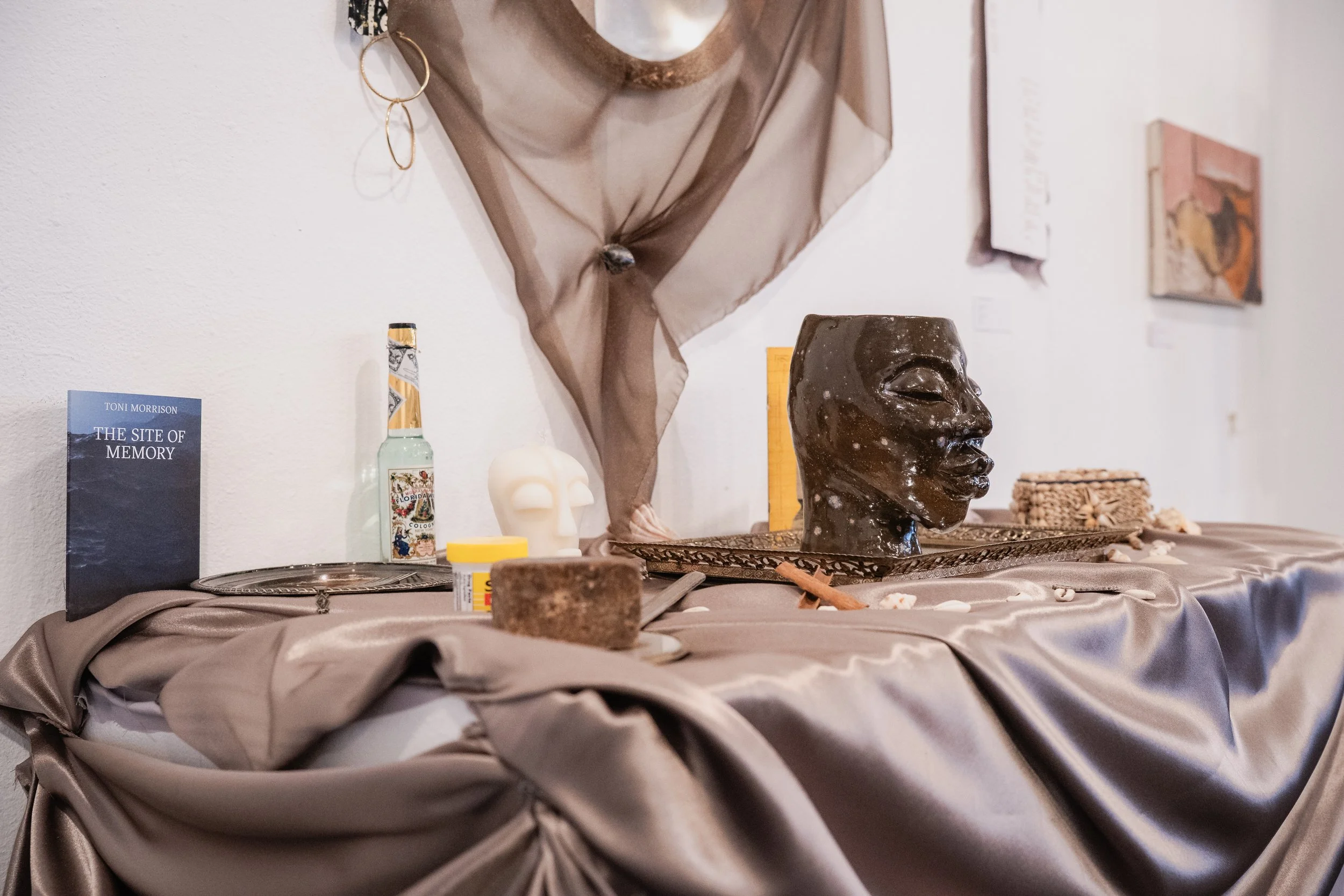
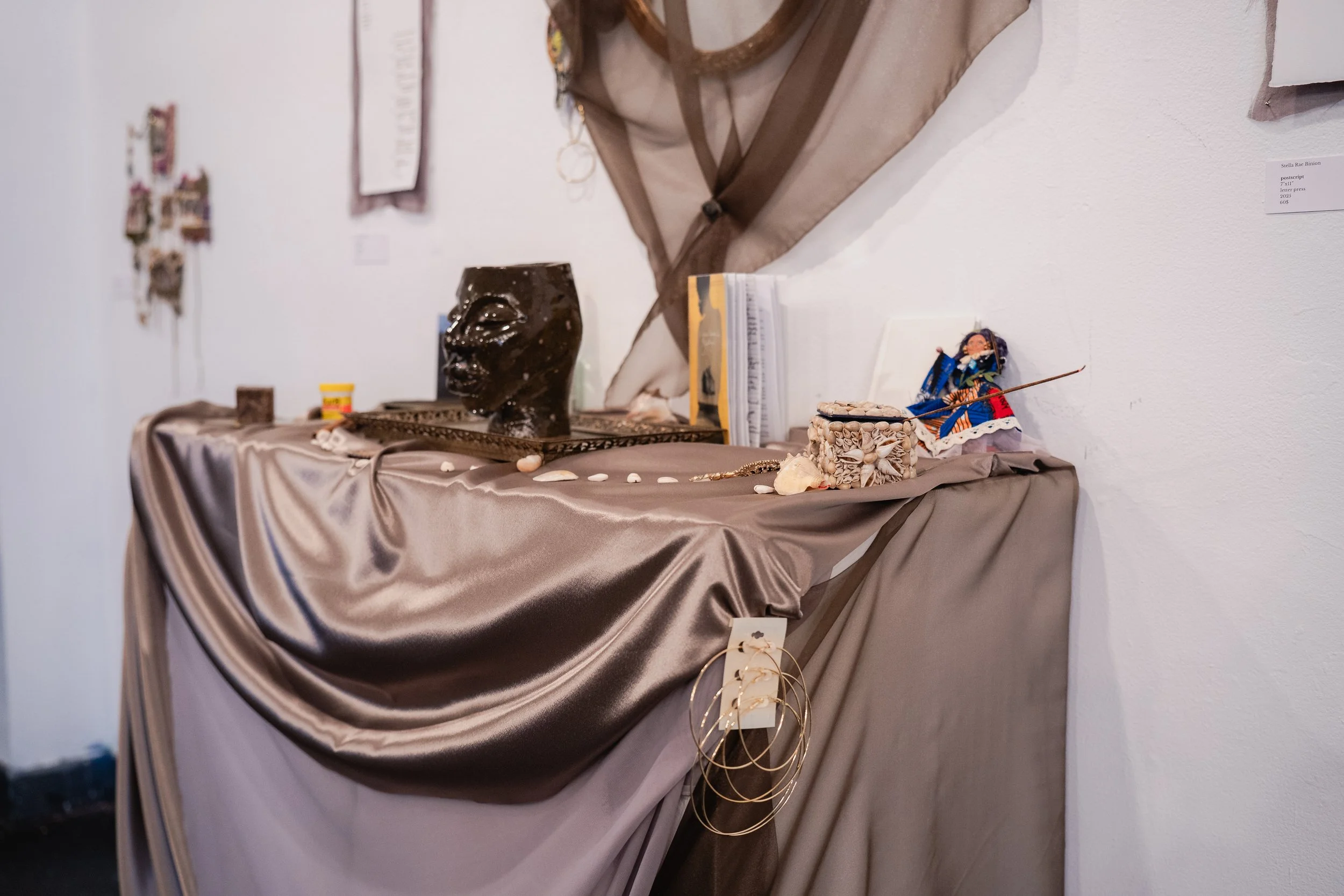
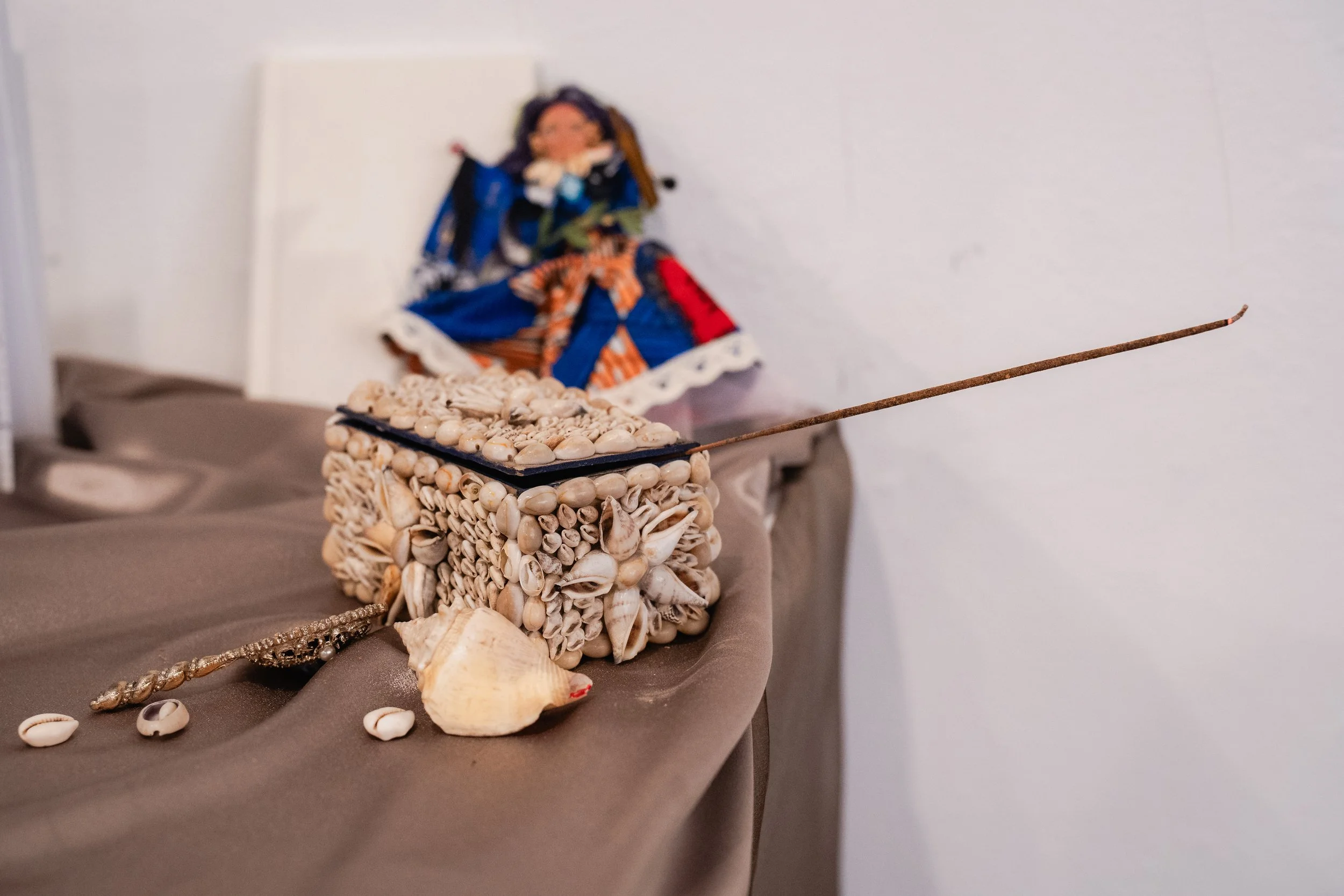
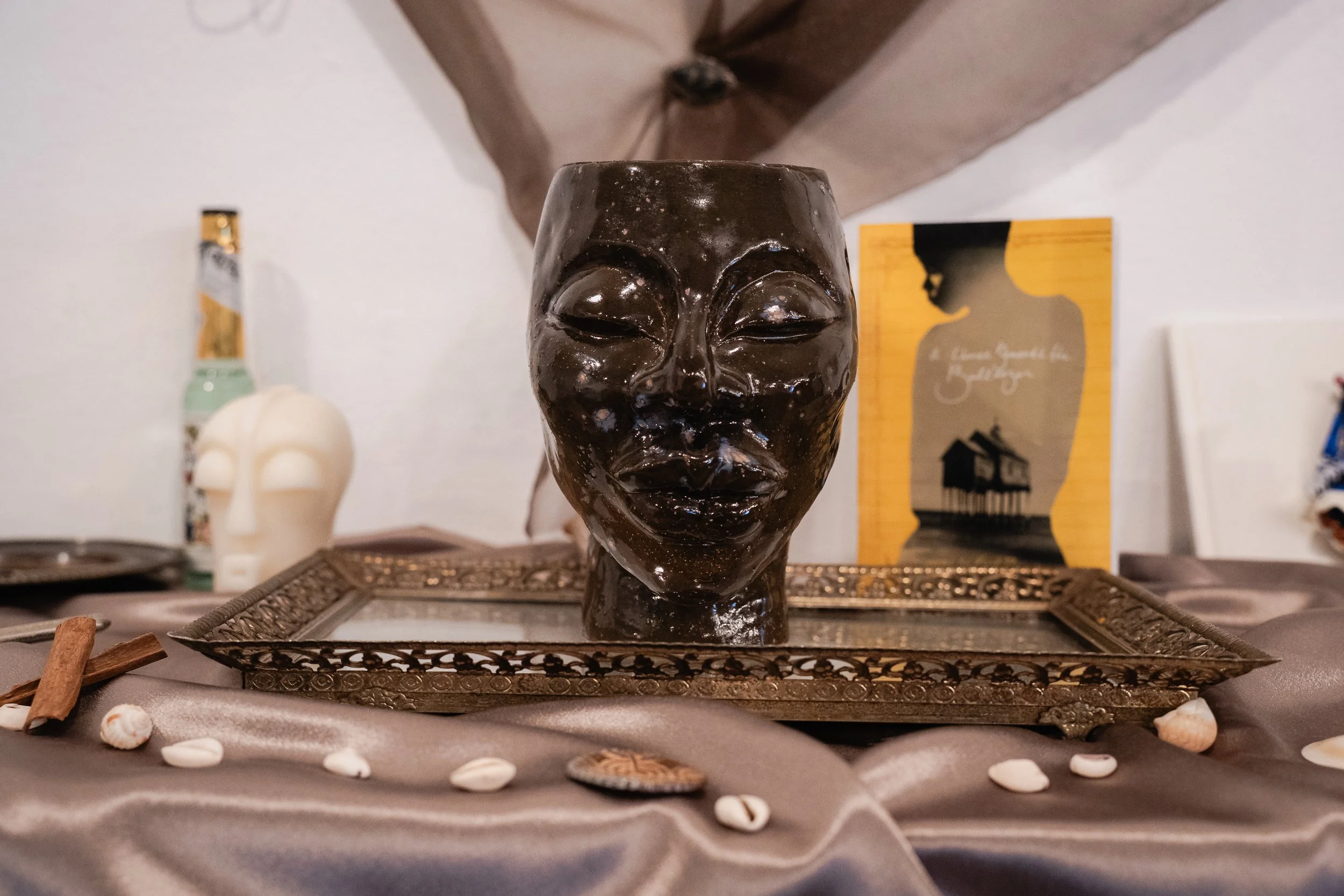
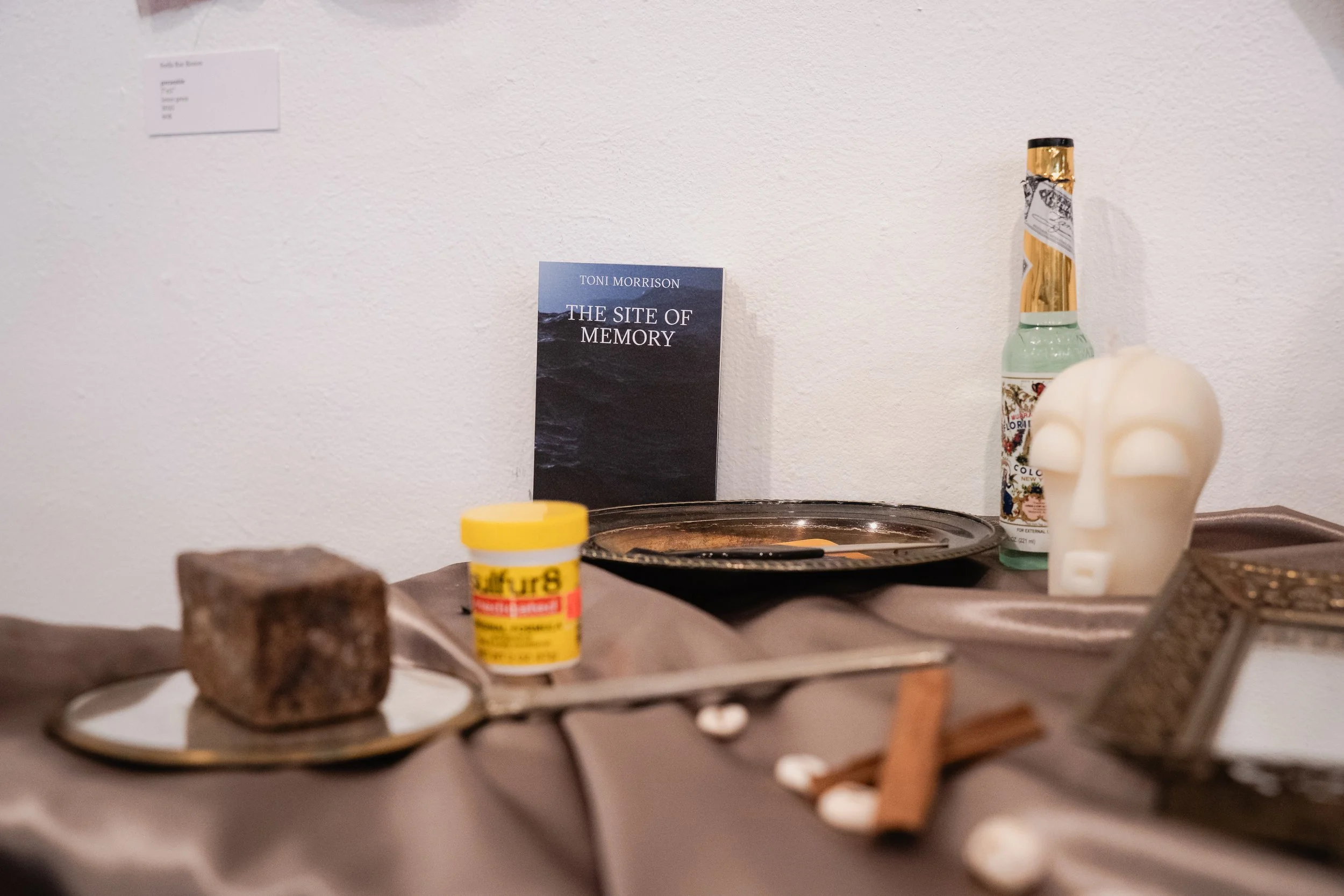
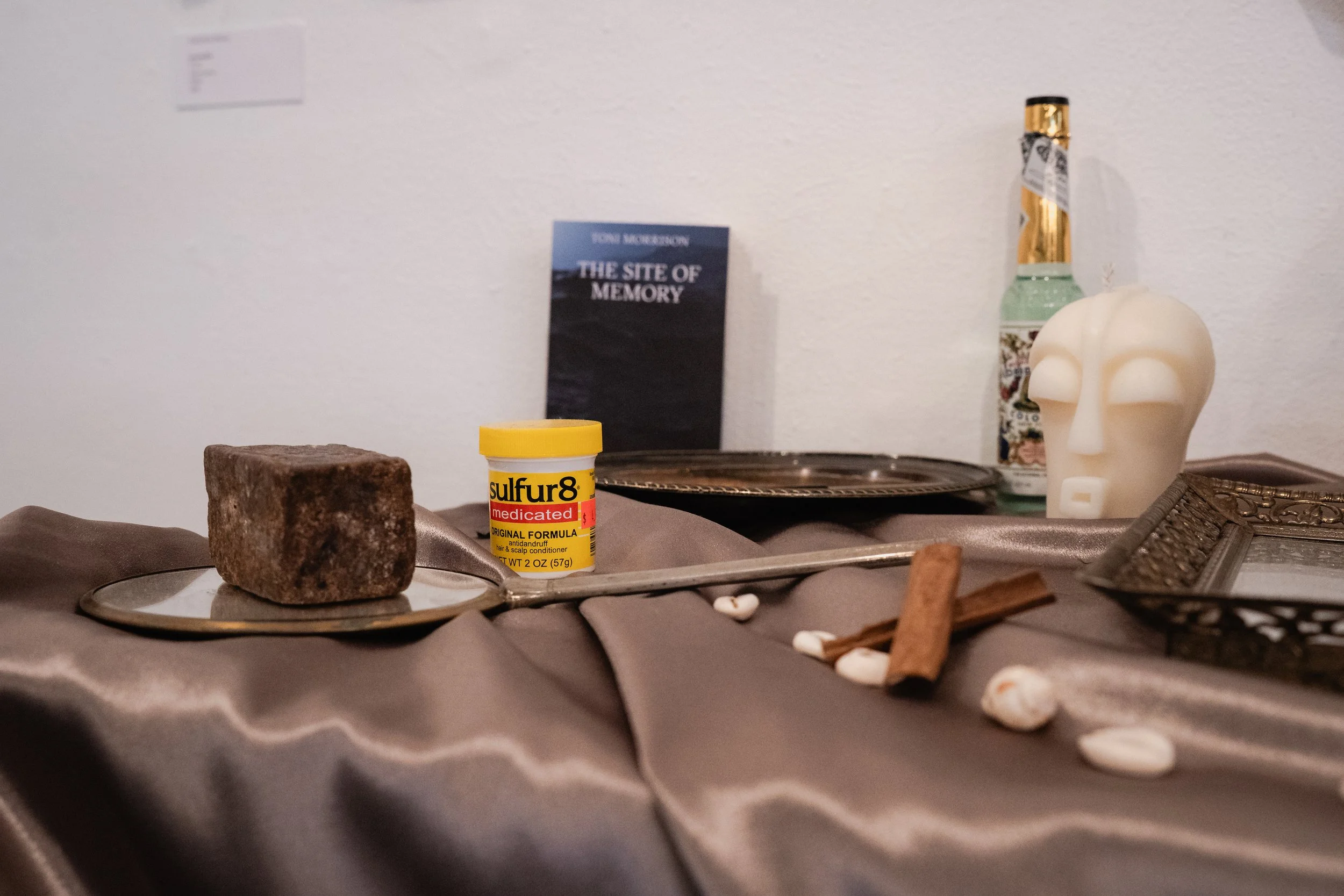
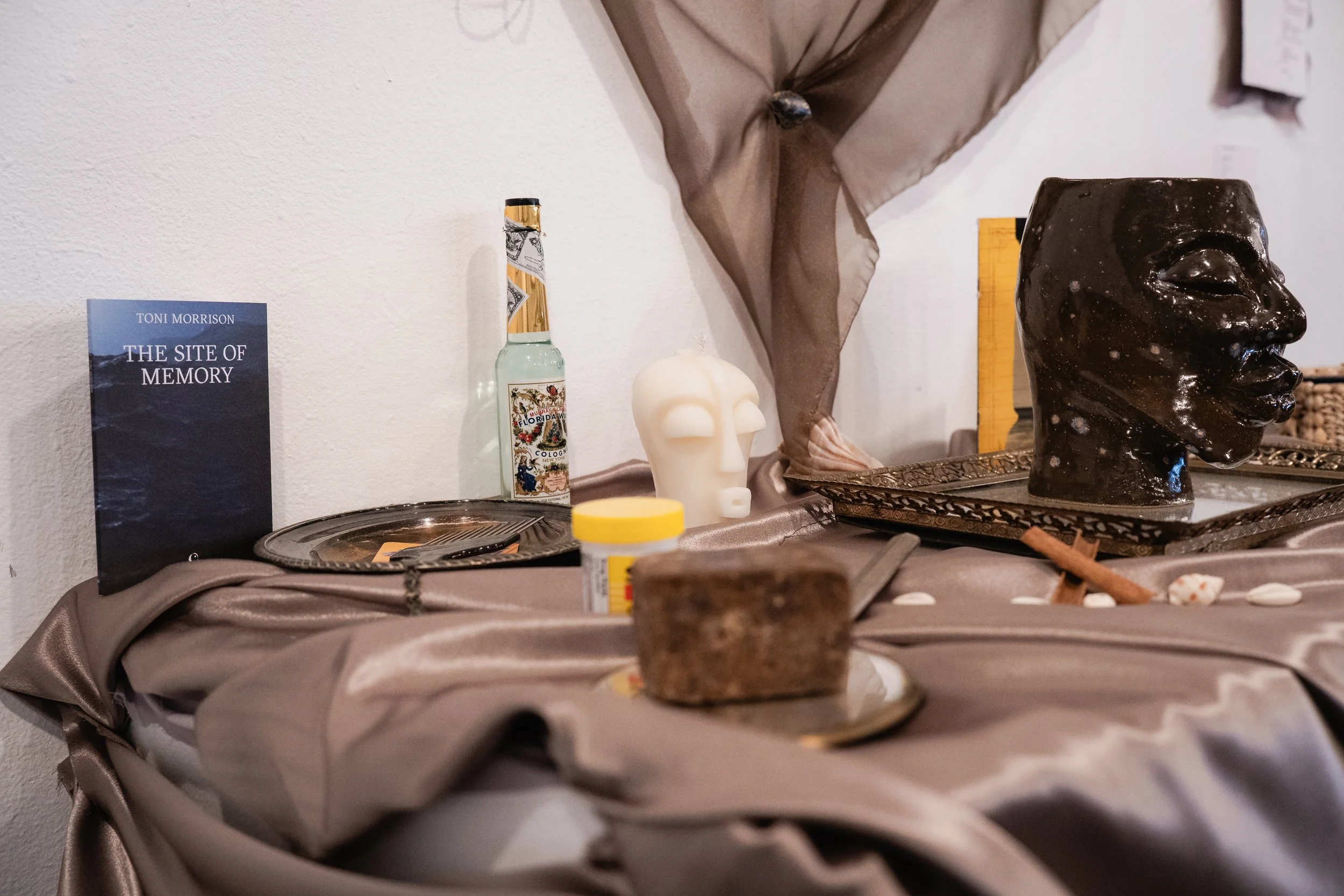
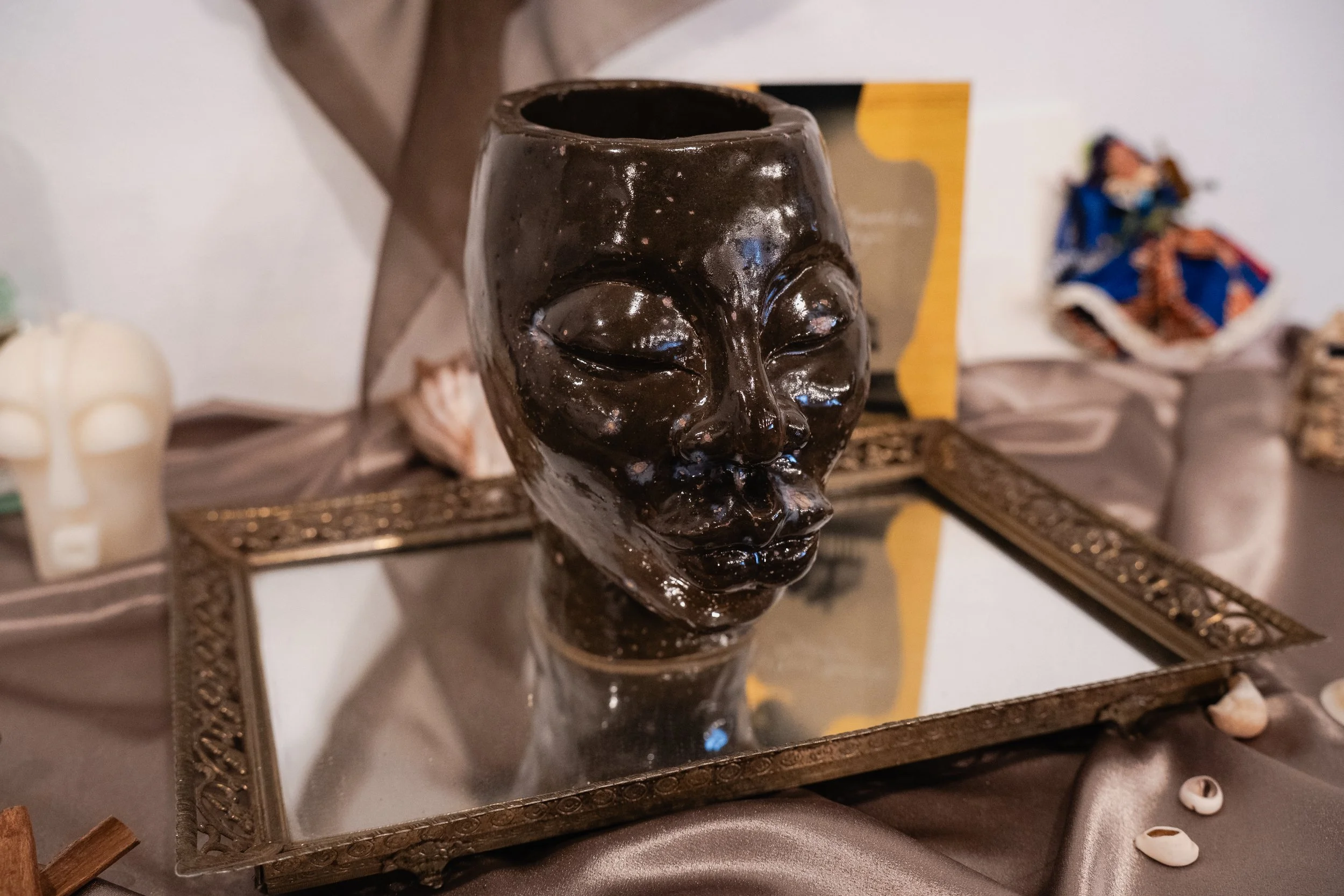
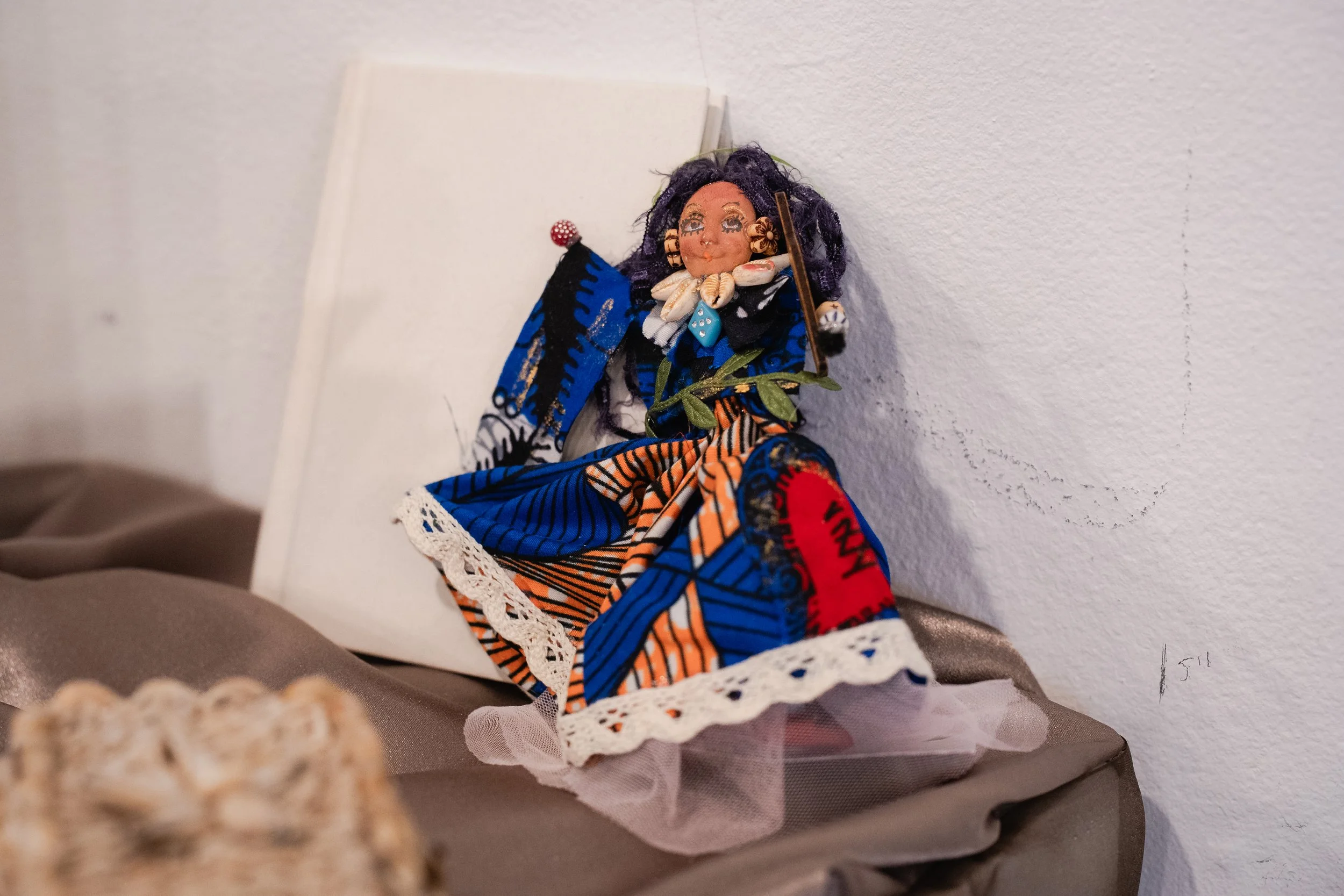
All gallery photos by Ricardo Adame
udochukwu anidobu, Lola Ayisha OgbarA, Stella Rae Binion, Keamber Pearson, Heaven Hill, phia lynne, Andrea Coleman
Too Tender Headed
Too Tender Headed serves as a sensory ritual for reclaiming our divine sensitivities and memory-keeping around our tenderness. In ode to the 'two & tender headed', this installation asks us to call back our sensitive nature contrasting societal conditions for survival that demand our hearts hardening. As the virtuous saying reveres “where two or more are gathered” in the name of pleasure or protest, there is also tenderness. Here, we carve space for the sacred, investigating exactly when we began alchemizing our corporeal sentiments into indifference. How do we return to our heads?
Most specifically, the black femme experience is one that knows the duality of tenderness and madness. Drawing inspiration from Lucille Clifton’s poetry collection, “Two-Headed Woman”, and Kush Thompson’s poem, yea/thou I walk through the valley of shower sex/I will fear no water, this gallery serves as an aid in our returning from our minds dwelling, back into our bodies. Through sound conjure, collage, poetry, painting, and photography, this collection desires us to implore our individual giftings. To consider the ancestral technology of inherited memory, our lived experience, & tenderly hold these in unison.
A ‘Two-Headed’ person(s) in Black and indigenous cultural lore are peoples holding divine gifts attributed to sensory sight, heightened intuition, and an inherited pre-colonial relationship to both the spiritual and physical world. Many of us grew up protected by praying grandmothers, who held gifts of sight, dreams of foretelling, clairaudience, fortitude, and herbal or somatic healing. From those descended from generations of Black southern mothers throughout the American south, history revealed our pre-colonial spiritual rituals were hidden within the fabric of forced religion, in hopes they may sustain. Many of these rituals included physical traditions evolving hair that revealed clues around our interpersonal state of mind, desires of protection, communicating pathways to freedom, or even holding rice and grains in times of displacement.
Even in our adaptability, attempts to survive may callous an innate tender nature towards an irreversible maddening; one that leads to righteous anger with nowhere to release. With parasocial laws policing our head and hearts expression, the intuitive connection we hold to divinity is often demonized & culturally suppressed. This attempt to survive without our heads is seen as an achievement attained through numbing and sensory detachment. Kush Thompson’s poem speaks to the sacred cycle of keeping one's head, reading;
“to have set myself on fire
is to drown this holy haunted continent
the sopped Ouija of my edges
and all its rattled laughter
to tales about water in a blk girl's hair
to name myself this
is to say, from my scalp grows
what dies and lives again”
As a young black child, I was gifted an audacious curiosity for the sensory world I inherited, and equally encouraged to clay form galaxies that can hold all the multiplicities of my newly birthed self. I hold vivid memories of the cities I built from water and soft foam in the bathtub, moments I nestled up with park district trees and dirt, greeting each insect by a name spirit called me to. In times of witnessing verbal conflict, quiet tensions among adults, sensory play became my form of self regulation. As I got older, and was made to independently search for safety, my gifted imagination and intuitive inheritance became threatened.
Holding fast to our heads and tender scalp becomes a selective ritual in a world insistent on desensitizing us to witnessing irrefutable harm. This gallery is meant to emphasize tenderness as not merely a feeling, but as a somatic map of medicine in a world where the crossculture black tenderness and survival rarely meet without resistance.
What if we allowed our sentiments to meet our sensibilites, even if it meant feeling the world more sharply?
_____________________________________________________________________________________
Interview transcriptions answered by contributing artists udochukwu anidobu, Keamber Pearson, Andrea Coleman, and Stella Rae.
Have you ever been called sensitive or tender-headed?
Keamber: I have always been told by my family that I am sensitive or too sensitive. And a lot of times it used to rub me the wrong way because I thought it was mainly attributed to my mental health and like the stigmatization of that. But as I've gotten older, I've realized how much more beautiful the world is because of my sensitivities, because of how open I am to feeling, to seeing, all of those things. Yeah, I wouldn't want it any other way. I'm like, life is supposed to be lived fully. And if I am not in touch with myself and how I connect with the world, how can I truly say I've had a beautiful life at the end of this life?
udochukwu anidobu: You know what? Yes. And I have the perfect anecdote. Um, was it fourth grade? [laughs] I'm so serious. Fourth grade, my mom was taking my braids down one day, and I don't know, maybe she was having a bad day, but she was entirely too rough on my head. And you know that spot in the middle of your head, right at the tippity top, the temple, the swirl? Right. The crown. Right. Was dragging a comb through my shit. I was screaming. We cut my hair that day. Yes. I had a low cut for two years, three years after that…So yeah, I have been told I’m tenderheaded. And I know realistically, I have a pretty decent pain threshold. Even when I got my piercings, I may have let one tear slip. But I don’t have a high threshold for a lack of care…
Describe your relationship to madness. Describe your relationship to wholeness.
Keamber: My relationship to madness. I feel like I've always been proud of myself, or thought of myself as someone who's a very cool headed individual. who doesn't get mad or upset deeply or let it just show up in a way that looks like I'm unraveling. And so I've been trying to counter that and lean more into feeling upset and unedited in my emotions and how I show up through my emotions. So lately, I think I kind of... I see madness as a way to reckon with the illnesses of this world. If you are... you know, not doing well or mad or hysterical or anything like that, I think that is a healthy sign that you are in tune with yourself and how things ought to be. And my relationship to wholeness would encompass allowing myself to be mad more, to be upset more, to cry more, to allow myself to exist in like the first way that comes up. And not trying to override it for something that is more accommodating for other people's comforts. So I would say my relationship to wholeness is first honoring and questioning, not even questioning really like what's going on with me, but just giving it more language and being like, okay, that's all right. This is a part of this experience. And the whole experience is just the sum of parts, and all parts ain't going to be pretty. So I would say that's what wholeness is to me.
Andrea Coleman: My relationship to madness is kind of a beautiful dance. As an Aquarius, I think we're somehow embodying the madness. We are the water barriers of everyone's emotions and actions, and I'm able to not necessarily consume it, but take it in, filter it, and come out with this creative energy from that. I'm able to be a vessel. I'm able to be this kind of circus of emotions, but also am able to ground myself. So my relationship to madness is quite lovely….My relationship to wholeness is completely grounded in who I am and being very confident in what that is. And not being confused by any means or being deterred by any influences, but being very myself in every circumstance, experience, environment that I'm in. And being completely unapologetic for it, which is my favorite.
udochukwu anidobu: I wish I was more mad externally. I feel like internally I'm a very insane person in a controlled way…I feel like if my inner thoughts became external, people would see me as a crash out. And I wish that I had the capacity to crash out more so that people understood the extent of how I feel things. But that's very difficult for me because I feel like I was socialized in a very specific culture, in a very specific way, um, as a very specific gender. Hmm. So I've gotten to a point where I know how to navigate things to make the people around me comfortable, and I value the comfort of the people that I care about, so I reign myself in a lot… And I've been playing around with this idea, not so much madness, but ugliness, as the politics of aesthetics are leaching into every aspect of our lives. But some of the ugliest characters in our society are able to exercise a level of instability outwardly with no consequence.
where do you feel discernment in your body? (describe where it hits you)
Stella Rae: I'm an Aquarius, so unfortunately, I feel discernment in my mind first. I have to kind of work to, bring it into my body. I think I definitely have gut reactions. Like the brain of the body, the gut will tell me something. Also I feel like my skin temperature will let me know. If there's, like, a shift in my body temperature, I get goosebumps or… something just feels a little off. That is an important distinction, an important signal for me.
Listen to the full interviews here https://www.harlemmasimba.com/sonic-works
Artist Bios
Stella Rae Binion
stella rae binion (they/she) aspires to breathe underwater, embodying an ongoing project of “undrowning” (after alexis pauline gumbs) and speculations of black loving continuance. stella rae is a chicago-based poet, filmmaker, printmaker, and bodywork practitioner. their practice includes poetic research, investigations within fugitivity and the black outdoors, honor work as prayer and divination, witnessing through language and imaging, and the celebration and protection of black queer people. stella rae received a BA in media theory and creative writing from brown university in 2023.
Andrea Coleman
Andrea Coleman is a Chicago-based visual artist, writer, and storyteller who channels the essence of her suburban roots and draws inspiration from animation art and mural concepts. She delicately explores the interplay of aura and narrative through mediums such as paint, fabric, and personal archives, offering a glimpse into the acts of reminiscing and honoring. Coleman graduated with a Bachelor of Fine Arts from Columbia College Chicago and has received notable recognition, including the A+T Seed Grant and the Make A Wave Grant from 3Arts. As a former artist-in-residence at the Chicago Artist Coalition, she was named one of the Breakout Artists for Chicago’s Next Generation of Image Makers in 2021. Her work has been featured at prominent fairs and galleries, including EXPO Chicago, Kavi Gupta Gallery, and Blanc Gallery, further establishing her presence in the art world.
Lola Ayisha Ogbara
LOLA AYISHA OGBARA is a Nigerian American conceptual artist from Chicago, Illinois. She has earned a BA from Columbia College Chicago and an MFA from Washington University in St. Louis. Her practice explores the haptic sub/conscious, racialized voyeurism, and transcendental sonic experiments. Ogbara has exhibited in art spaces nationwide, including The Luminary, Kavi Gupta, Kemper Museum, Mindy Solomon Gallery, and Kristen Lorello Gallery. She has also received residencies, fellowships, and awards from Alfred University, Arts + Public Life at the University of Chicago, the Coney Family Fund, the Chicago Department of Cultural Affairs & Special Events, and many more. Ogbara is currently based in Chicago, Illinois.
Heaven Hill
Chicago based artist, Heaven Hill, utilizes self reflection, personal ephemera, found material, and intuitive action in order to express the joys of Black girlhood and the cultural richness of Black womanhood. Heaven’s work sits at the intersections of fibers, collage, and print media, resulting in complex and experimental soft collages. Through inspirations such as memory and nostalgia, culture, femininity, and the West African principle of Sankofa, Heaven takes us with her, as she visually reflects upon her past, and navigates her present.
Her work has been exhibited at The Museum of contemporary art, Fortune House Art Center, and the Griffin Museum of Science and Industry
Keamber Pearson
Keamber Pearson is a visual storyteller from Haddock, Georgia who is rooted in the belief and practice of art being a tool for resistance. She wishes to empower others to tell their own stories as a means of healing. Her work is an offering to her ancestors and her most expansive self. She moves through words and photographs. The love of these mediums intertwine with her love of history and fascination with existence. She uses art to create space for her dreams and imaginings. Her work is grounded in and seeks to highlight the experiences of blackness, queerness and southern culture.
phia lynne
phia lynne is a chicago born artist, archivist, and lover. their work materializes the poetics of homeplace, sentimentality, and blackqueer belonging.
udochukwu anidobu
udochukwu anidobu is a multidisciplinary artist and landscape architect whose collage work is inspired by the memories of black landscapes from the mundane to the sensational. She collects moments in time through archival images, audio, and film and recomposes them into deeply layered compositions that examine how humans and landscapes communicate in ways that blur the lines between fantasy and reality; finite and infinite.
Related programming
Opening Reception:
April 3, 2026
Gallery Activation w/ Kush Thompson:
May 2, 2026
Closing Reception:
June 14, 2026