
Alexa gutierrez + Madeline penzel
girlhood 2
december 2025 - february 2026
Alexa gutierrez + Madeline penzel
girlhood 2
What is girlhood but flipping through J-14 magazines, long stares at the ceiling from bed, and closing one’s eyes to daydream? All of the lived realities and first embarrassments, coupled with escapism, pinky promises, and finding out which celebrity crush you’d marry through a quiz. Constant reminders, everywhere, that this is the most important part of your life: so much so that you feel like you’re experiencing it in retrospect even as it’s happening.
Girlhood is a time of lucidity, of urgency, of aspiration. It is an experience baked into most kinds of adolescence: growing up, we read young adult and children’s literature written by adults, who are looking back at their own memories in the third person, almost like a character. Through the veil of past experiences, we come to these years retrospectively even as we live them, to aspire to worlds already lost in the eyes of adults, worlds made of longing and wistfulness, worlds that we might spend the rest of our lives trying to return to. Girlhood, in a way, is fantasy, a thing that can only materialize when it has vanished.
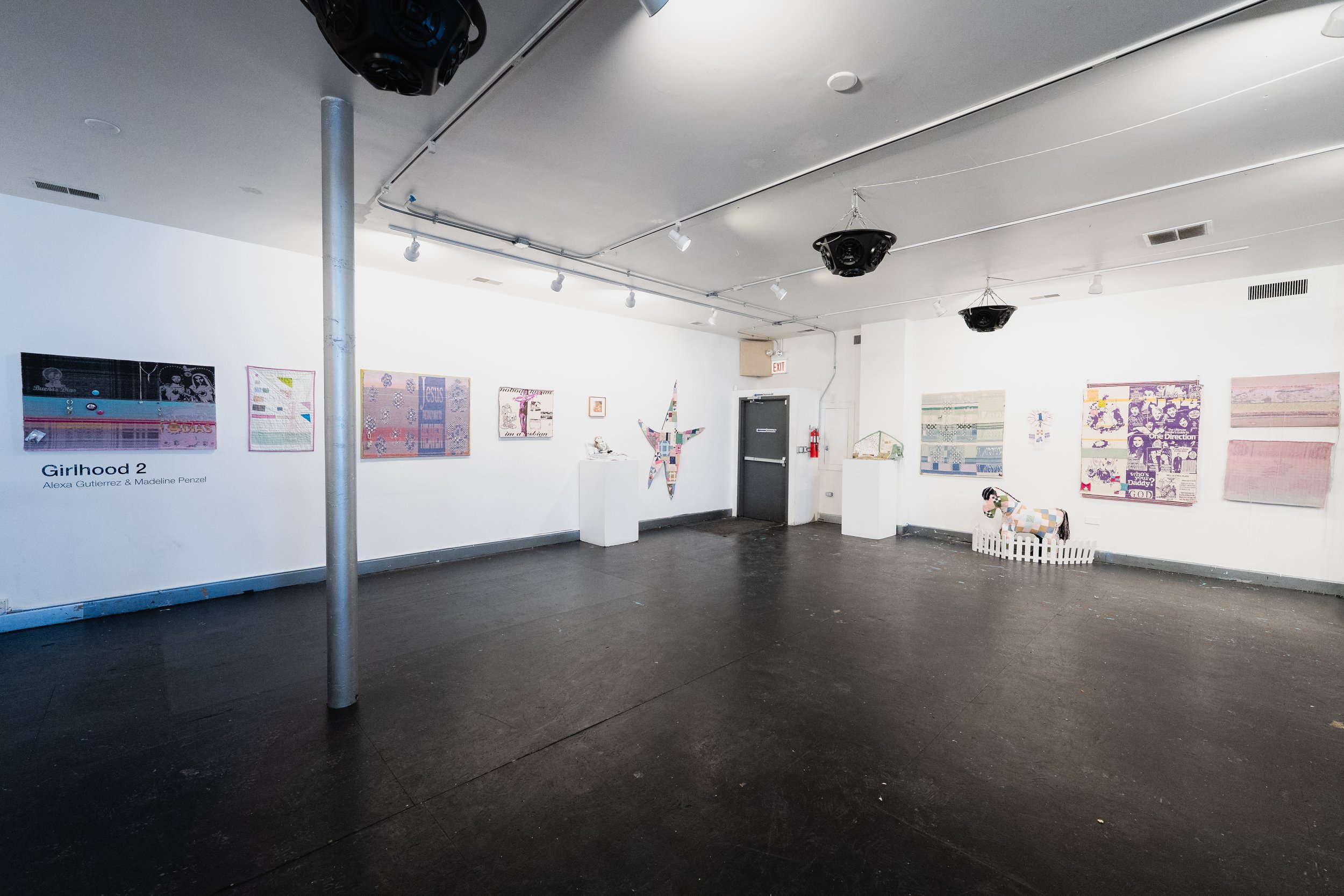
How do you make something look like a memory? In organizing this exhibit, I was interested in the effects of the afterimage, or an image that lingers long after you first see it. In memory, photos transform: they harden in bits and pieces, details fragmented through personal interests and fixations. In Girlhood 2, this metaphor of afterimage offers the idea that one’s experience of girlhood is not, in fact, the initial image we see and experience, but rather the aftereffects of it, the lingering glow and flash of light in memory. The artists of the exhibition, Alexa Gutierrez and Madeline Penzel, explore this idea further by processing image and memory in tangible forms through fiber art and collage, the lingering afterimage turned into an object woven with personal and cultural meanings.
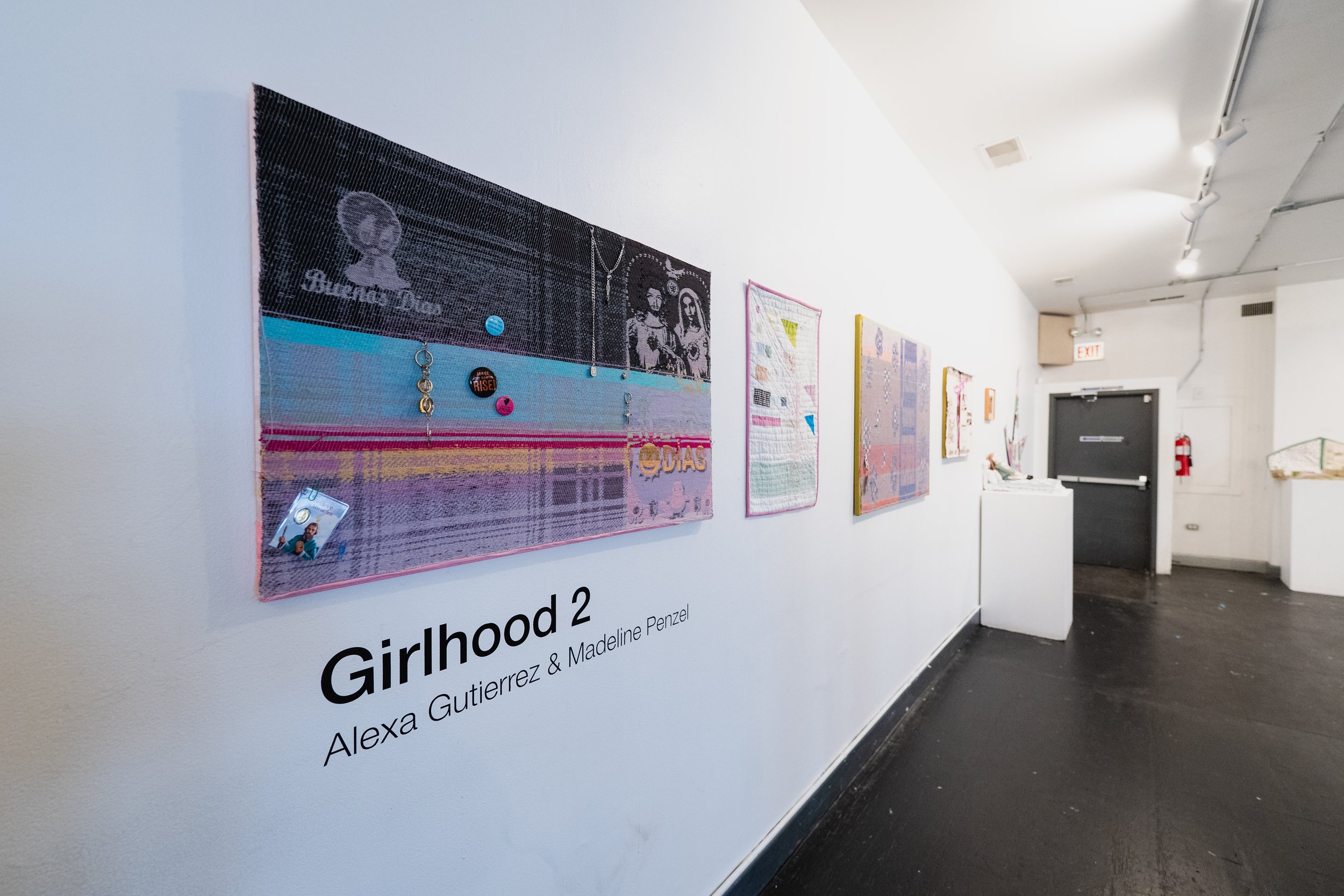
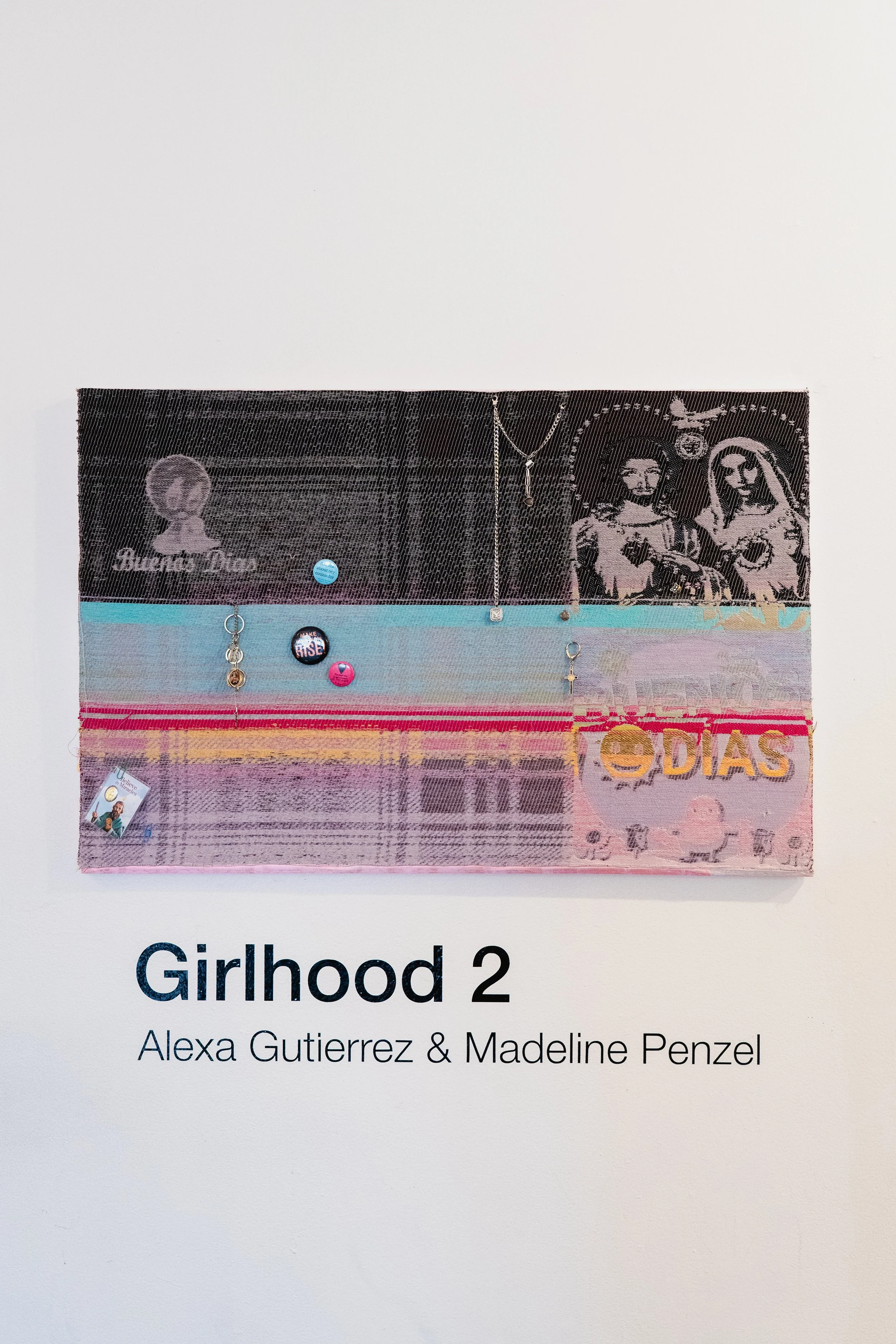
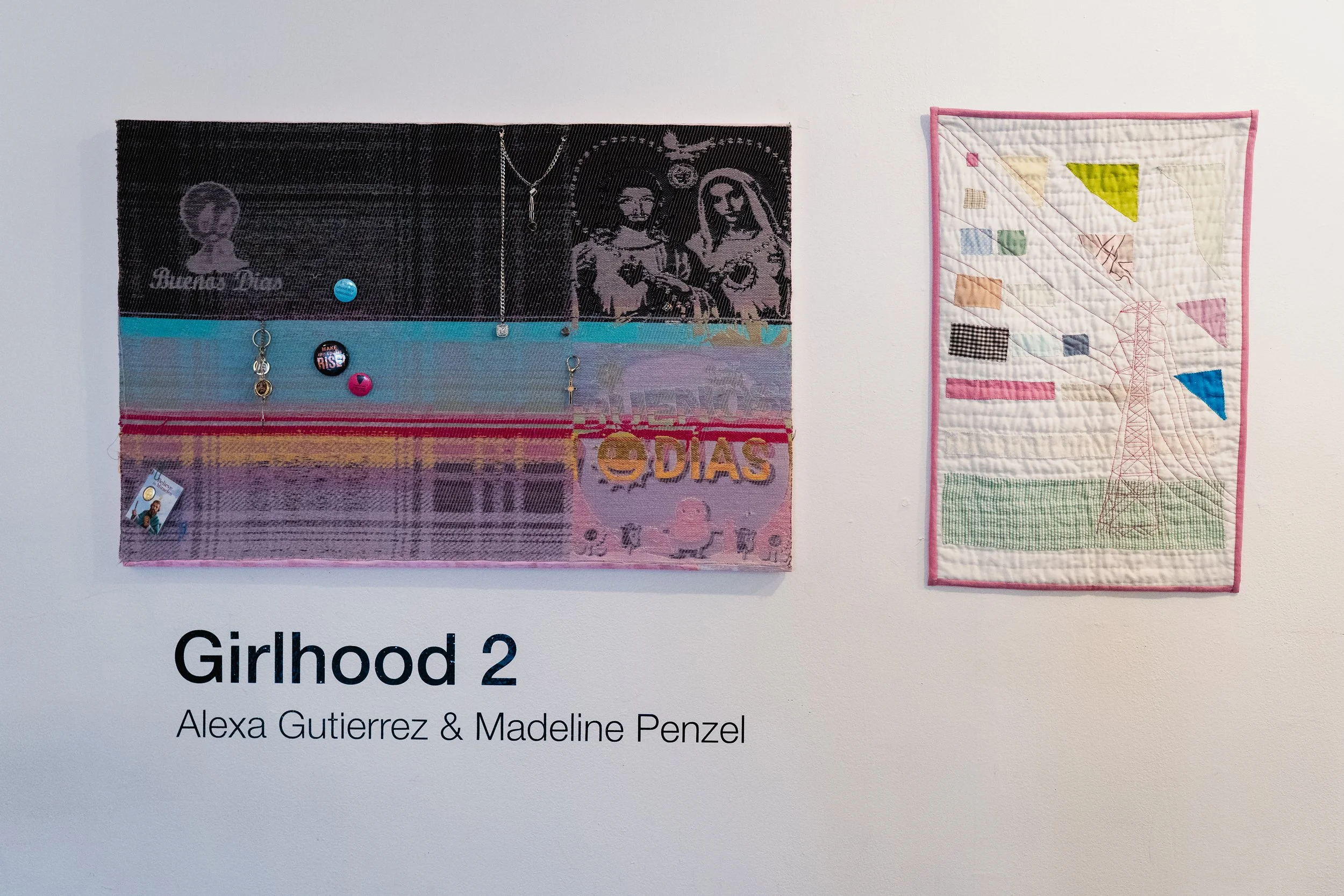
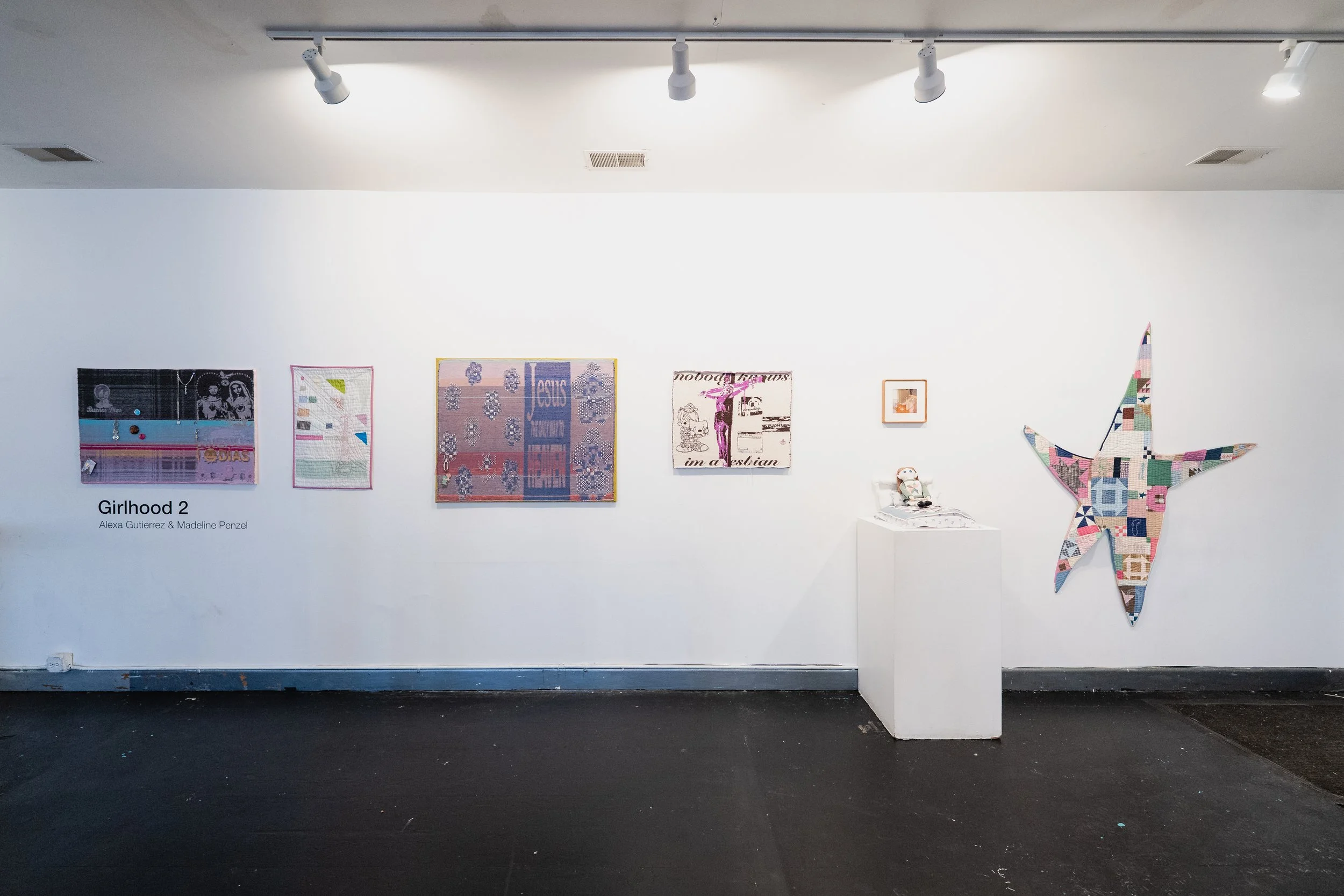
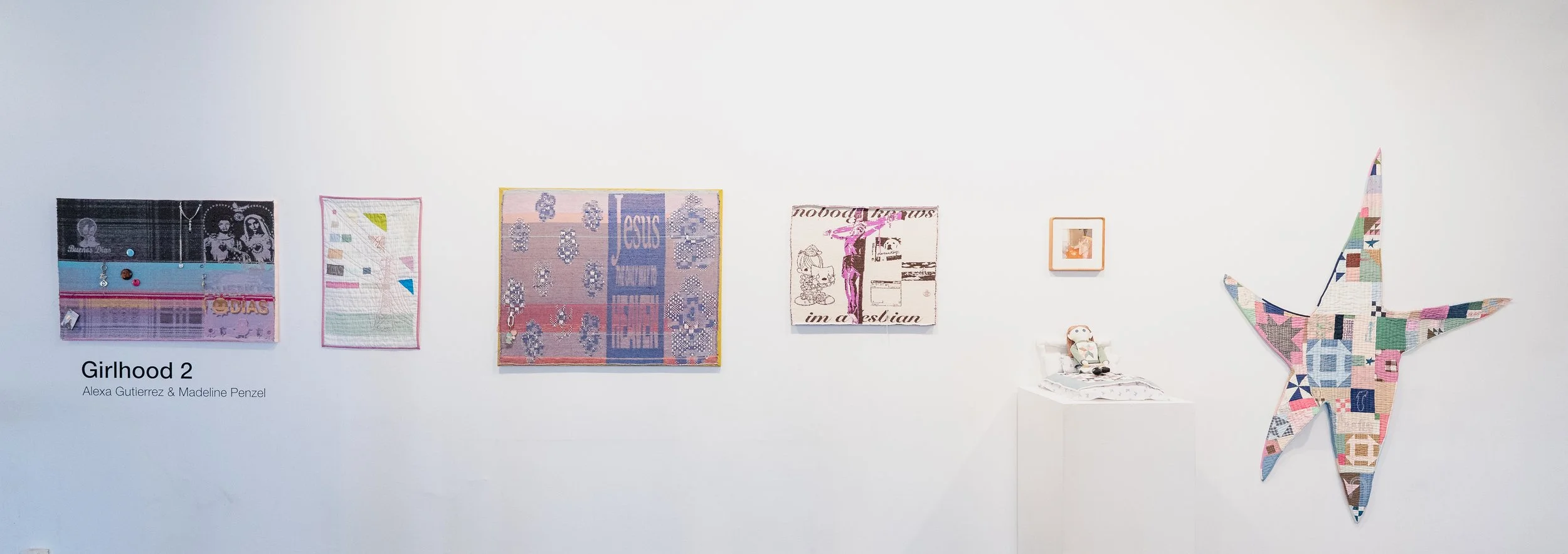
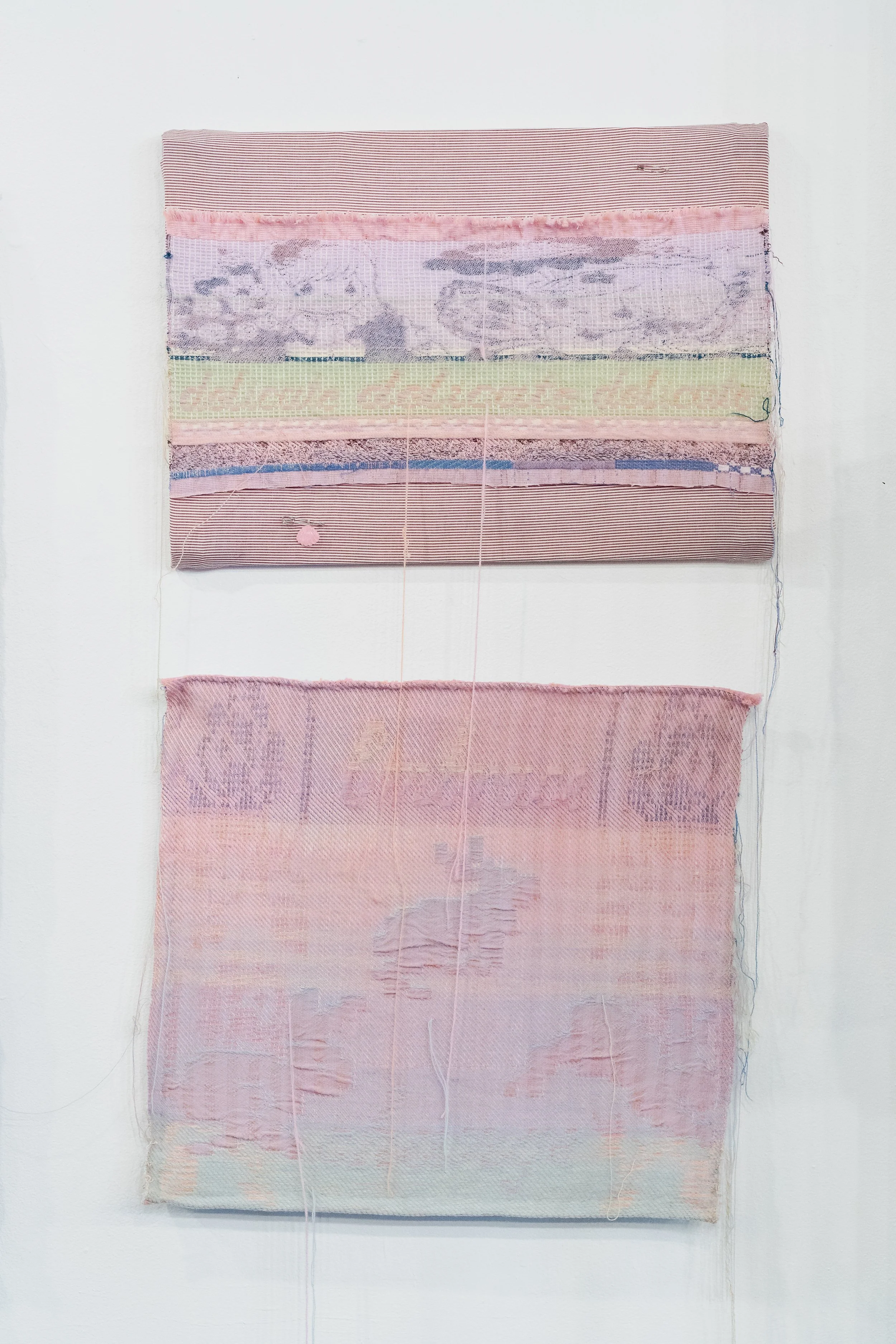
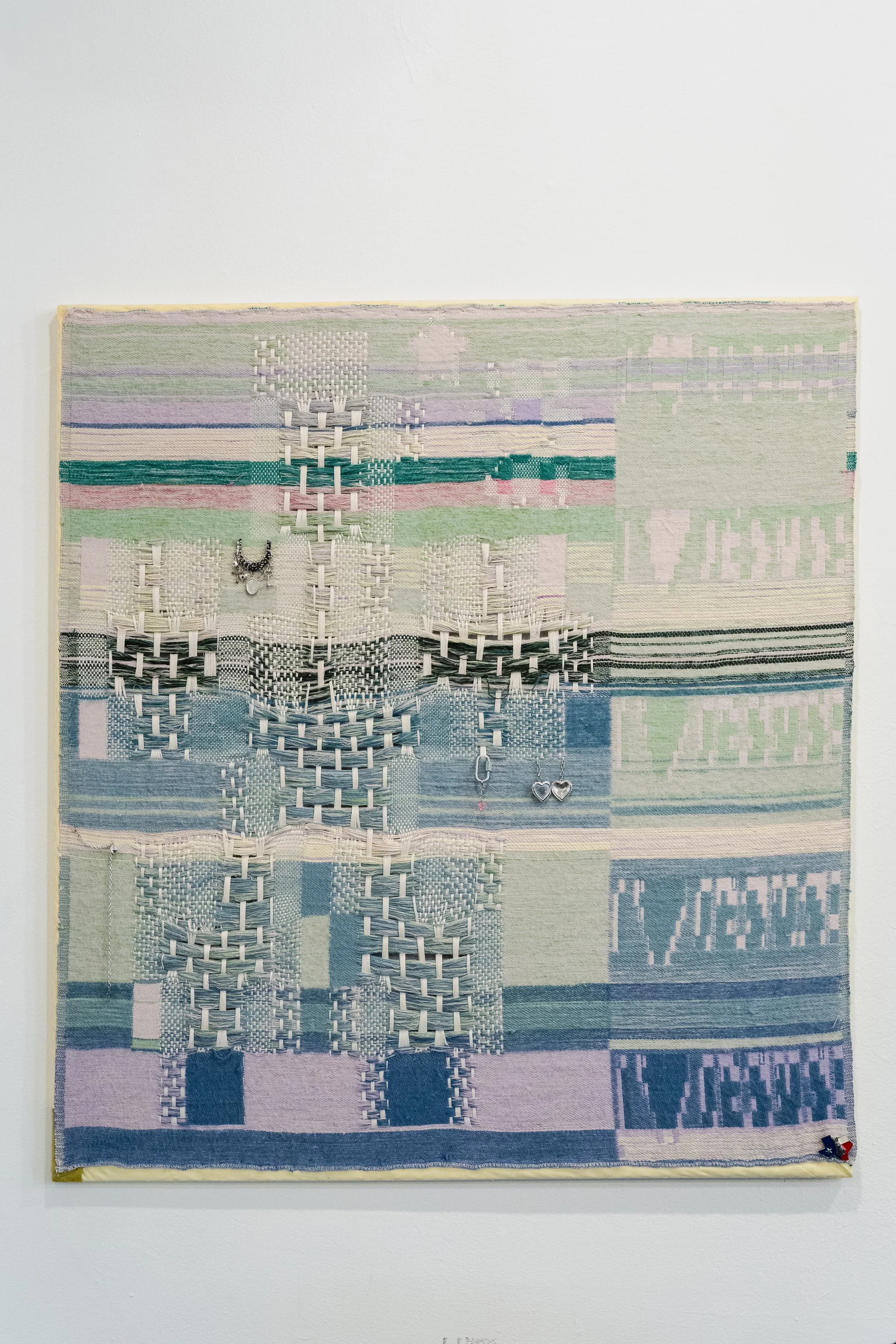
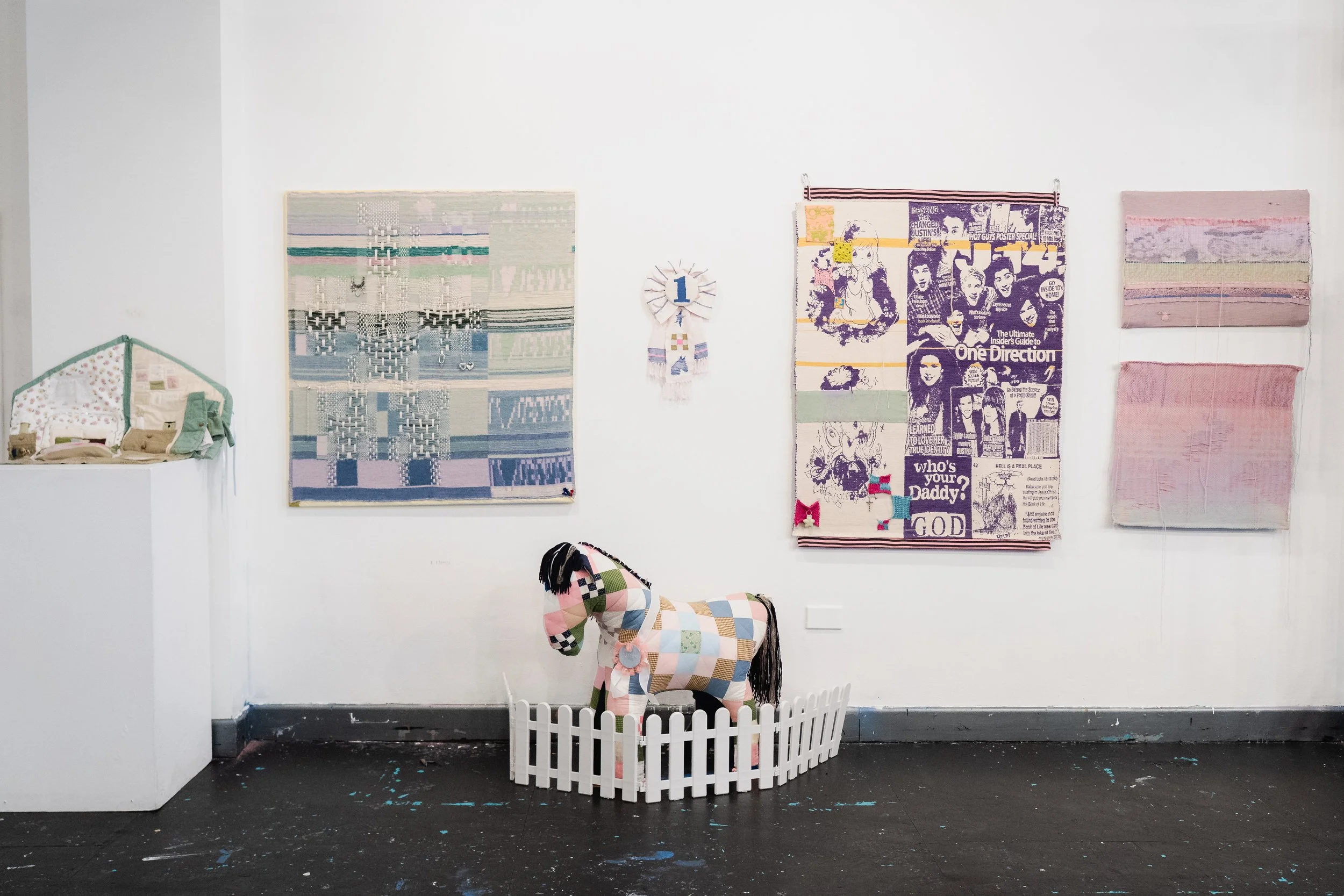
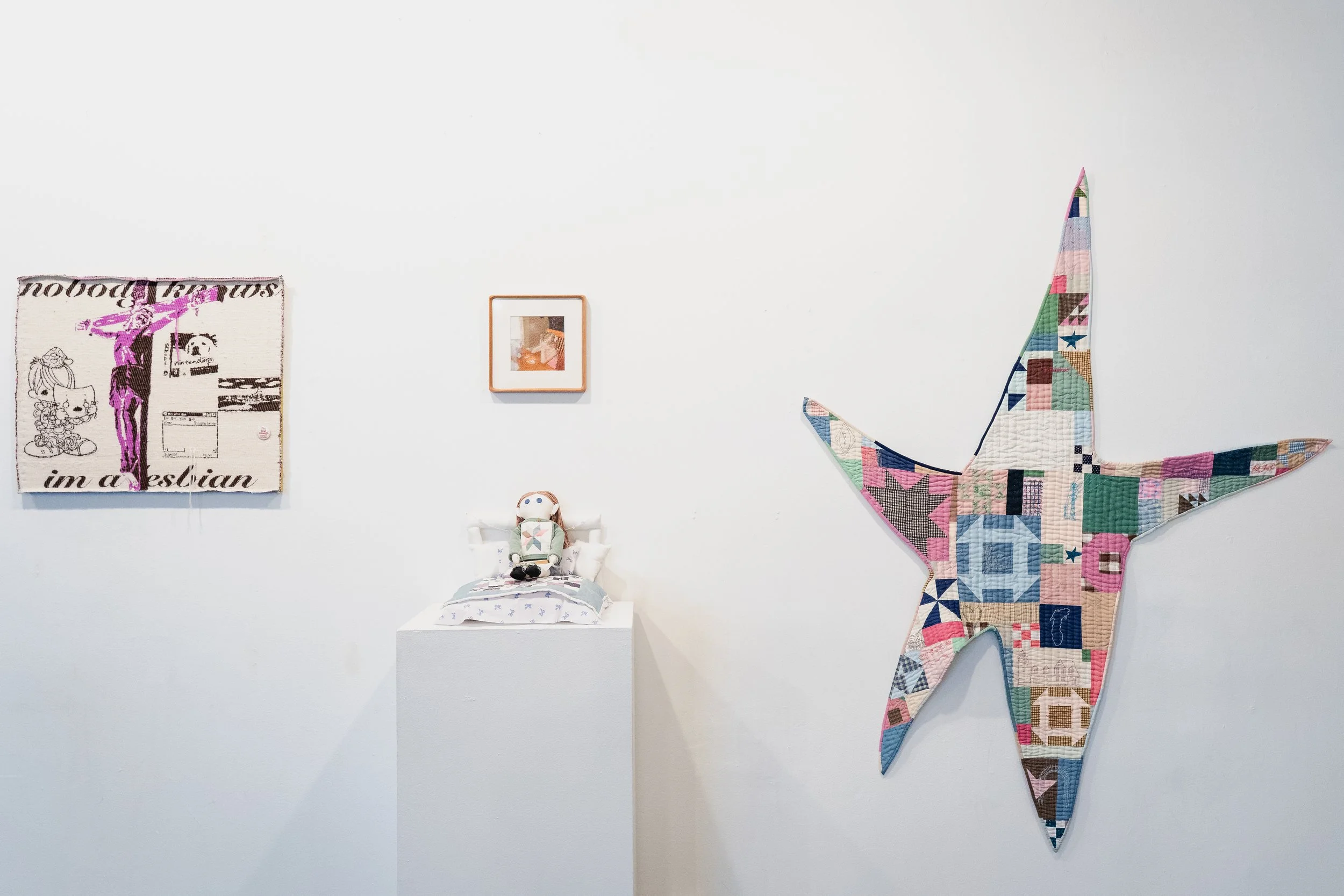
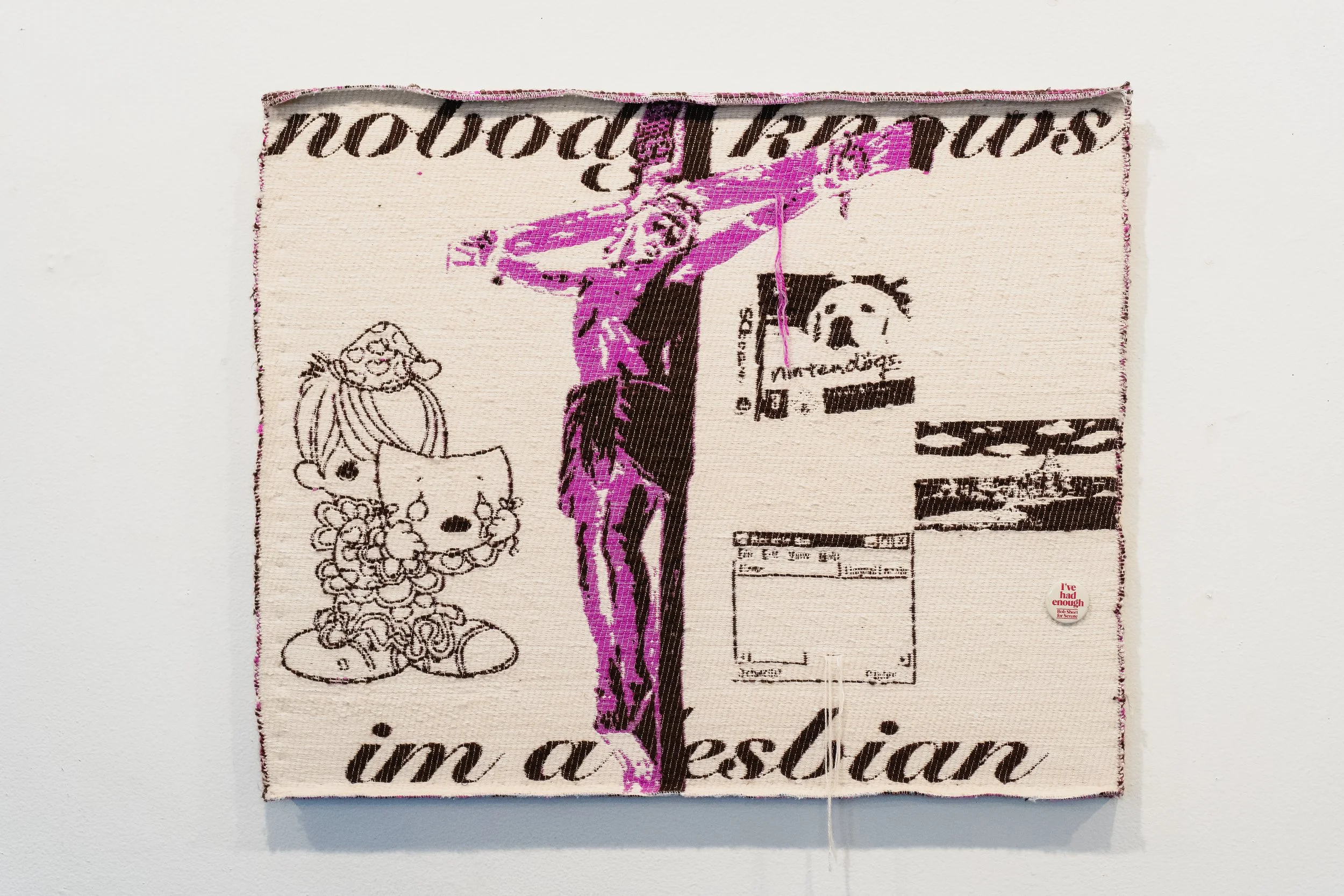
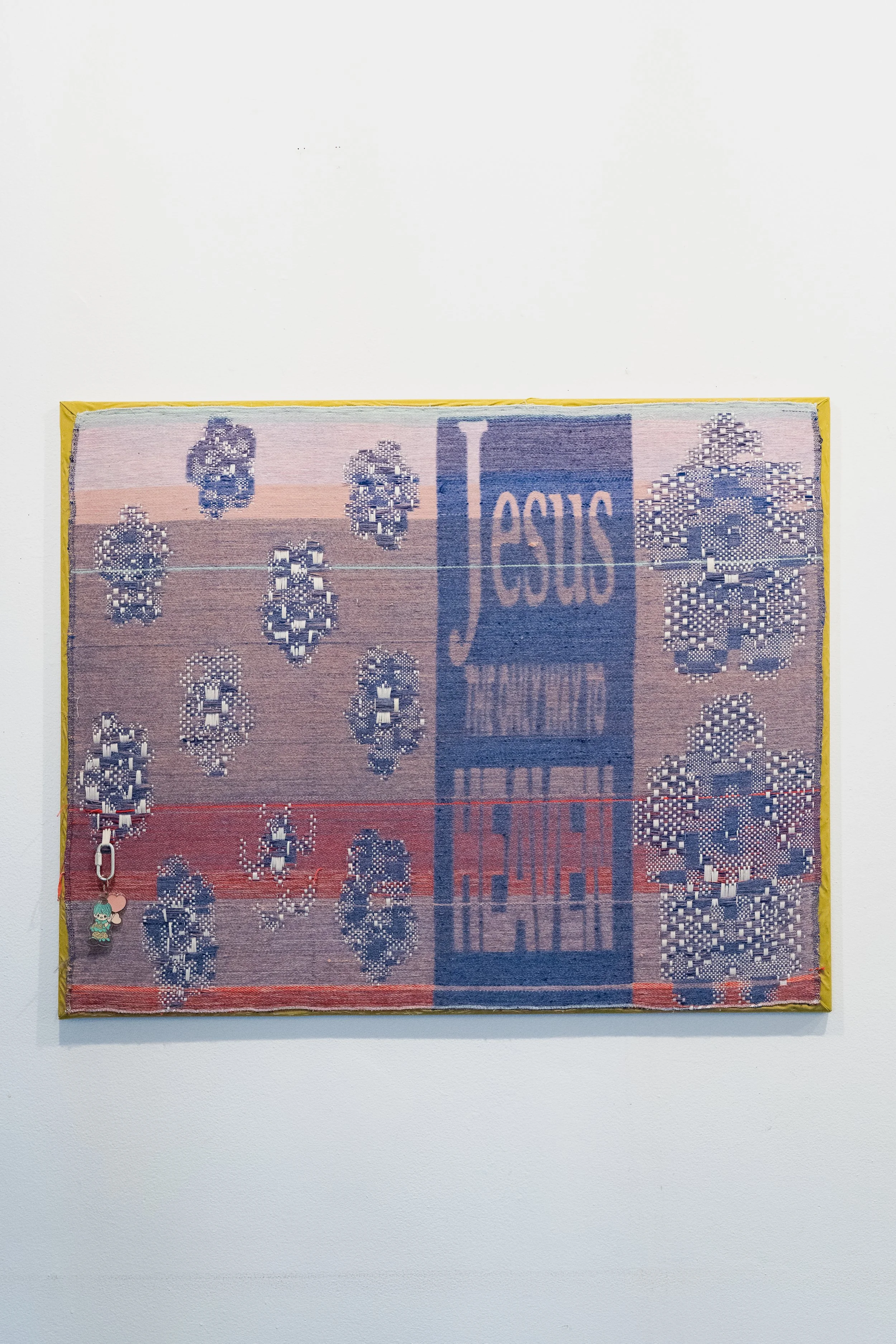
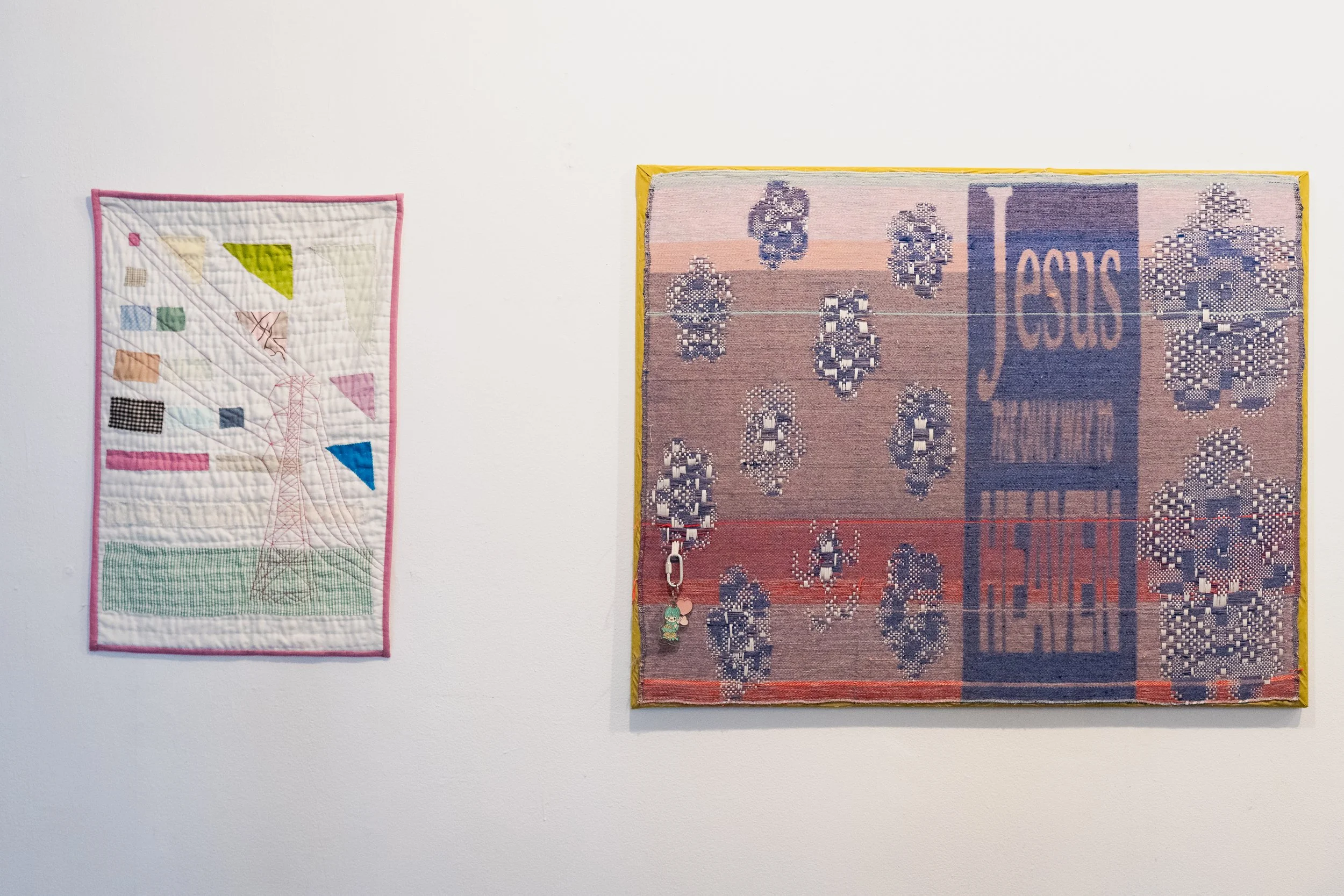
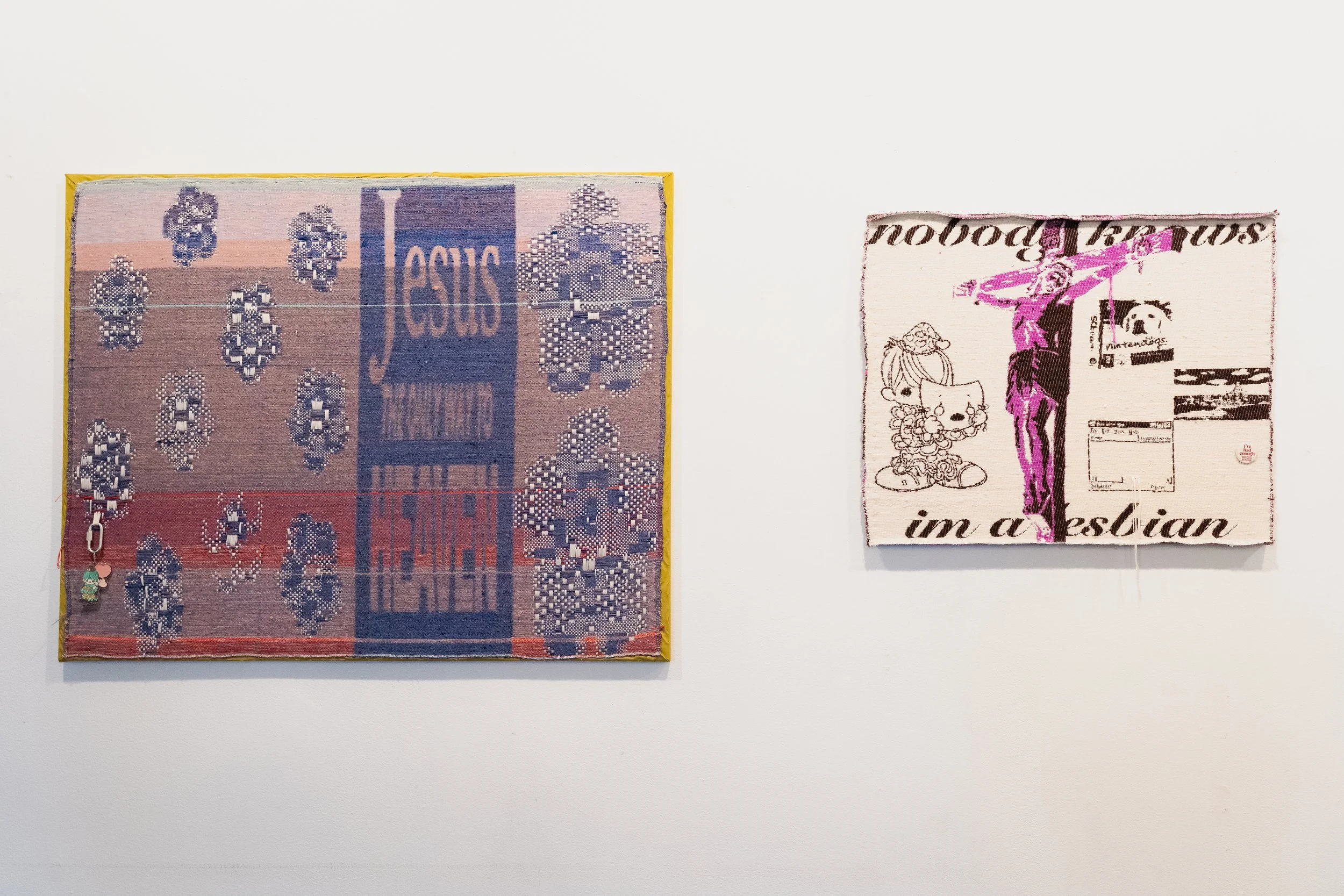
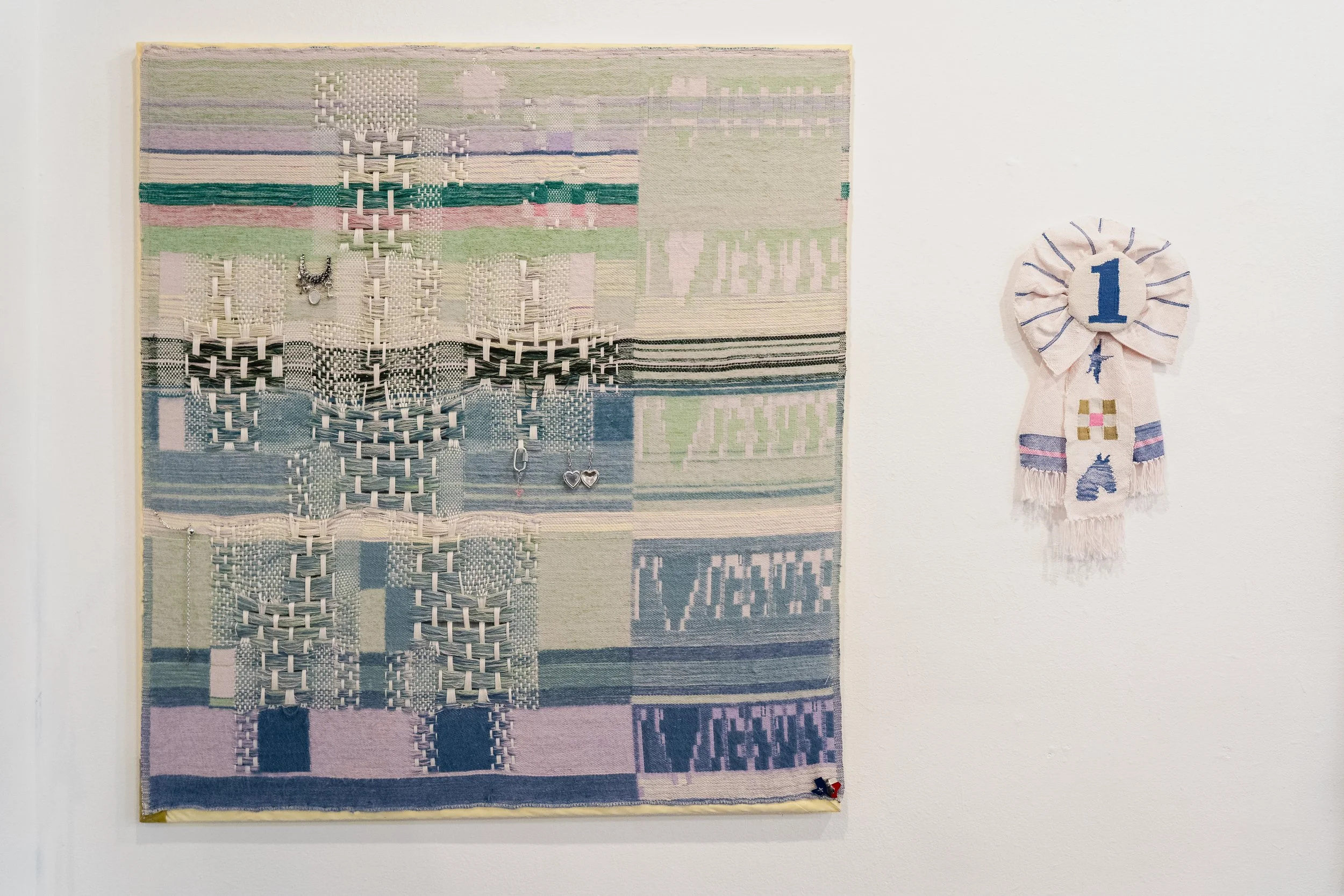
Alexa Gutierrez processes the afterimage of girlhood through ephemera, including magazine covers, memes, and photos from popular culture, ultimately transforming these images into textile paintings. Alexa Gutierrez’s woven paintings act, in part, as a riff on celebrity portraiture, pulled apart and pieced together like irreverent altars. A recurring motif of Gutierrez’s work is the way that religious iconography infuses pop culture: mushy pictures of Jesus dotting the landscape and the fervor of tabloids infused into the messiness of everyday life and longing. I was drawn to Alexa’s work because of how she materializes girlhood into a practice of recycling fantasy: much of her process involves taking apart and reworking previous works, much like the process of memory itself.
Influenced by her childhood years growing up in the church in Texas, phrases like “Southern Princess” and pictures of Jesus flash in and out of the tapestry, strewn along with pop cultural figureheads like Tweety Bird, Kim Kardashian, and stills of Kingdom Hearts. Hints of online community and digital culture create a kind of screen static across her work. Because of how easily weaving on Jacquard looms can replicate digital images, each threaded entry becomes a kind of soft pixel on the tapestries. Browsers, pop-up windows, and stills from memes and TV shows become tangible and felt. Gutierrez plays with dimensionality, as well, with charms and memorabilia dangling off the strands of tapestries. In a previous installation, some of these charms were rather aptly picked off by teenagers viewing the exhibition. What I love about these dangling effects is that they are left to serve as reminders of what remains long after girlhood: the hardness of chains contrasted with the softness and blurriness of longing, or the detail of a loose thread, left on the brink of unraveling. What becomes of the self, of the girl, is not completely controllable, if anything, the memories and details that linger are difficult to predict and much more important than we expect.
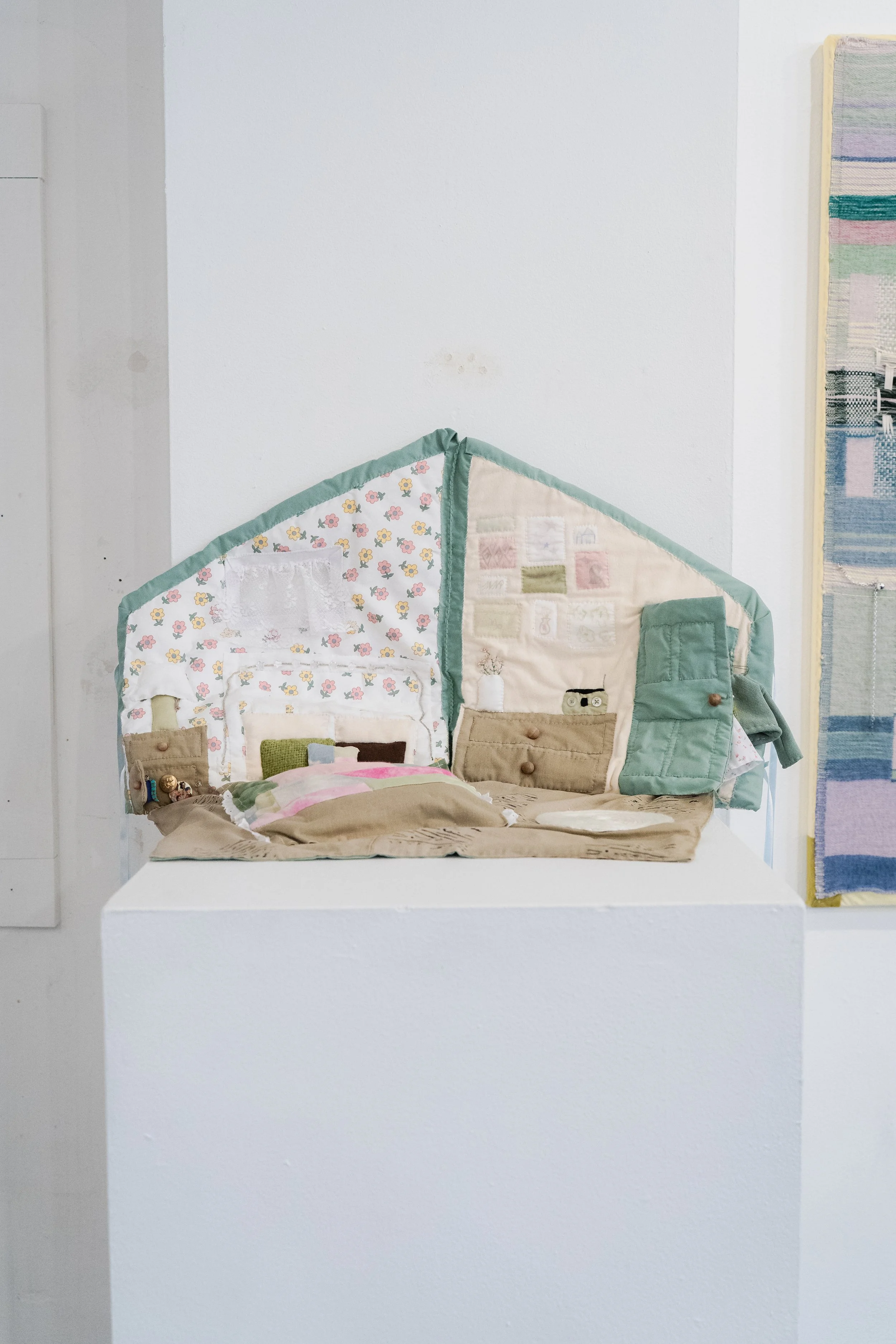
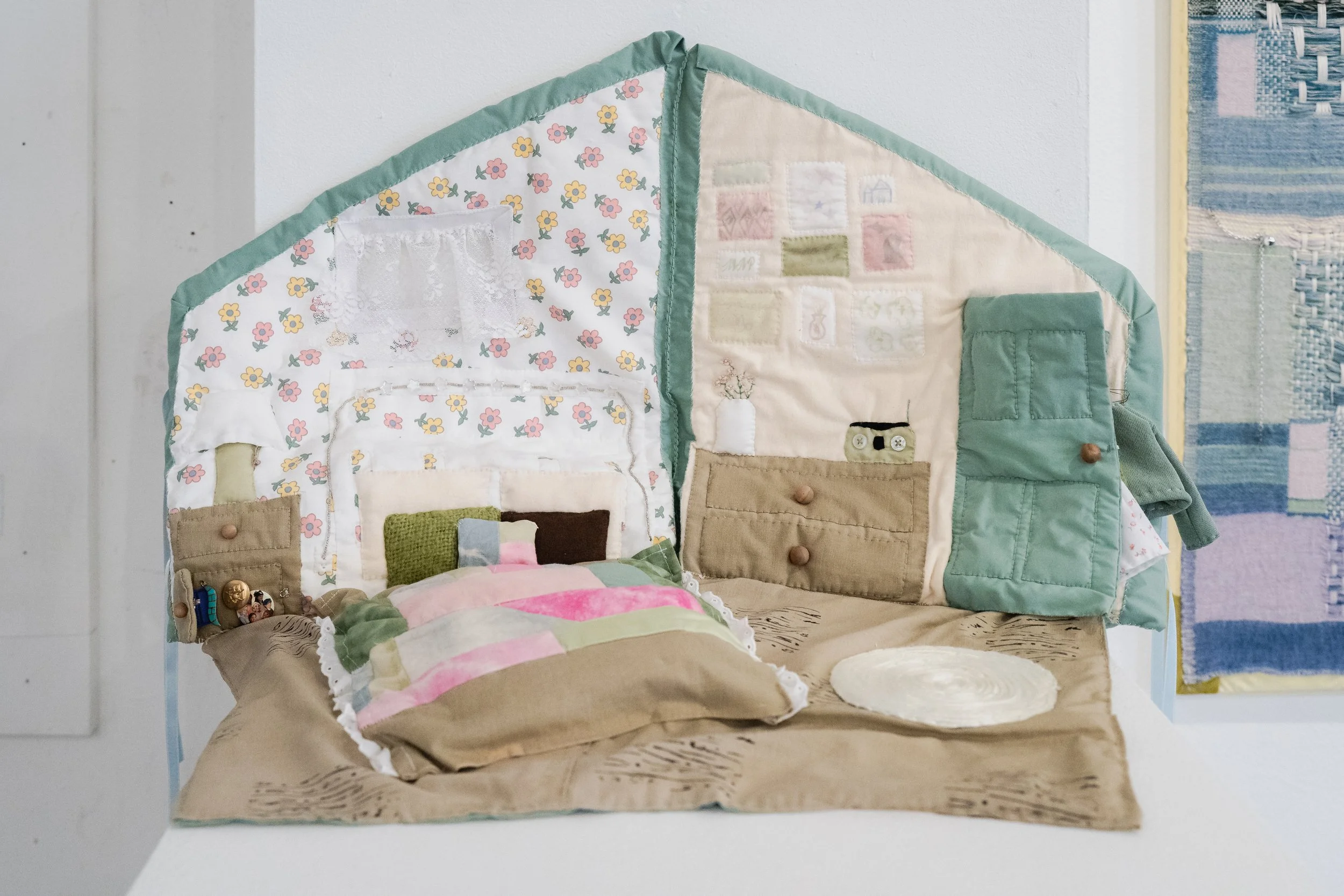
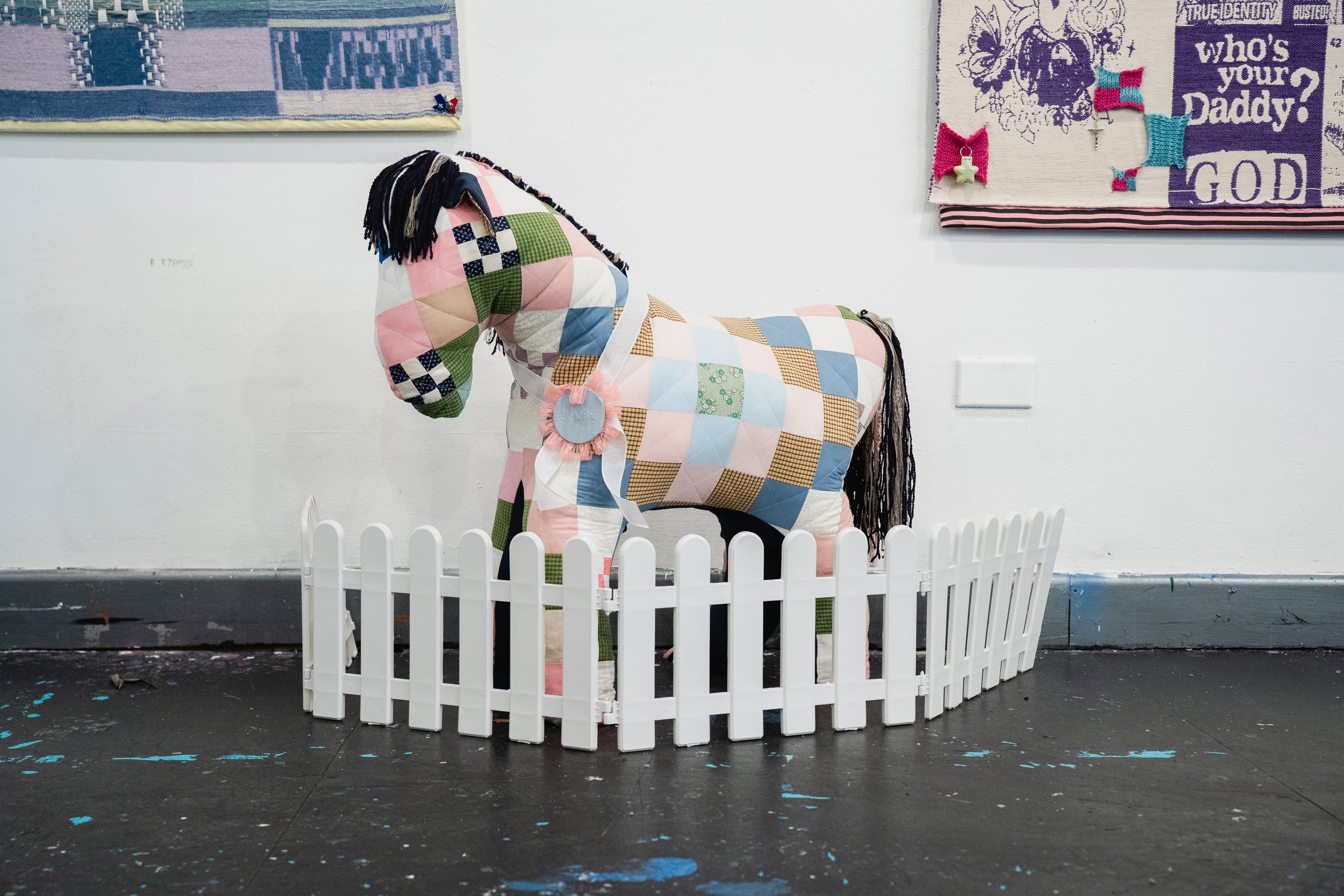
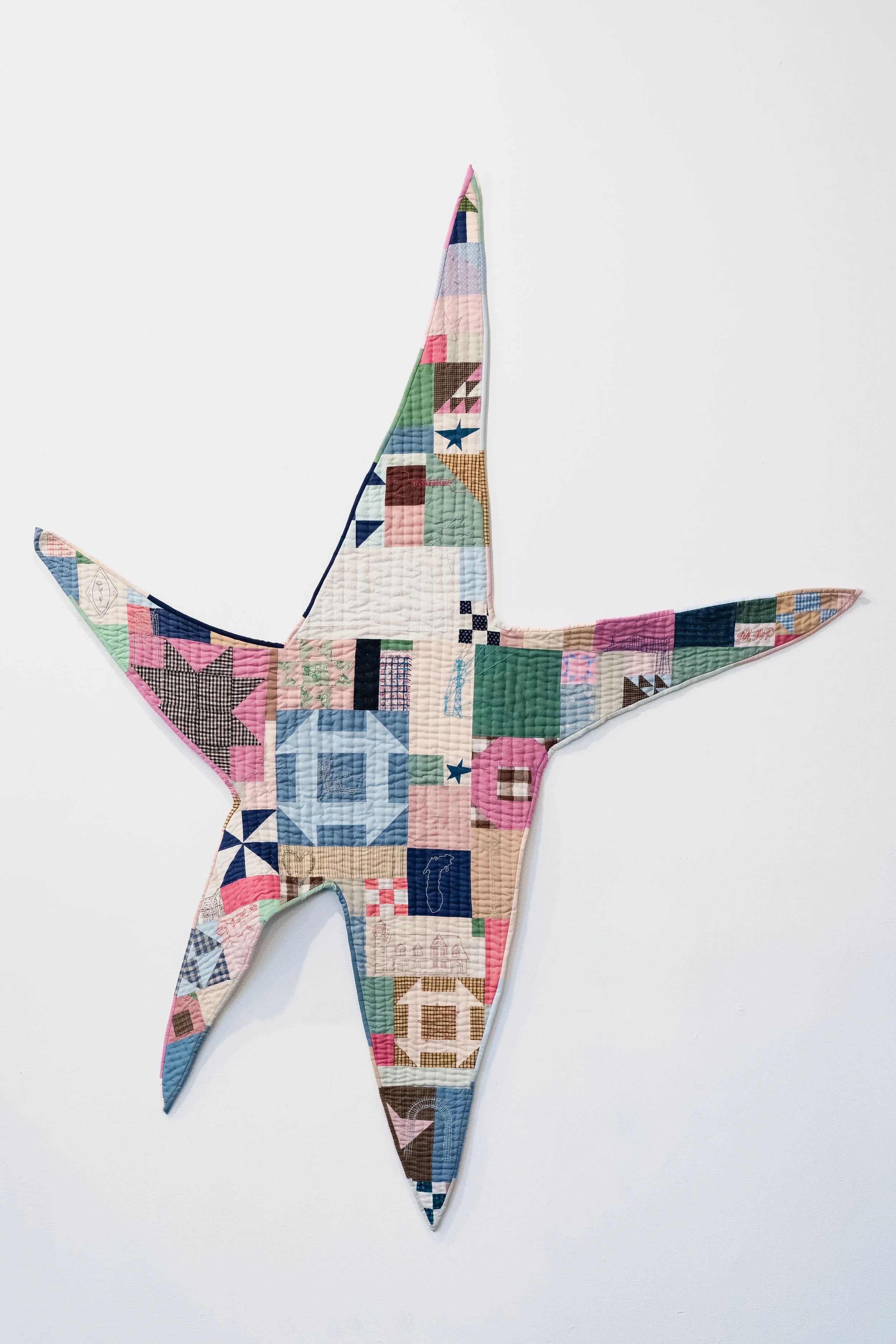
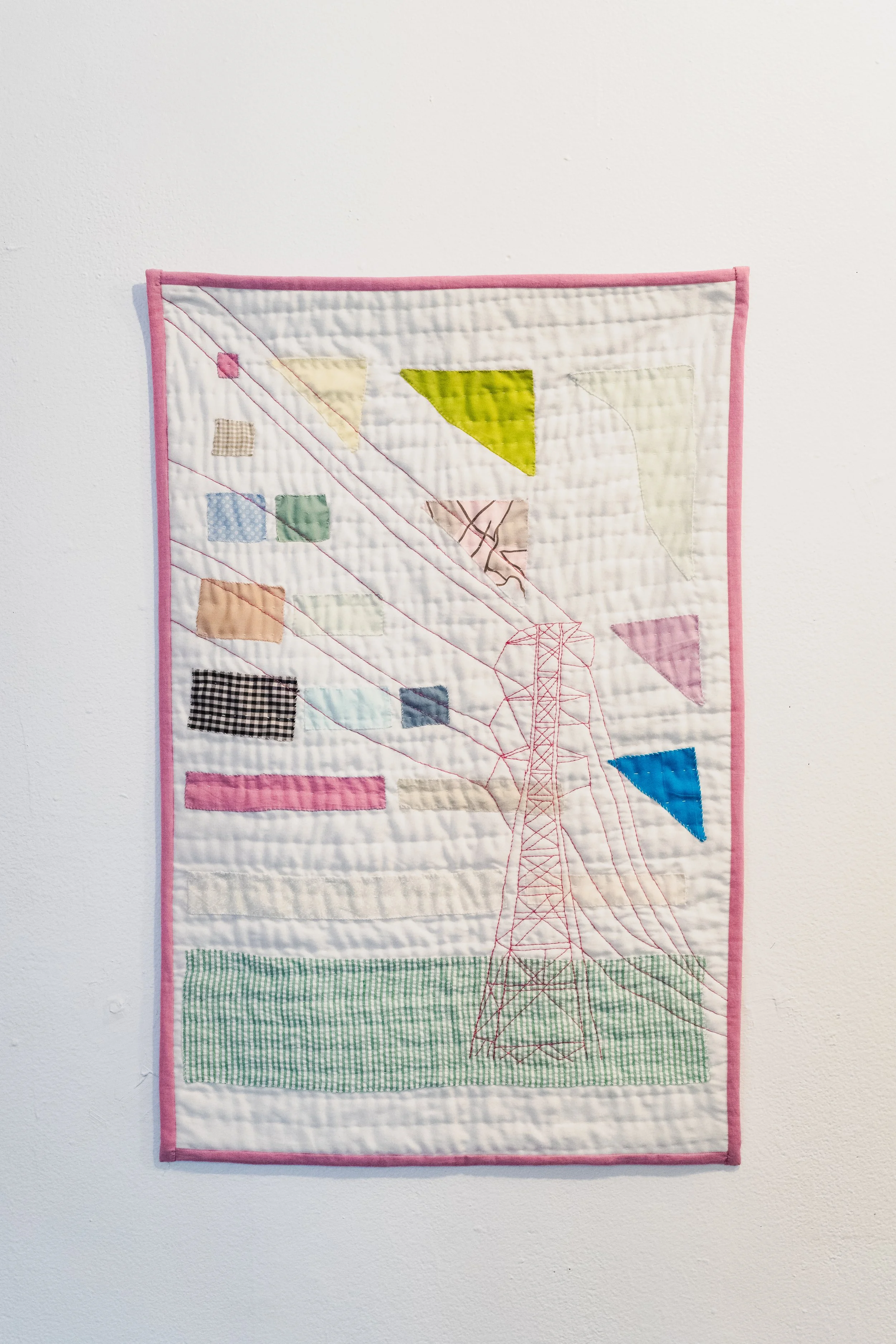
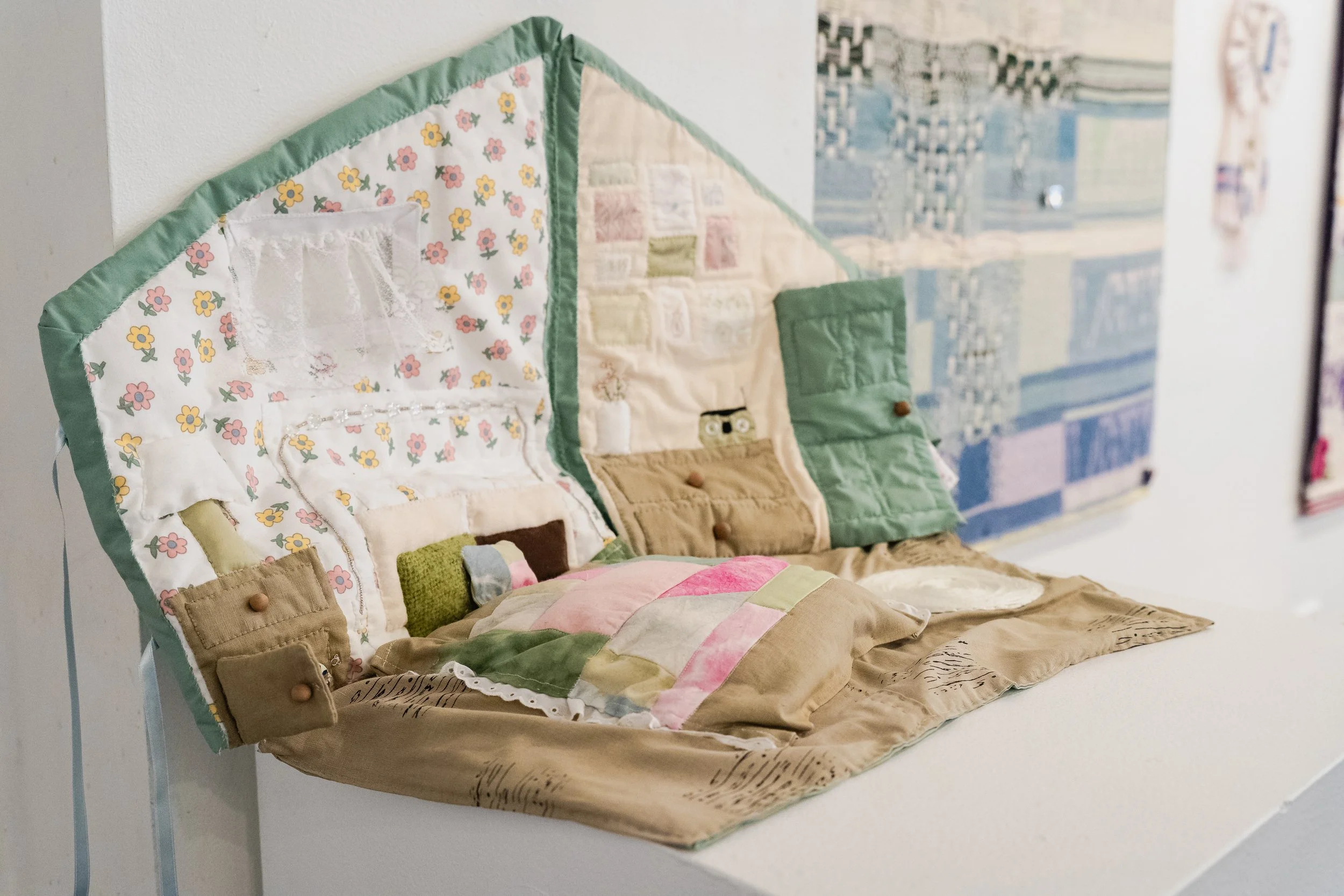
Where Gutierrez reaches toward pop culture and religion, Penzel’s work swings between domesticity and sprawling landscape. Gazing through car windows at barn-style houses down the driveway and power lines across the varied fields and grids of Michigan, these roadside glimpses constellate a series of personal landmarks that reimagine open land through the warmth and softness of quilting. Storied secrets in each hot pink, lime, and cornflower blue quilt block reach out of the completed whole. Penzel’s work reflects the ways in which building a self, especially in girlhood, often happens through the fragments of reverie found in bedroom solitude, where yearning ferments in the plush corners of throw pillows and carpeted dance routines, in the silence after everyone has left your birthday party.
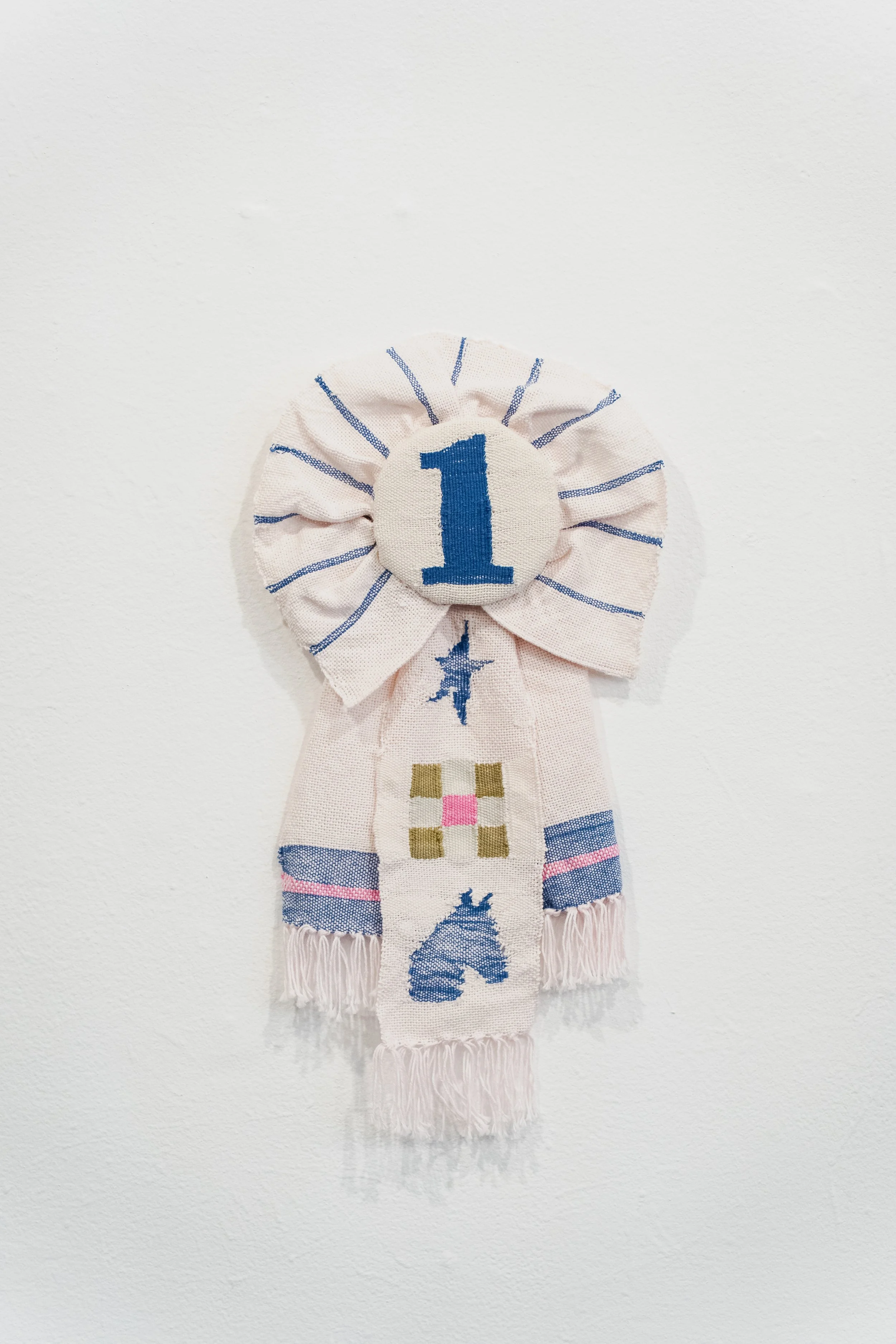
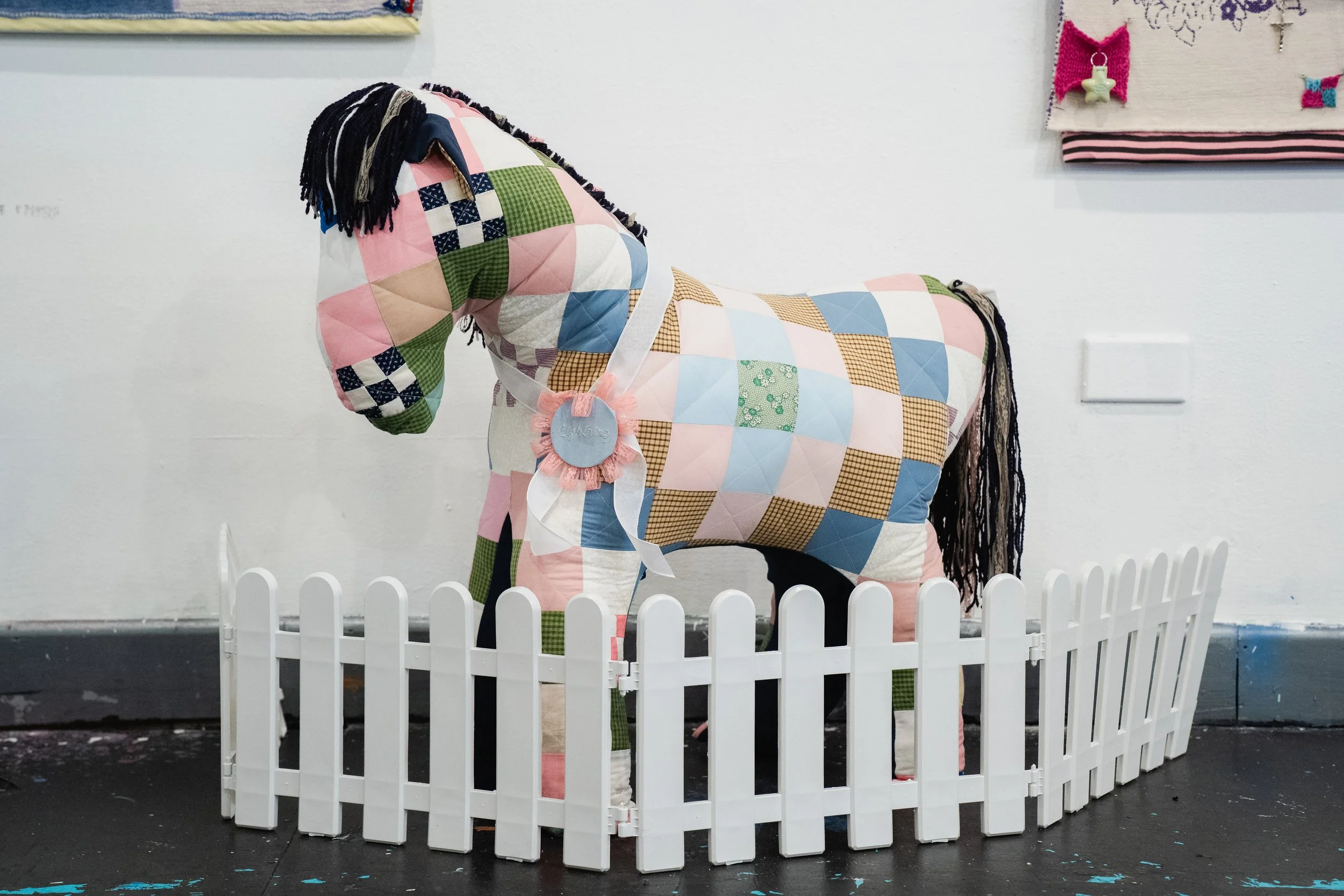
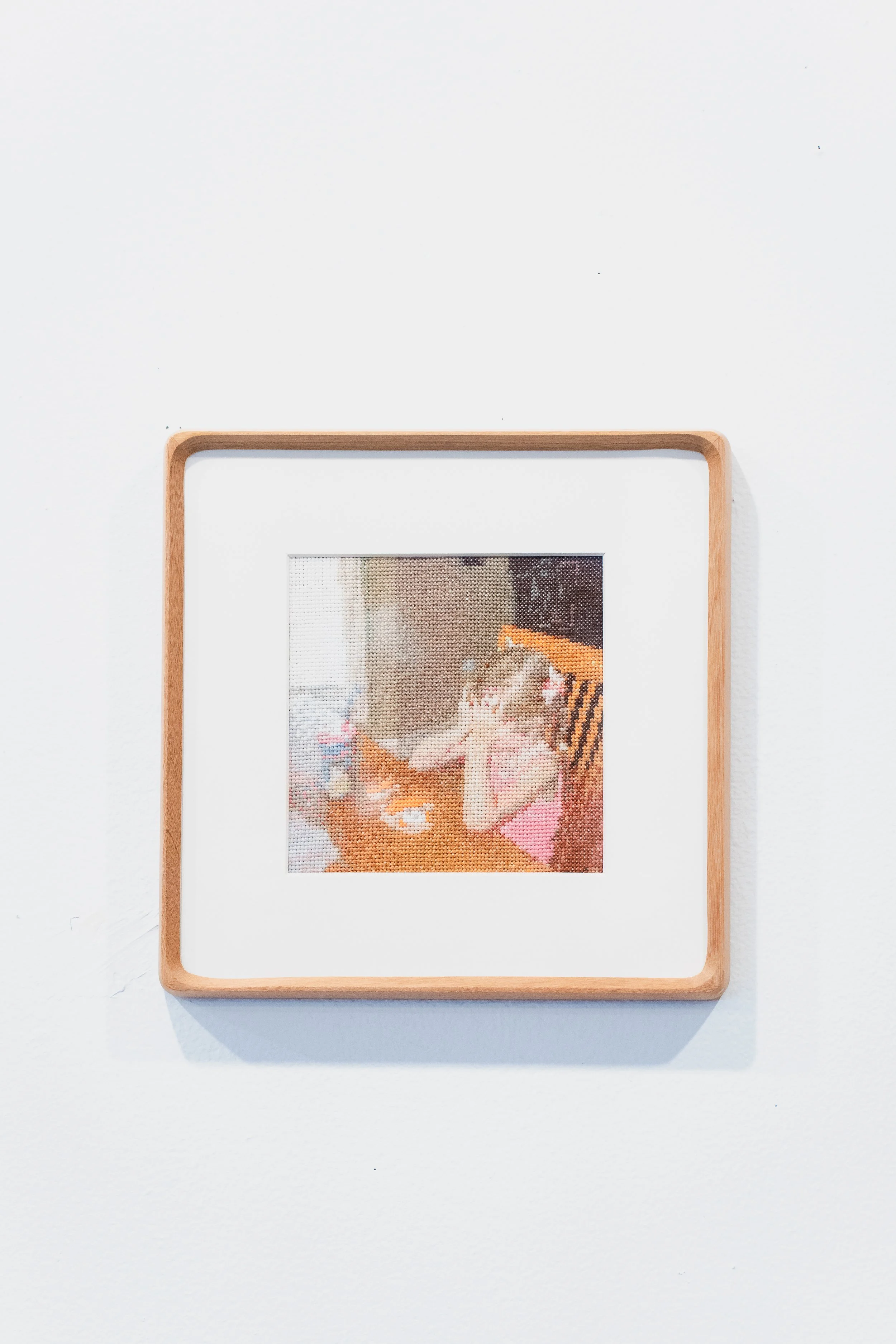
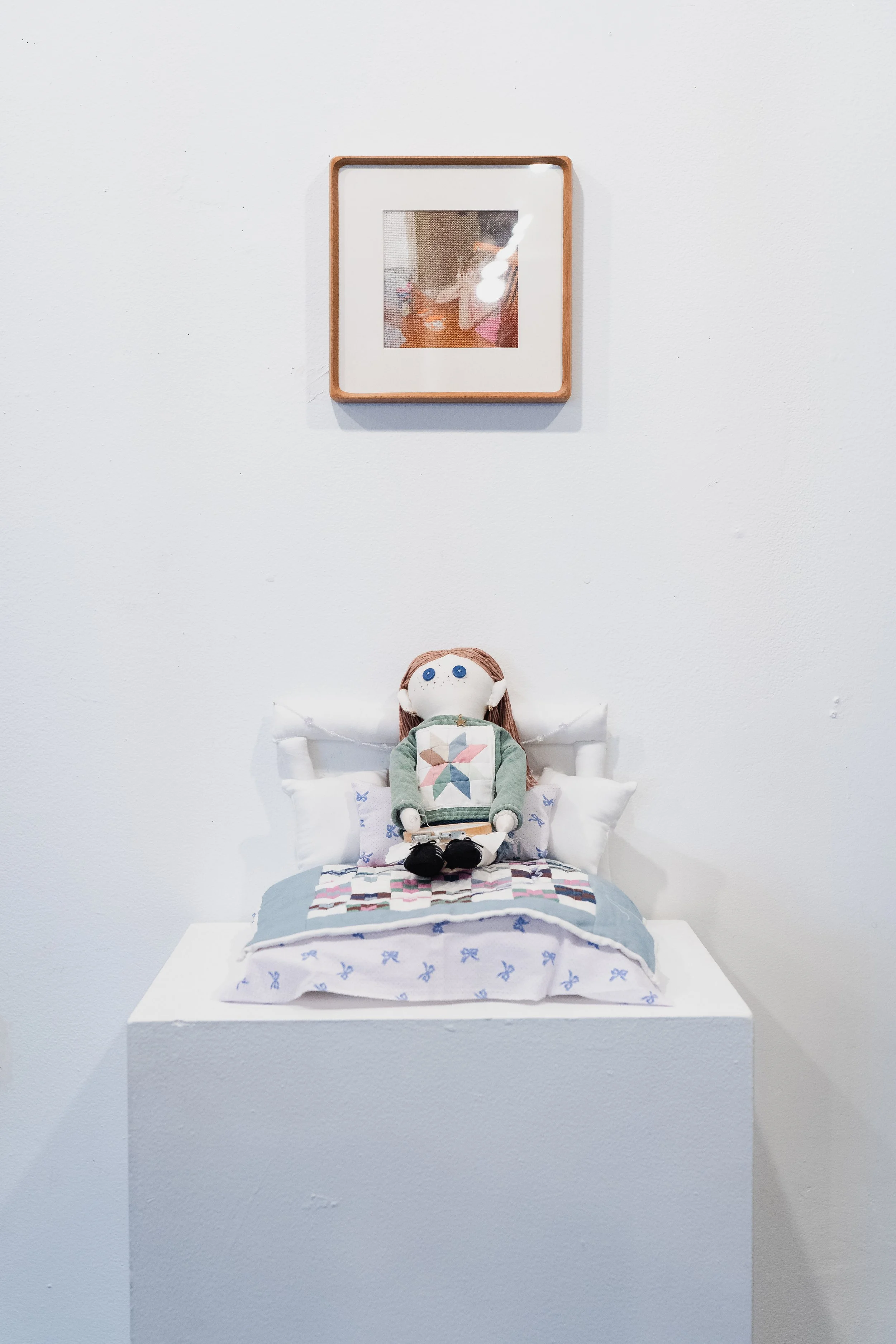
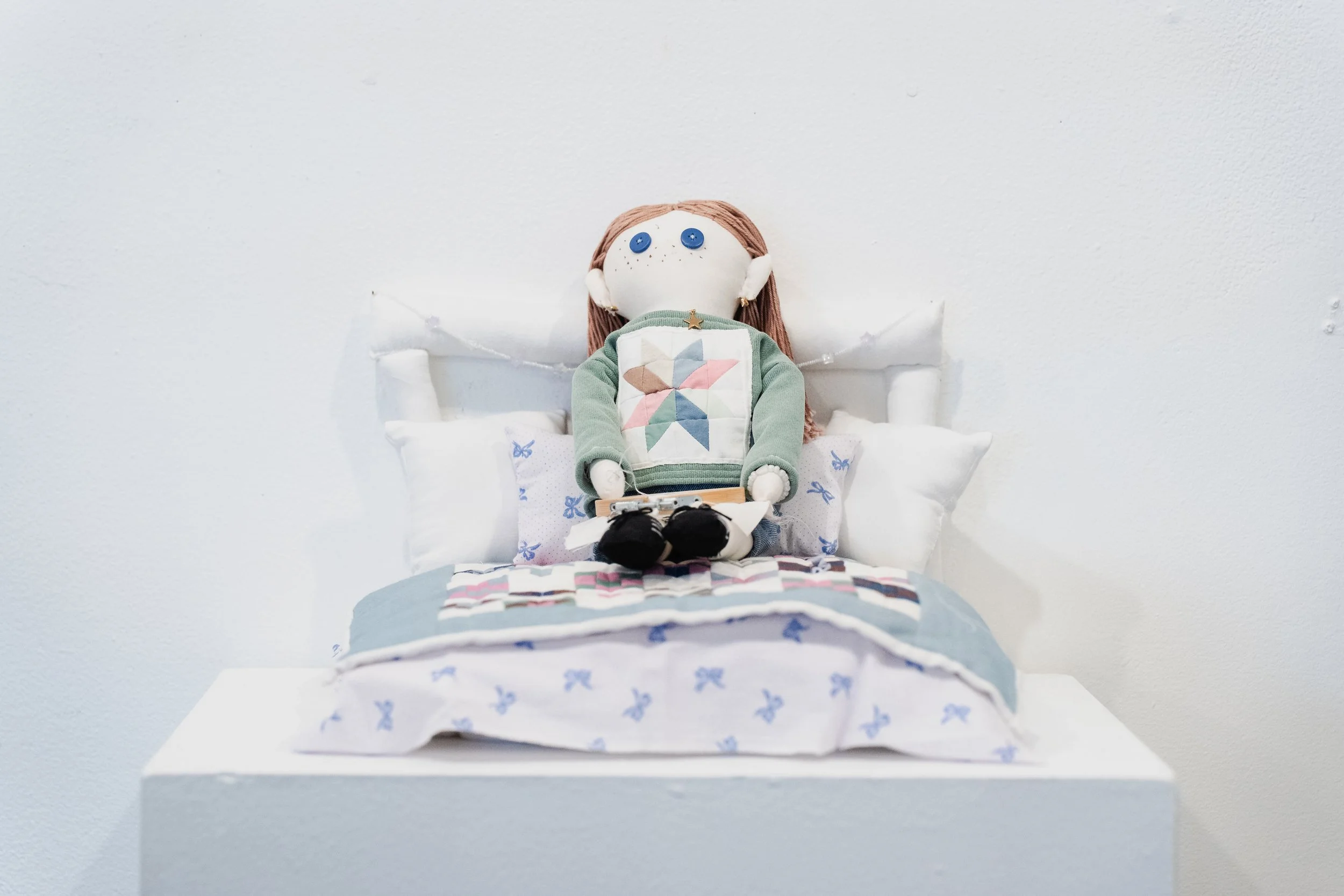
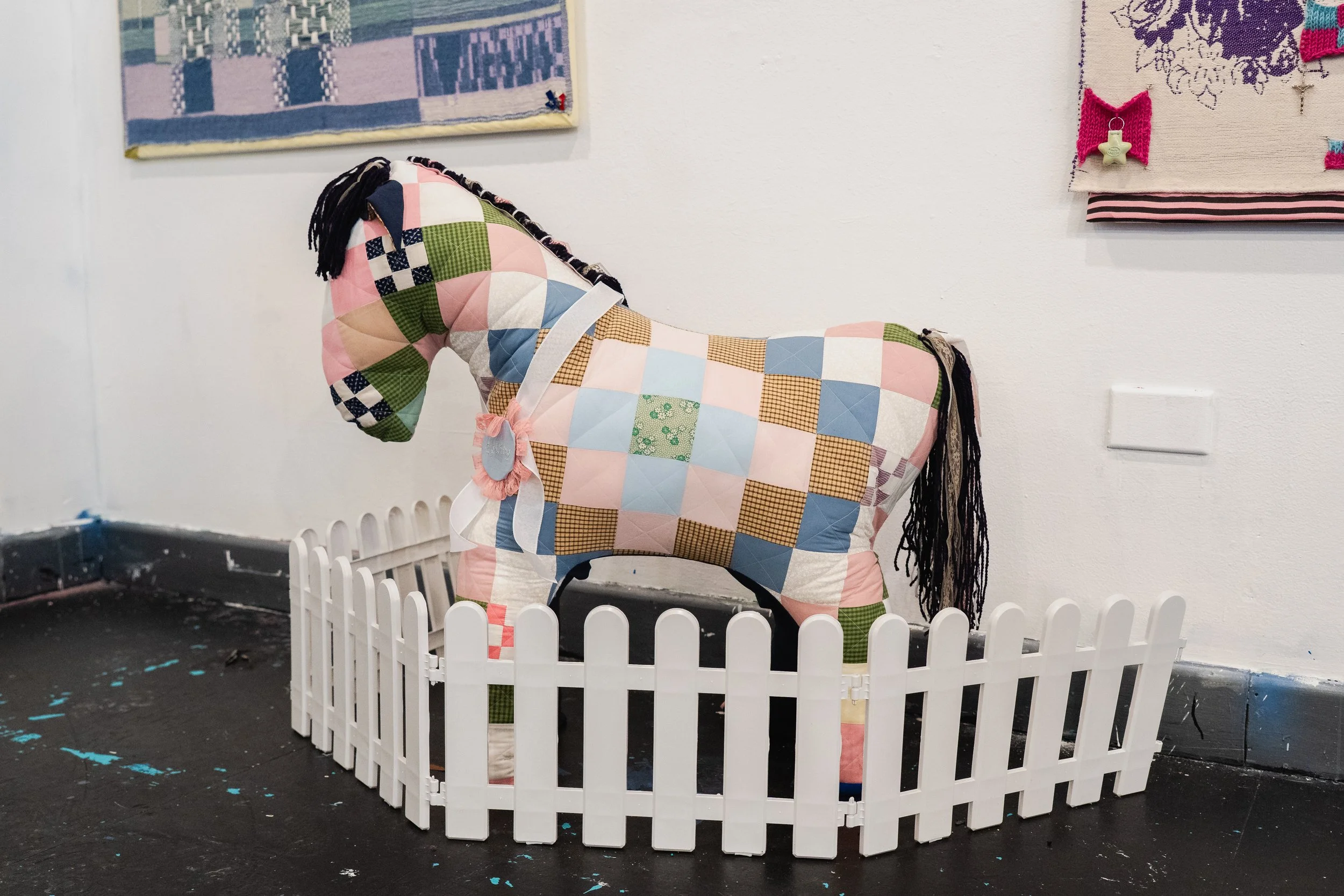
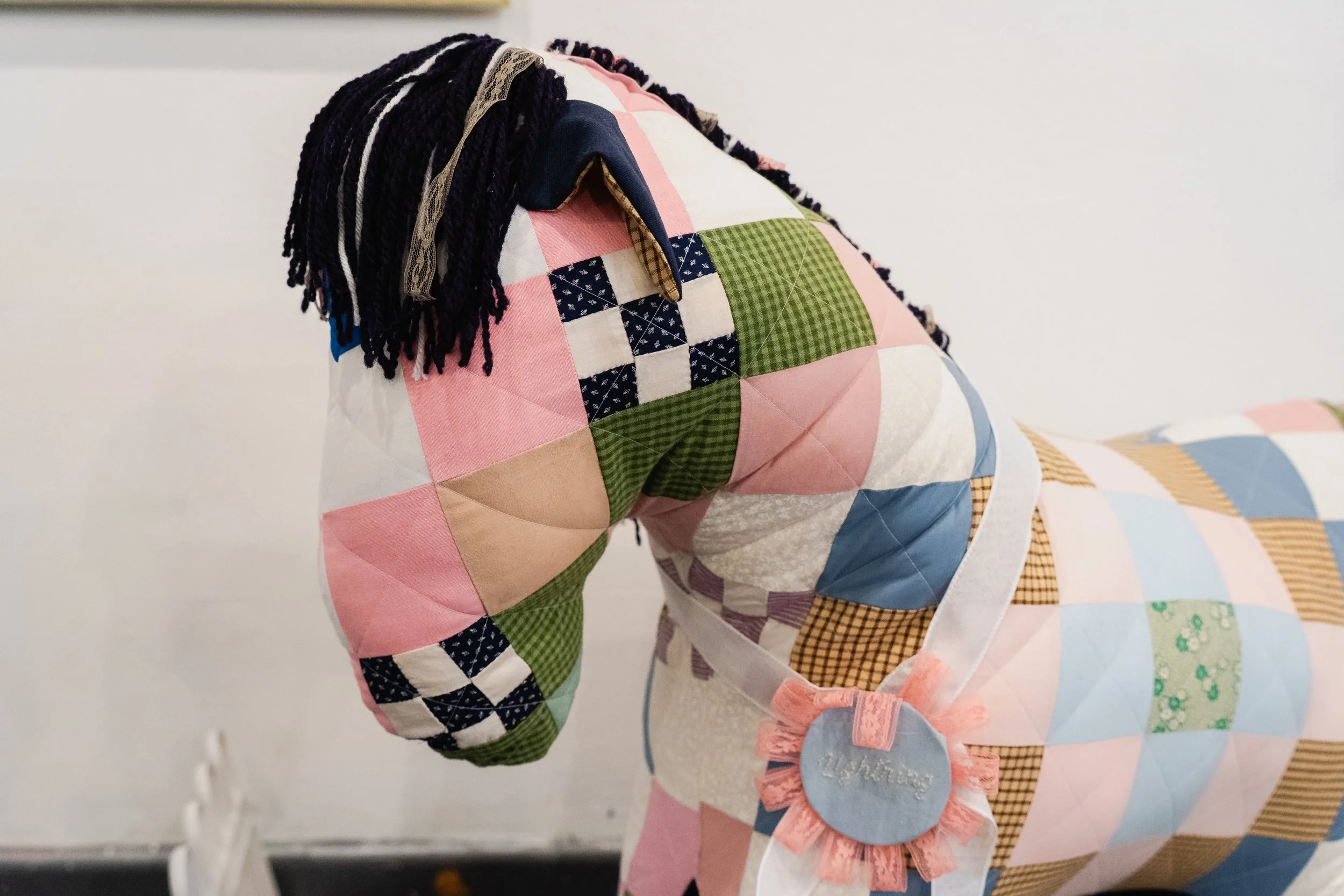
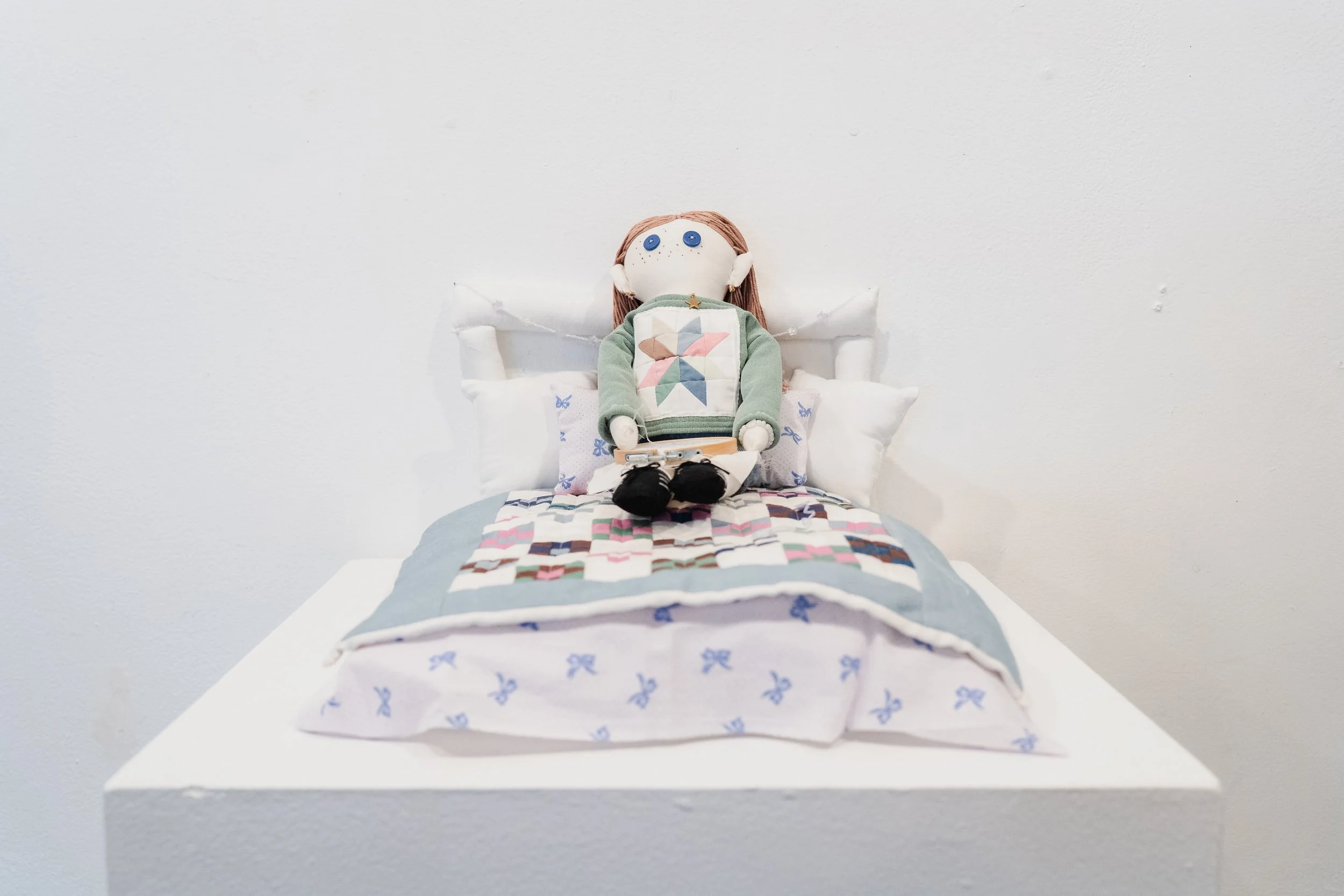
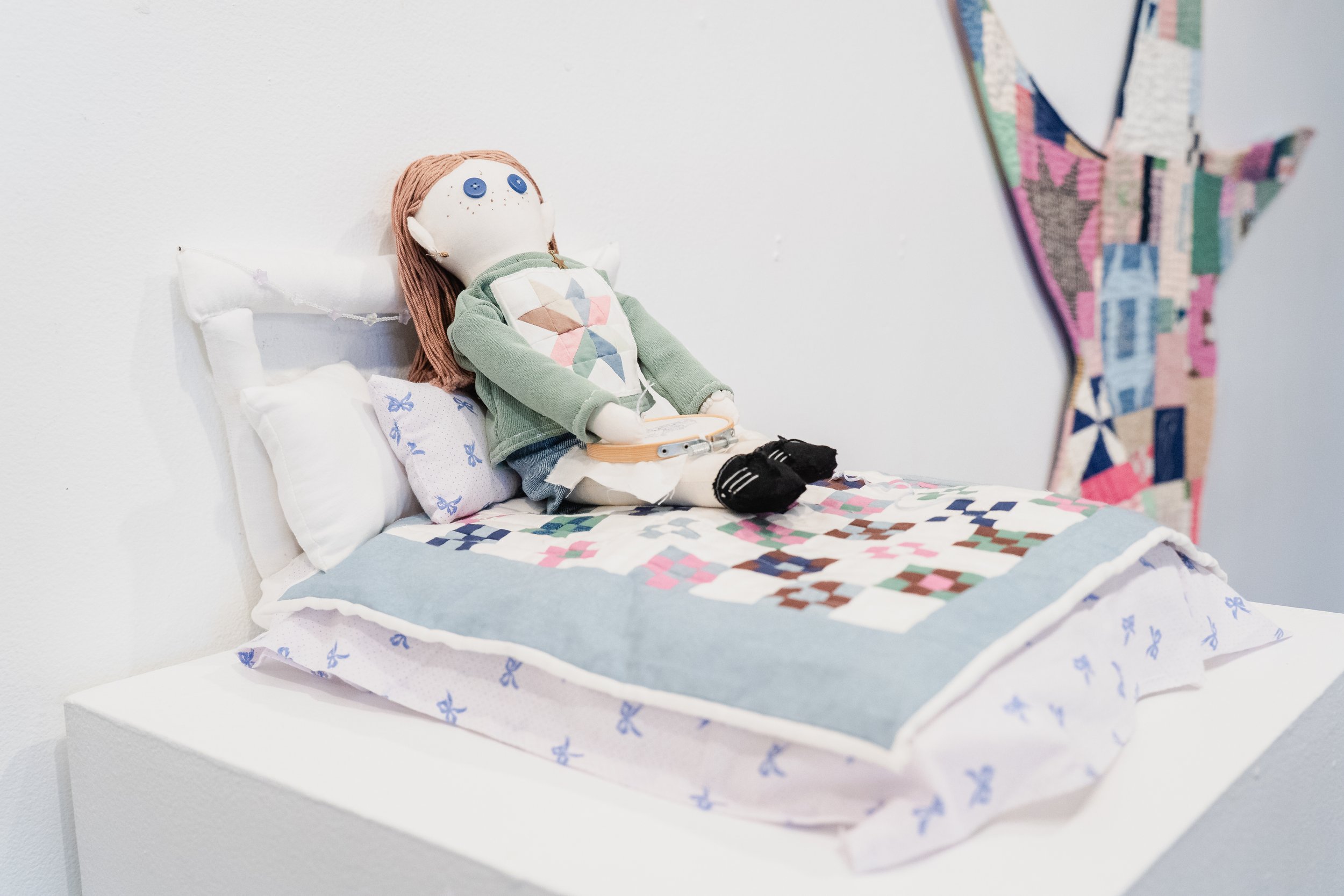
Before photography, tapestry and embroidery served as accessible means of record keeping and provided another dimension to memory: touch. In that’s how the cookie crumbles, a photographed moment of early childhood disappointment is etched into the fuzzy texture of embroidery, tying together the histories of image and tapestry, grounding ephemeral feelings in the persistence of fabric. Penzel’s works make visible the labor that endures behind the curtain—domestic craft historically assigned to the role of women at home. It is a labor that signifies utility as much as it stirs up the power of childhood fantasy. Penzel’s Dollhouse 2 and Me Sitting On My Bed Doing An Embroidery Project take one of the most iconic objects of girlhood—dolls—and present them as forms of work that produce play. They are laboriously crafted and meticulous objects that conjure imagination and wonder, calling back to nights spent staging dramatic scenes with American Girl dolls and imagining one’s life in miniature. The weight of a blanket, a prize pin, the gable roof of a home: these are ideals of girlhood as much as a fantastical unicorn or a horse named Lightning.
Between Gutierrez and Penzel’s works, home and fantasy are coextensive. The home as a place of fantasy, and fantasy as a home—girlhood as the house in which one lives and breathes desire, in which desire builds around longing for a home. Gutierrez and Penzel’s use of fiber arts reminds us that we clothe and warm ourselves with desire, a desire as bland as a commercial commodity and rich as a whispered secret. It is a bit like dressing up in furs and gowns to play a part: each piece worn sheds new light on the distance between who we were as kids and the selves we aspired to be. Above all, girlhood is about possibility, and, like playing with dolls, or reading fanfiction, few things seem impossible with art as a home for one’s longing.
- Yeeseon Chae 2025
Interview
What does girlhood mean to you, both in personal memory, practice, and culturally?
Alexa Gutierrez: Girlhood is the core of my practice. I'm looking through the lens of a younger version of myself and weaving cloth with an irreverence to the absurdities of the media I was consuming. That being early internet was intertwined with the toxic purity culture of the evangelical church.
Madeline Penzel: Girlhood is a word that I have used to describe my art practice practically since the beginning. It encapsulates the feeling of nostalgia, whimsy, fun and tender love that I express with my work. Girlhood has always inspired me in every aspect of life, it has carried me through childhood into adulthood and is still something that is part of my daily life. Some people may characterize girlhood as childhood specific, but for me girlhood is a life long experience. Because I create things with my younger self in mind, I can see that the younger version of me never really changed.
What were some of your biggest influences during that time? How has your relationship to those changed over time?
Madeline Penzel: My biggest influence during childhood was my collection of toys. I have been a collector since the beginning, always collecting something whether it was Webkinz or American Girl dolls. I was fascinated by tiny things with large amounts of detail and world building with those little objects. I can remember crafting clothes for my stuffed animals, fake food for my dolls, or making new toys entirely by hand. Now as an adult, I have translated that care for my most prized possessions into my own world of objects as a dedication to my younger self.
Alexa Gutierrez: In the later part of my childhood, I was absolutely enamored with One Direction. The concept of them at the time was so important to me; it was made out to seem like these boys made music for their fans, for me. Now, more than ten years later, I understand that they were created to generate revenue in nearly a million ways. Also, the hysterics of the fandom... I look back at how much of the media surrounding the members of One Direction was insane. Especially fanfiction. I feel that influences some of the more absurd media that I use in the weavings.
All gallery photos by Ricardo Adame
Related programming
Opening Reception:
December 19, 2025
Closing Reception:
February 6, 2026